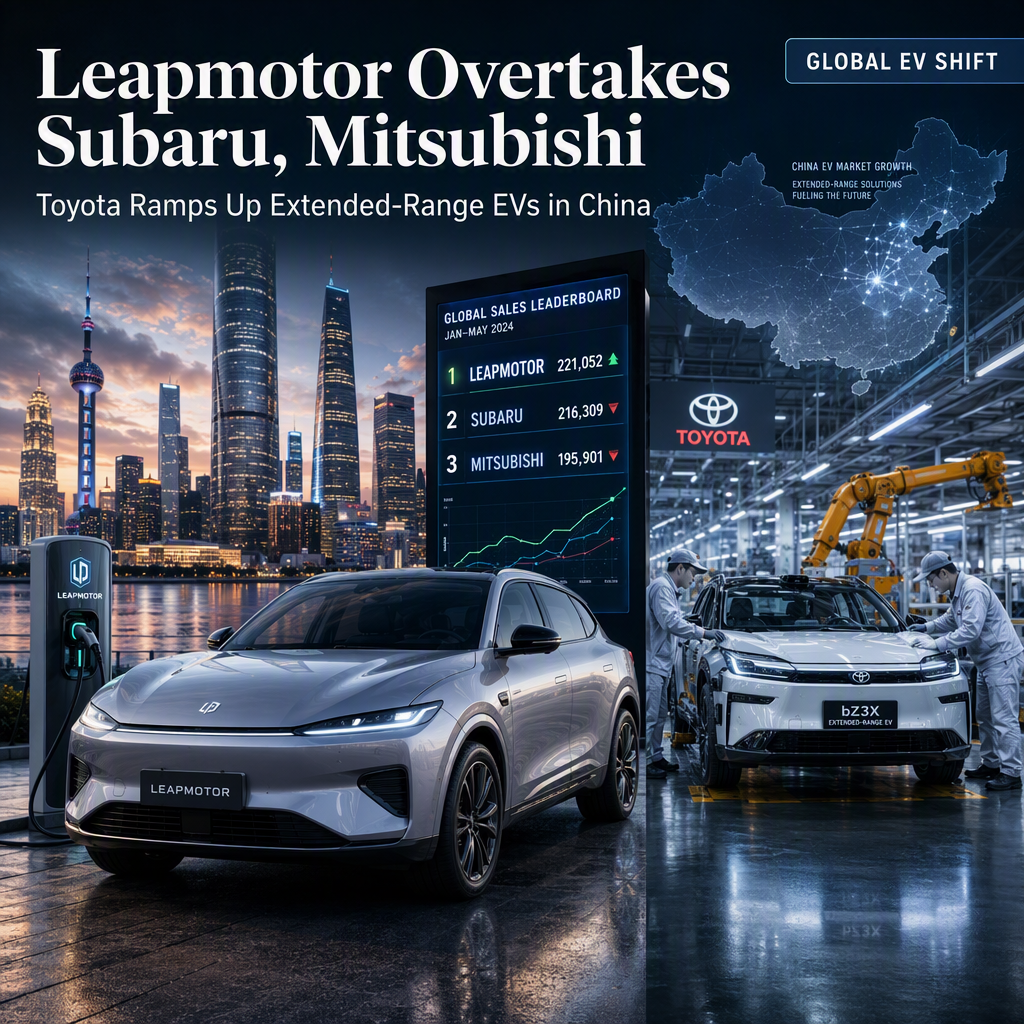
Chinese electric vehicle (EV) startup Leapmotor has overtaken Japanese automakers Subaru and Mitsubishi Motors in global vehicle sales for the first time during the April-June quarter, driven by rapid expansion in both China and Europe [1]. Leapmotor, recognized for its budget-friendly EVs, achieved higher deliveries than its Japanese rivals, reflecting the company's aggressive growth strategy and the rising demand for affordable electric vehicles in key markets [1]. This milestone highlights the shifting dynamics of the global automotive industry, with Chinese manufacturers increasingly challenging established players from Japan and other regions as consumer adoption of EVs accelerates, particularly in areas with supportive government policies [1].
Meanwhile, Toyota Motor is set to begin producing extended-range electric vehicles in China in the spring, marking a strategic move to strengthen its presence in the world's largest EV market [2]. The new bZ3X battery EV, tailored for the Chinese market, is part of Toyota's broader electrification strategy, which emphasizes long-distance models to meet the needs of consumers prioritizing range and reliability [2]. By manufacturing these vehicles locally, Toyota aims to leverage China's supply chain efficiencies, potentially reducing costs and improving responsiveness to market trends [2].
Industry analysts cited in the article expect Toyota's initiative to positively impact its market share and revenue in China, as extended-range EVs are projected to become a key segment amid growing demand and advancements in charging infrastructure and battery technology [2]. Toyota executives have emphasized the importance of long-distance models for expanding their EV business and strengthening their position in China [2].
Both developments underscore the intensifying competition in the global EV market, with Chinese startups like Leapmotor making significant gains and established automakers such as Toyota adapting their strategies to capture growth opportunities in China [1][2].
CONCLUSION
Leapmotor's achievement in surpassing Subaru and Mitsubishi Motors in global sales signals the growing influence of Chinese EV manufacturers on the world stage. At the same time, Toyota's move to produce extended-range EVs in China demonstrates the strategic importance of the Chinese market for global automakers. These developments point to a rapidly evolving competitive landscape in the electric vehicle sector, with significant implications for market share and industry leadership.