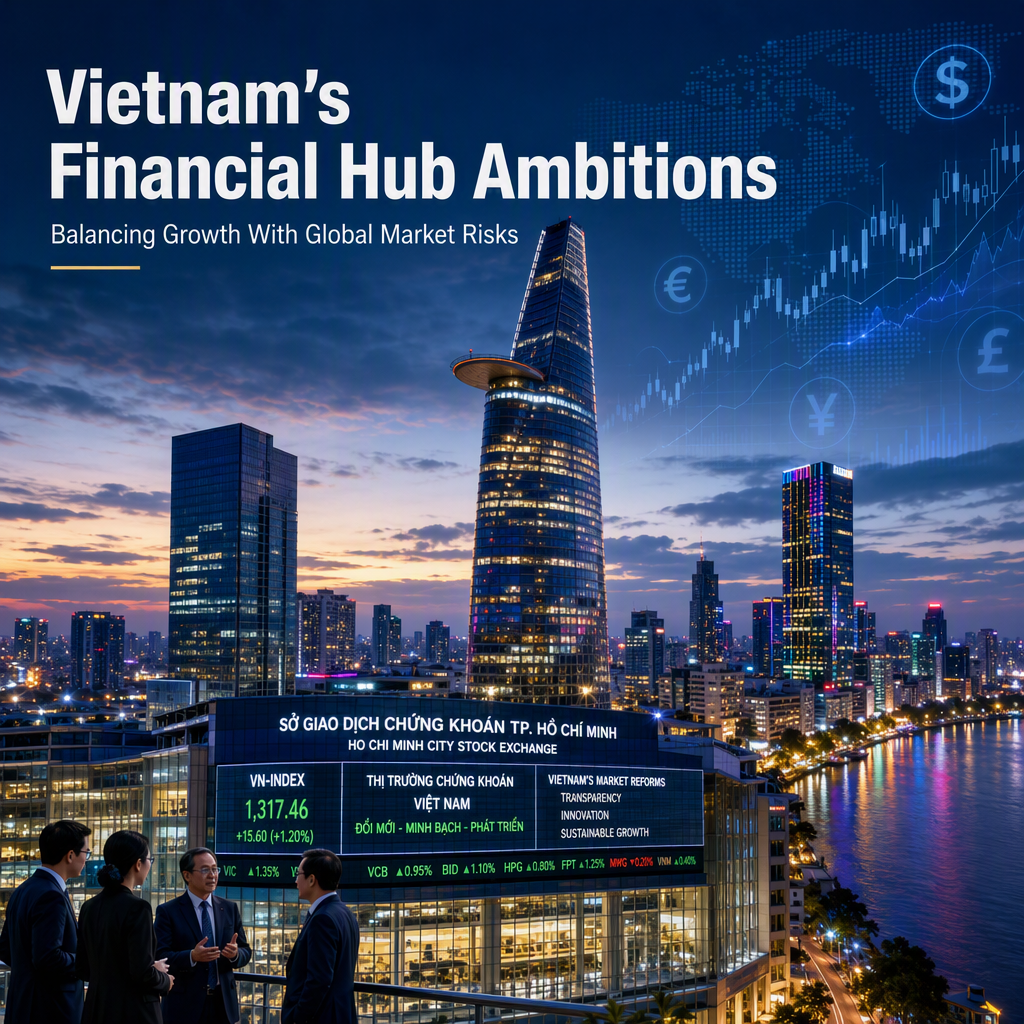
Vietnam has announced ambitious plans to transform Ho Chi Minh City into a global financial center, aiming to attract international investors and financial institutions through regulatory reform, infrastructure upgrades, and targeted incentives [1]. However, the country faces significant challenges reminiscent of those encountered by other Asian economies during the 1997 Asian financial crisis, particularly the risks associated with rapid financial liberalization and speculative capital flows [1].
To mitigate these risks, the Vietnamese government has focused on strengthening macroeconomic fundamentals, including building up foreign exchange reserves and maintaining tight controls on capital flows [1]. The State Bank of Vietnam has also been cautious about allowing full currency convertibility, recognizing both its necessity for a global financial center and the potential vulnerabilities it introduces [1].
Despite robust economic growth, with GDP expanding by over 6% annually in recent years, Vietnam's efforts are hampered by structural challenges such as a nascent corporate bond market, limited transparency, and underdeveloped legal frameworks [1]. Market analysts and international fund managers have emphasized the need for deeper capital markets, stronger regulatory oversight, and greater transparency to attract blue-chip financial institutions and global investors [1].
The government has outlined plans to modernize the Ho Chi Minh City Stock Exchange, develop derivative markets, and streamline administrative procedures for foreign investors, but progress has been slow due to bureaucratic hurdles and inconsistent regulatory enforcement [1]. As Vietnam moves toward greater integration with global markets, balancing financial openness with stability remains a central concern for policymakers and market participants [1].
CONCLUSION
Vietnam's drive to become a global financial hub is marked by both ambition and caution, as the government seeks to avoid the pitfalls of past regional crises. While economic growth is strong and reforms are underway, structural and regulatory challenges must be addressed to realize these ambitions and ensure long-term market stability.