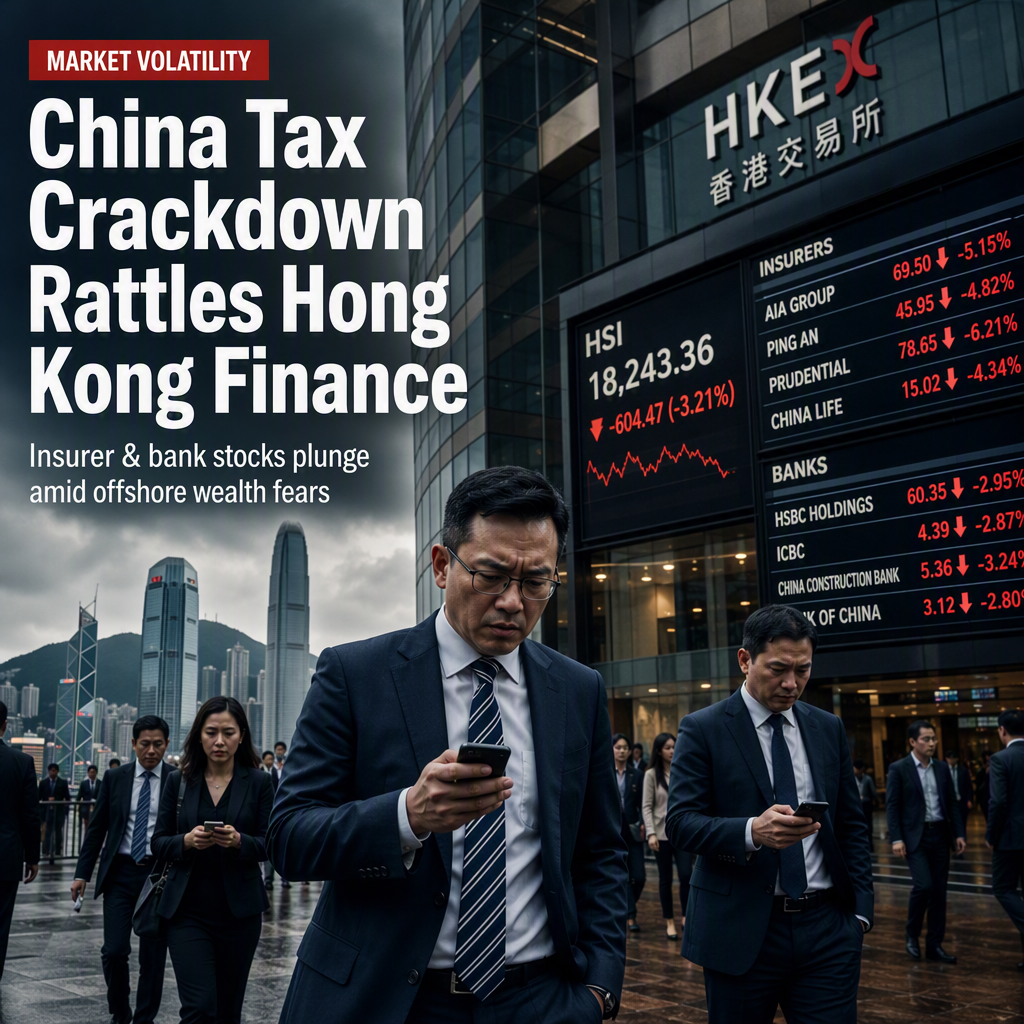
Shares of insurance companies and banks in Hong Kong experienced notable declines on Thursday following mounting concerns that China is expanding its global tax collection efforts to target citizens' offshore wealth, specifically focusing on offshore trusts and insurance products [1]. This development has triggered a sell-off in Hong Kong-listed insurers and banks, as investors reassess their risk exposure and the potential regulatory fallout from the widened enforcement [1].
Financial analysts highlighted that the dragnet could significantly impact wealth management and offshore financial services, with particular attention on how Chinese high-net-worth individuals structure their international assets [1]. The crackdown has raised questions about the future growth prospects of Hong Kong's wealth hub, amid fears that further tightening could dampen demand for offshore investment vehicles [1].
A senior analyst at a Hong Kong brokerage described the move as a 'game-changer for offshore wealth management,' suggesting that Chinese clients may need to rethink their strategies, potentially leading to a shift in capital flows as compliance costs rise and uncertainty increases [1]. Traders reported increased volatility in Hong Kong financial stocks, with technical support levels being tested and resistance levels now acting as short-term ceilings for price recovery [1].
Investors are closely monitoring for any official statements from Chinese regulators to gain clarity on the scope and timing of the enforcement [1]. There is heightened market sentiment that further regulatory action could follow, especially as China seeks to shore up tax revenues and clamp down on capital flight [1]. While no specific trading advice was issued by major banks, several brokerage reports have recommended caution and advised clients to review their exposure to offshore investment-linked insurance products and trusts [1].
CONCLUSION
China's expanded tax enforcement targeting offshore trusts and insurance has rattled Hong Kong's financial markets, leading to sharp declines in insurer and bank stocks. The move has injected significant uncertainty into the wealth management sector, with analysts and investors bracing for further regulatory tightening and advising caution regarding offshore investment products.