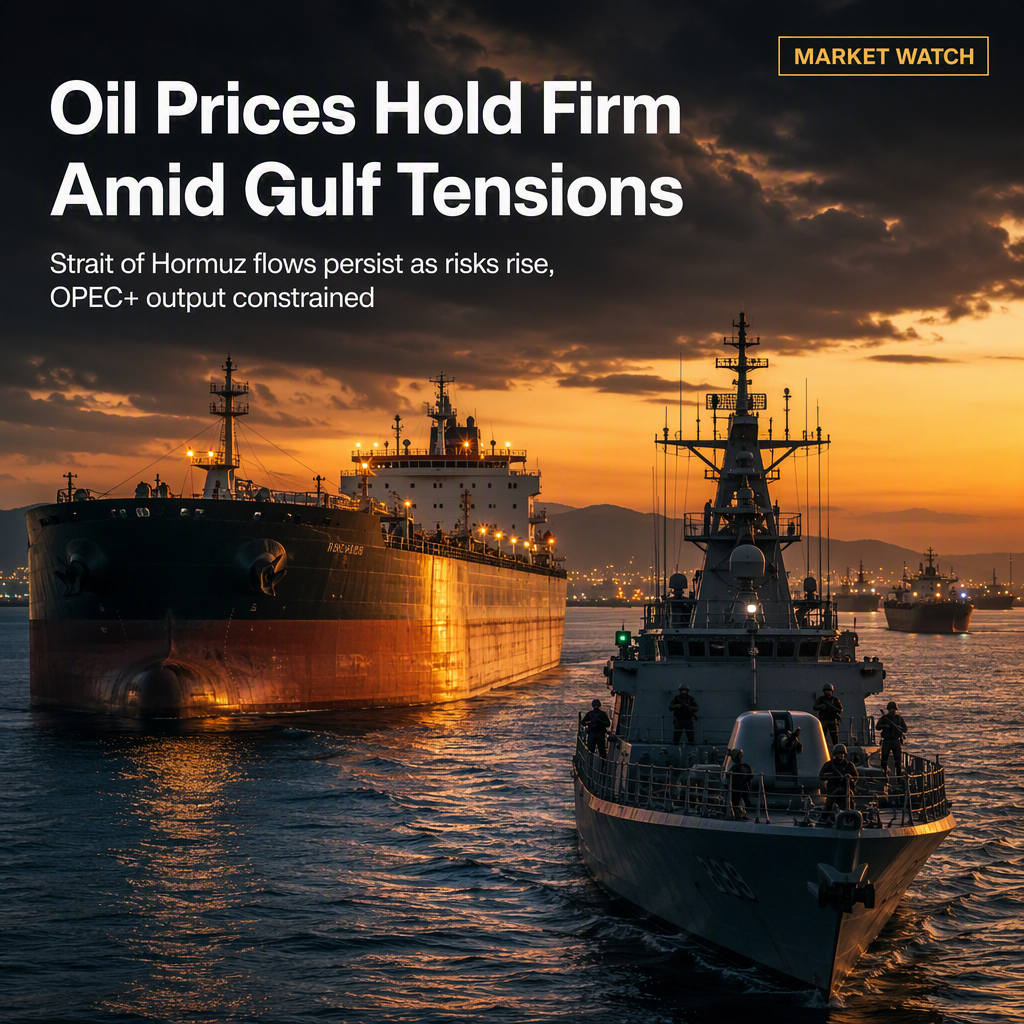
Oil prices remain supported as tensions escalate between the US and Iran in the Persian Gulf, according to ING analysts Warren Patterson and Ewa Manthey [1]. The US has struck several Iranian-linked tankers in response to Iran targeting US warships, while Iran has taken action against tankers navigating unauthorized routes and plans to enforce a new restricted zone outside the Strait of Hormuz, potentially increasing risks for vessels in the Gulf of Oman [1]. Despite these developments, oil continues to flow through the Strait of Hormuz, with the US energy secretary reporting an average of just over 9 million barrels per day, facilitated by US Navy escorts [1].
OPEC+ has kept its output quotas unchanged for October, following earlier increases that fully unwind voluntary cuts of 1.65 million barrels per day. However, ongoing disruptions in the Persian Gulf mean most members are producing well below their quotas [1]. Speculative net longs in ICE Brent have risen, with speculators buying 37,837 lots, resulting in a net long position of 261,435 lots as of last Tuesday. The increase was primarily driven by short covering, although fresh buying and short covering were both relatively sizeable [1].
While oil price action has been modest in response to the latest Middle East developments, European gas prices have seen more significant upside. The TTF was trading almost 4% higher in early morning trading, reflecting increased vulnerability in the gas market due to limited LNG flows compared to crude oil, especially as the 2026/27 heating season approaches [1].
CONCLUSION
Escalating tensions in the Persian Gulf have reinforced oil prices, with continued flows through the Strait of Hormuz and increased speculative activity in ICE Brent. OPEC+ output remains constrained by regional disruptions, while European gas prices are rising amid limited LNG supply. The market remains sensitive to geopolitical risks, particularly as heating demand grows closer to 2026/27.