
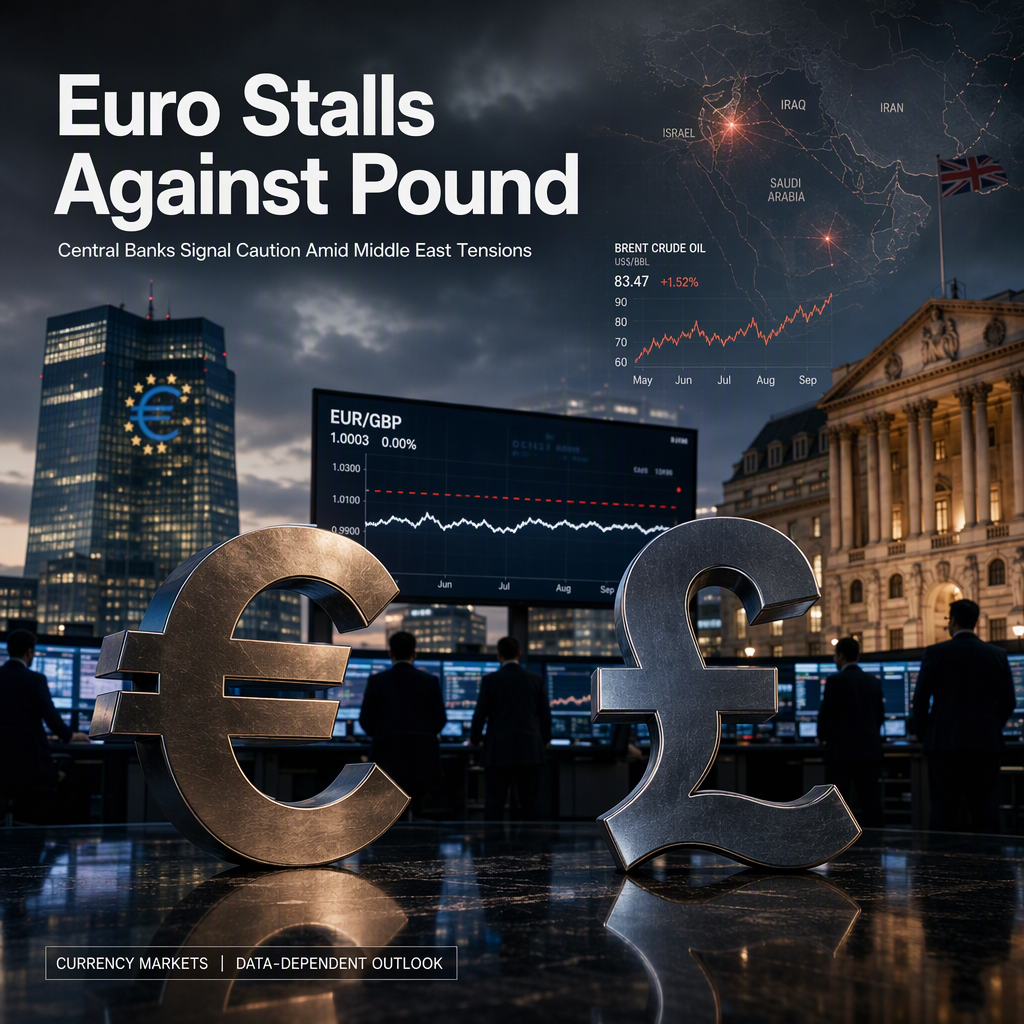
The Euro traded flat against the British Pound on Tuesday, with the EUR/GBP pair hovering around 0.8578 after failing to break above the 0.8660 resistance level, which previously served as multi-month support [1]. This subdued price action reflects market participants' ongoing assessment of geopolitical risks in the Middle East and their potential impact on monetary policy in both the Eurozone and the United Kingdom [1]. Elevated crude oil prices, driven by the lack of progress in US-Iran negotiations and continued conflict in the region, have heightened inflation risks, prompting central banks to maintain restrictive interest rate policies [1].
The European Central Bank (ECB) has implemented two interest rate hikes this year, raising the deposit facility rate to 2.50% [1]. In contrast, the Bank of England (BoE) has kept its Bank Rate unchanged at 3.75% for six consecutive meetings [1]. Despite this, markets anticipate further rate increases from both central banks in the coming months, though policymakers remain cautious due to the vulnerability of both economies to higher energy costs and the challenge of balancing inflation control with economic growth [1].
ECB policymakers have expressed ongoing concerns about inflation and the broader economic outlook. Peter Kazimir described the latest rate hike as “unavoidable” and emphasized the significance of energy prices for future policy decisions [1]. José Luis Escrivá stated that interest rates are “still not in restrictive territory” and warned that the global rise in long-term bond yields could add further pressure to rates [1]. ECB President Christine Lagarde highlighted persistent upside risks to inflation and downside risks to growth, noting that while higher inflation is expected, there is no evidence yet of it becoming entrenched [1]. She advocated for a “measured response” to keep inflation in check [1].
On the BoE side, Governor Andrew Bailey indicated that if the Middle East conflict continues and second-round inflation effects intensify, further policy tightening may be necessary [1]. The market's attention is now turning to upcoming economic data releases, including UK second-quarter GDP, German preliminary inflation and retail sales figures on Wednesday, and the Eurozone’s preliminary inflation report on Friday [1].
In currency markets, the British Pound was the strongest against the Australian Dollar among major currencies on the day [1].
CONCLUSION
The Euro's flat performance against the Pound reflects ongoing uncertainty regarding central bank policy paths amid persistent inflation risks and geopolitical tensions. Both the ECB and BoE are signaling caution, with markets awaiting further economic data and central bank commentary for direction. The outlook remains data-dependent, with energy prices and Middle East developments as key factors.