
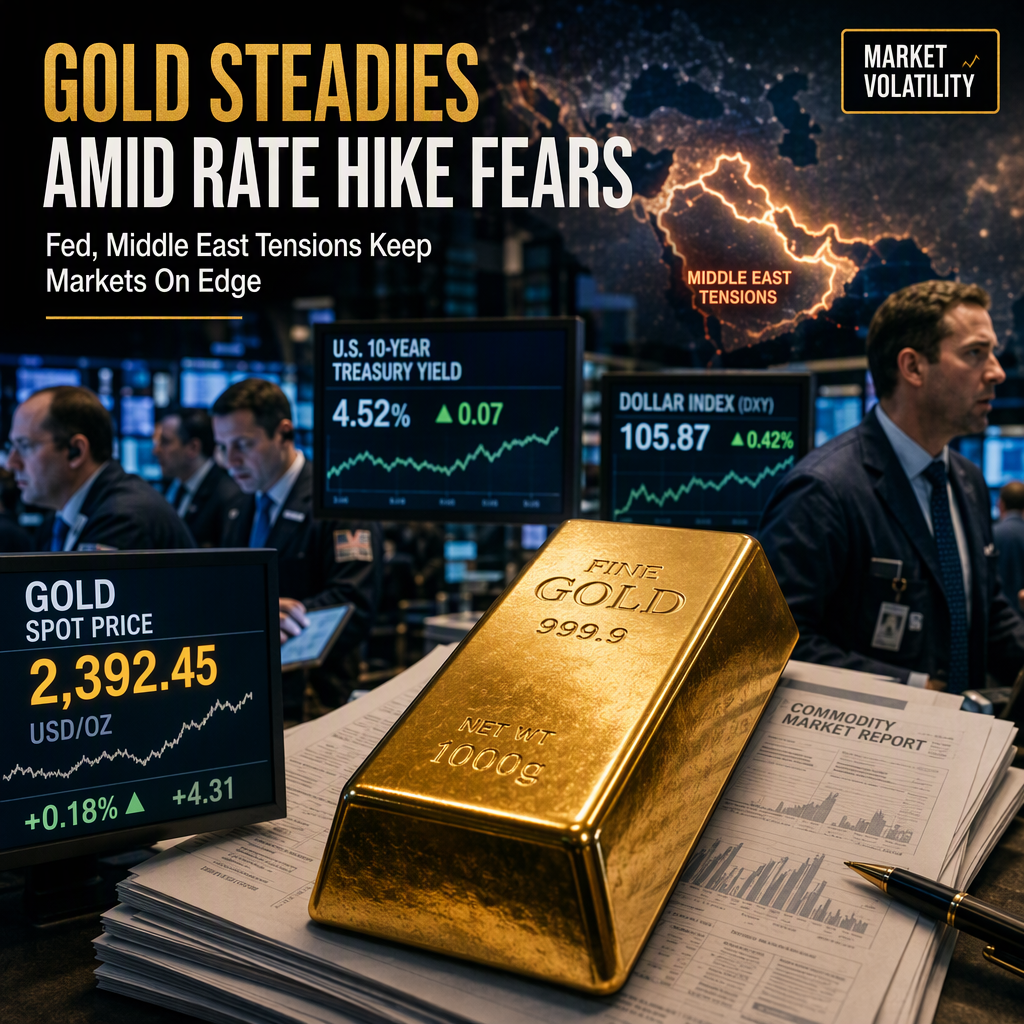
Gold (XAU/USD) steadied on Tuesday following a sharp sell-off at the start of the week, with the price trading around $4,152, up 0.90% on the day. This stabilization comes after gold slumped nearly 4% on Monday, reaching a low of $4,110, its lowest since August 5. The decline was attributed to a surge in US Treasury yields, with the benchmark 10-year yield holding near 5.24%, just below Monday's peak of 5.27%, the highest level since 2007. The rise in yields has increased the opportunity cost of holding non-yielding assets like gold, pressuring its price downward [1].
The bond sell-off and higher yields have been driven by persistent inflation concerns, further exacerbated by geopolitical risks in the Middle East. The ongoing US-Iran standoff over the Strait of Hormuz has kept oil prices elevated. Iranian Foreign Minister Abbas Araghchi confirmed that Tehran held indirect talks with the US through Qatari mediators in New York and is awaiting Washington's formal response to its proposal to reopen the Strait. However, US President Donald Trump denied reports that his administration had offered Iran sanctions relief or access to frozen funds, stating that Washington had offered Tehran 'nothing' to end the war. Both sides remain far apart on key issues, and with the conflict in its eighth month, the lack of progress suggests that disruptions around the Strait of Hormuz could persist [1].
Market expectations for further Federal Reserve interest rate hikes remain strong. After a 25-basis-point increase earlier this month, the CME FedWatch Tool indicates a 72% probability of another rate hike in October. The US Dollar Index (DXY) is trading around 101.40, near two-month highs, supported by the hawkish Fed outlook. A stronger dollar makes gold more expensive for buyers using other currencies, adding further pressure to the metal [1].
Looking ahead, traders are bracing for a data-heavy week, including the US Conference Board Consumer Confidence Index for September, JOLTS Job Openings data for August, and speeches from several Fed policymakers. Later in the week, attention will turn to the Personal Consumption Expenditures (PCE) Price Index, ISM Manufacturing PMI, and the Nonfarm Payrolls (NFP) report. Technical analysis indicates that gold remains bearish in the near term, with momentum indicators such as the 14-period Relative Strength Index nearing oversold territory [1].
CONCLUSION
Gold's recent volatility reflects the combined impact of rising US Treasury yields, persistent inflation concerns, and ongoing geopolitical tensions in the Middle East. With market expectations for further Fed rate hikes and a strong US dollar, gold may remain under pressure in the near term. Upcoming US economic data and Fed communications will be closely watched for further direction.