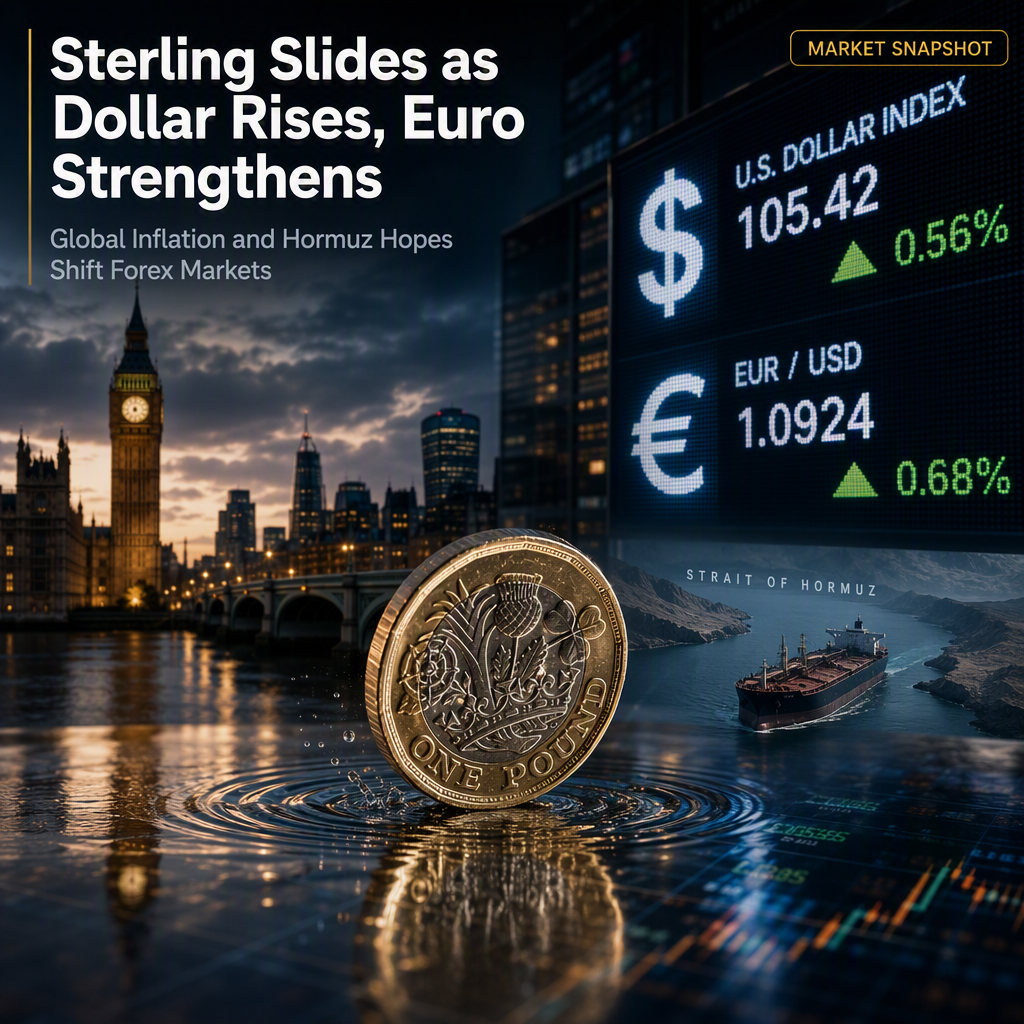
The British Pound (GBP) retreated against both the US Dollar and the Euro on Wednesday, driven by a combination of persistent US inflation data and optimism surrounding a potential de-escalation in the Strait of Hormuz. Against the US Dollar, Sterling fell approximately 0.39% as the Core Personal Consumption Expenditures (PCE) Price Index for July remained unchanged at 3.3% year-over-year, matching estimates, while headline PCE stood at 3.7% year-over-year, slightly above the 3.6% forecast. This data reinforced expectations of a possible Federal Reserve rate hike later in the year, with money markets pricing in a 74% chance of a 25-basis-point increase by December and the US Dollar Index (DXY) rising 0.27% to 99.17. US Treasury yields also climbed, with the 10-year note up four basis points to 4.664% [1].
In the absence of significant UK economic data, GBP/USD traded below 1.3600, after reaching a high near 1.3651. Technical analysis indicated that the pair maintained a constructive bullish tone above key moving averages, with resistance at 1.3628 and 1.3676, and support at 1.3490 and the 1.3410-1.3390 cluster [1].
Meanwhile, the Euro gained ground against the Pound, with EUR/GBP trading around 0.8570 and testing session highs near 0.8574. The Euro's strength was attributed to reports from Russian agency RIA Novosti suggesting that Washington and Tehran had agreed to a ceasefire to restore free navigation through the Strait of Hormuz, a critical route for global oil and LNG shipments. This development, if confirmed, could lower energy costs for the Euro area, providing a relative boost to the single currency. However, traders remained cautious, awaiting formal confirmation of the deal, as reports also indicated ongoing military tensions and intermittent talks with Oman [2].
Technical analysis for EUR/GBP showed a mild bullish bias, with the pair holding above its 20- and 100-period moving averages at 0.8558 and an RSI near 61. Immediate resistance was noted at 0.8574, with support at 0.8571 and a demand zone between 0.8565 and 0.8560 [2].
Looking ahead, market participants are focused on upcoming US data releases, including Initial Jobless Claims and the University of Michigan Consumer Sentiment Index, as well as a speech by Fed Chair Kevin Warsh at the Jackson Hole Symposium. In the Eurozone, German unemployment figures and confidence surveys are anticipated, while the UK calendar remains quiet, leaving Sterling sensitive to broader market sentiment [1][2].
CONCLUSION
The British Pound faced pressure from both a resurgent US Dollar, following sticky US inflation data, and a strengthening Euro amid hopes for a de-escalation in the Strait of Hormuz. With the UK economic calendar quiet, Sterling's direction remains tied to global developments and risk sentiment. Market participants are now watching for key US and Eurozone data, as well as potential confirmation of the Hormuz deal, which could further influence currency movements.