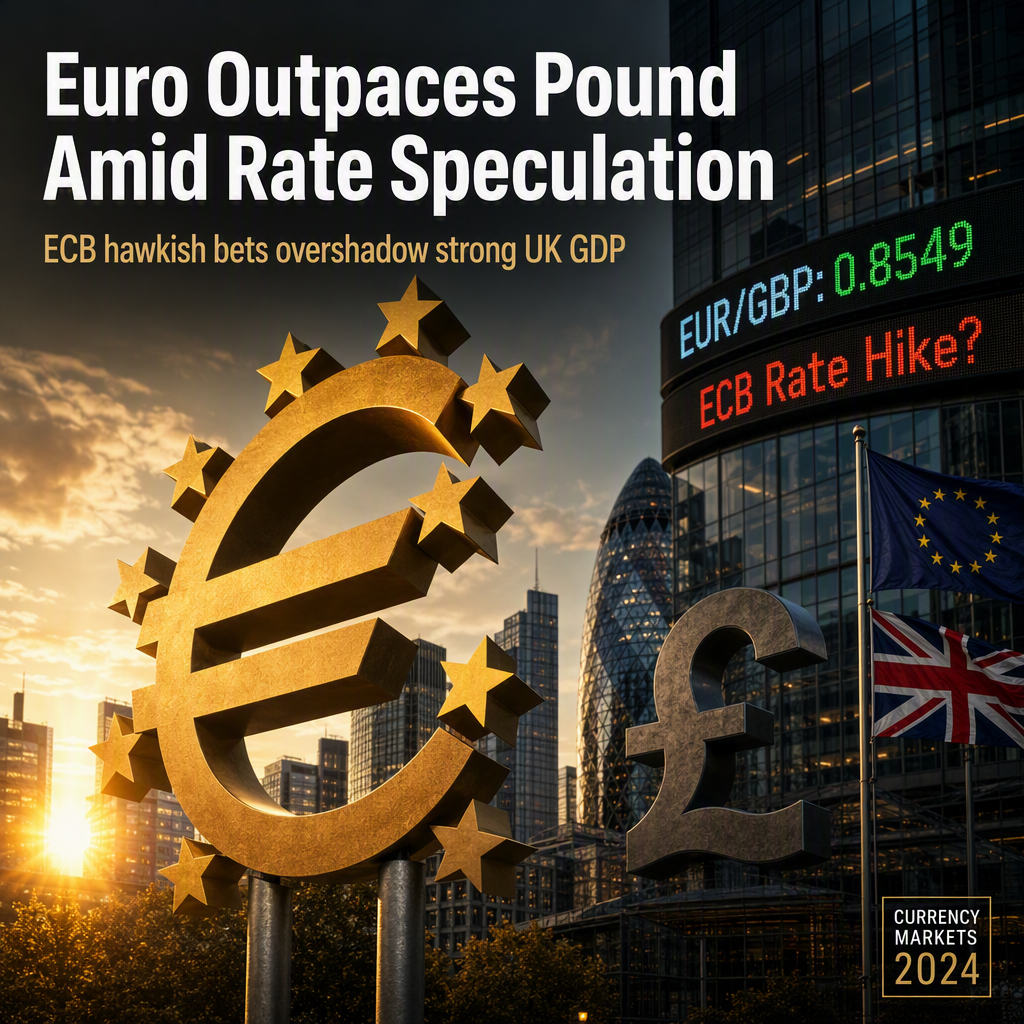
The Euro (EUR) gained against the British Pound (GBP) on Thursday, with the EUR/GBP pair trading around 0.8549 and snapping a three-day losing streak, despite the release of stronger-than-expected UK Gross Domestic Product (GDP) data that would typically support the Pound [1]. According to the Office for National Statistics, the UK economy grew by 0.3% in June, surpassing market expectations of no growth. For the second quarter, GDP expanded by 0.4%, matching forecasts but slowing from 0.6% in the first quarter. Year-on-year, GDP rose by 1.2%, beating the 1.1% estimate and improving from 0.9% previously [1].
Analysts at Standard Chartered noted that while UK GDP growth in Q2 exceeded the Bank of England’s (BoE) July projection of 0.3% quarter-on-quarter, it is unlikely to be the main factor influencing policy decisions. They emphasized that inflation and labor market data are more critical for the BoE, which is expected to keep rates on hold for the rest of the year due to already restrictive policy settings [1]. Market participants are now awaiting next week’s UK Consumer Price Index (CPI) data for further guidance on the BoE’s policy outlook. At its latest meeting, most BoE policymakers indicated that the tightening in financial conditions since the onset of the Middle East conflict was providing sufficient insurance against inflation risks from higher energy prices [1].
In contrast, energy-driven inflation risks are bolstering expectations for another European Central Bank (ECB) rate hike in September. A Reuters poll conducted from August 10 to 13 found that 57 out of 69 economists anticipate the ECB will raise its deposit rate by 25 basis points to 2.50% in September. Furthermore, around 80% of respondents expect the rate to end the year at 2.50%, with 63% believing it will remain at that level until at least the third quarter of the following year [1].
On the day, the Euro was the strongest against the New Zealand Dollar, gaining 0.31%, and also posted gains against the Pound (0.09%), US Dollar (0.08%), and other major currencies [1].
CONCLUSION
Despite robust UK GDP data, the Euro outperformed the Pound as market focus shifted to hawkish ECB expectations and the prospect of further rate hikes. The BoE is expected to keep rates steady, with upcoming UK inflation data likely to influence future policy direction. Overall, ECB policy expectations are currently providing more support to the Euro than UK growth data is to the Pound.