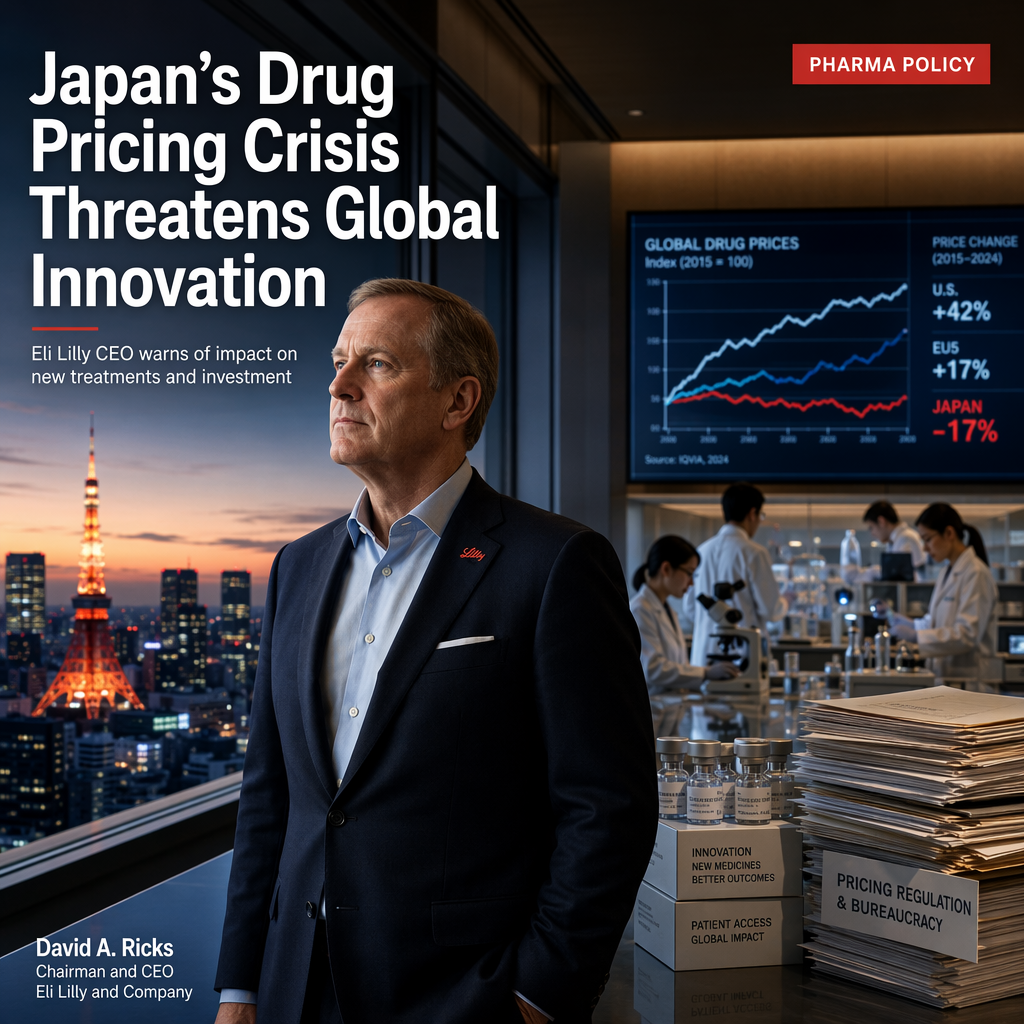
David A. Ricks, chair and chief executive officer of Eli Lilly and Company, has raised concerns about Japan's current drug pricing system, stating that it penalizes innovative medicines for their effectiveness and leaves patients with a limited range of treatments [1]. According to Ricks, when a groundbreaking therapy delivers better-than-expected results, its price is often cut, sometimes dramatically, during subsequent reimbursement reviews, regardless of the value it provides to patients and the health system [1].
This unpredictability in reimbursement makes Japan a less attractive market for launching new medicines, as companies are increasingly reluctant to introduce their latest therapies, knowing that success may be punished with significant price reductions [1]. As a result, Japanese patients face delays in accessing the latest advances in care and have fewer treatment options available [1].
Ricks emphasizes that the impact of Japan's policies extends beyond its borders. As the world's third-largest pharmaceutical market, Japan's approach influences global investment decisions. If investors and companies perceive that Japan does not reward innovation, they may redirect resources elsewhere, reducing incentives to invest in research and development that benefits patients worldwide [1]. Furthermore, other countries may look to Japan's policies as a model, potentially eroding incentives for global pharmaceutical innovation [1].
Ricks advocates for Japan to adopt a more predictable, value-based approach to drug pricing, arguing that rewarding innovation and providing clear rules for reimbursement would benefit both Japanese patients and the global health ecosystem [1].
CONCLUSION
Japan's unpredictable drug pricing system is seen as a deterrent to pharmaceutical innovation and investment, with potential negative consequences for both Japanese patients and the global market. Industry leaders urge Japan to implement a more predictable, value-based pricing model to support medical breakthroughs and ensure timely patient access to new treatments.