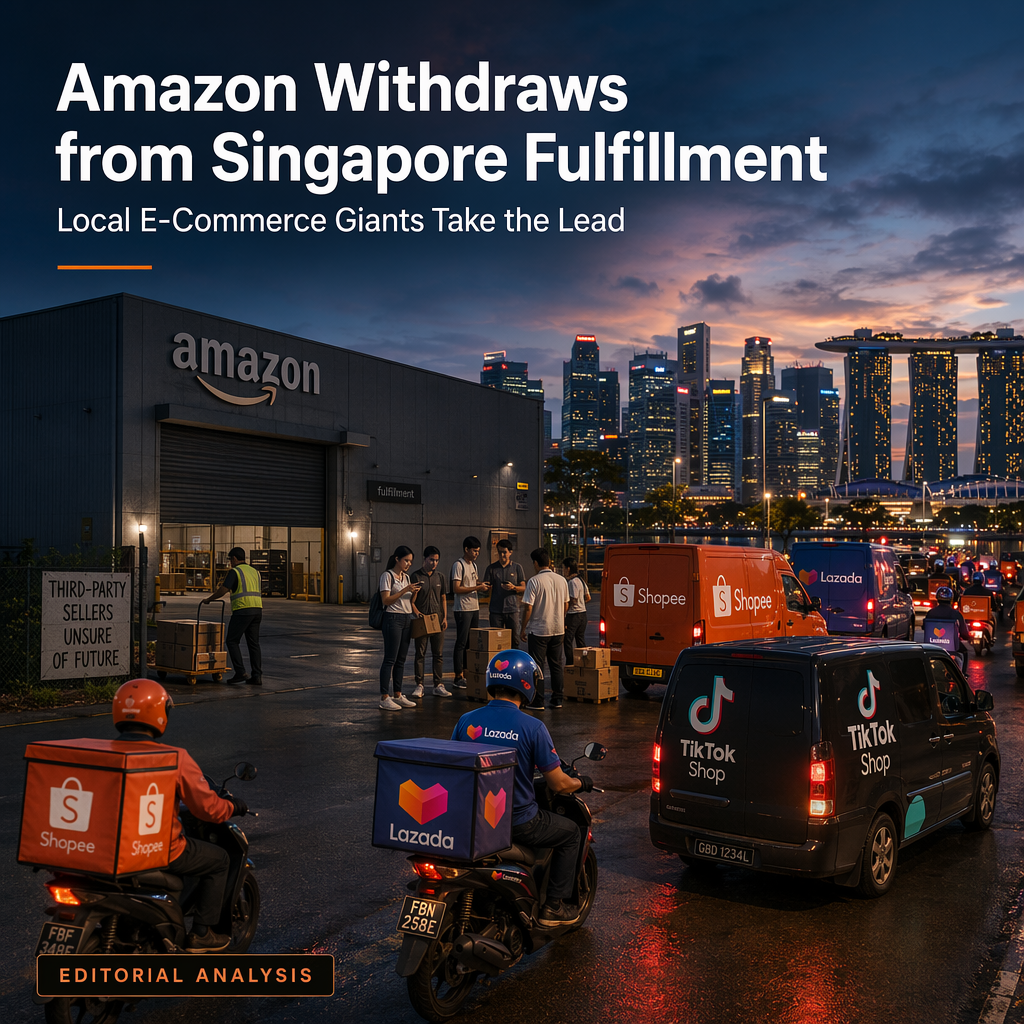
Amazon, the world's largest e-commerce company, has begun phasing out its fulfillment service in Singapore as of July 6, 2026, effectively marking a significant retreat from the Southeast Asian market [1]. This move includes the cessation of Amazon Fresh, the company's grocery delivery service that previously offered deliveries within a two-hour window, as well as the discontinuation of warehousing and last-mile services for third-party sellers [1].
Amazon's decision comes after persistent struggles to gain market share in Southeast Asia, where local competitors such as Shopee, Sea, Alibaba-owned platforms, and TikTok have established dominance by tailoring their offerings to local consumer preferences and logistics realities [1]. The company's global strategy, successful in developed markets, failed to resonate in the region's highly localized and competitive e-commerce landscape [1].
The withdrawal leaves third-party sellers who depended on Amazon's fulfillment infrastructure facing uncertainty, as they must now seek alternative solutions for warehousing and delivery [1]. The development highlights the broader challenges faced by Western e-commerce models in Southeast Asia, where success hinges on hyper-localization, adaptation to local payment systems, and understanding of consumer habits [1].
No specific market reactions, analyst opinions, or forward-looking statements were provided in the article [1].
CONCLUSION
Amazon's withdrawal from Singapore's fulfillment and grocery delivery services underscores the challenges faced by global e-commerce giants in Southeast Asia's localized market. The move signals the importance of adapting strategies to local conditions, as regional players continue to outpace multinational competitors. Third-party sellers and the broader market will be watching closely to see how Amazon and others respond to these competitive pressures.