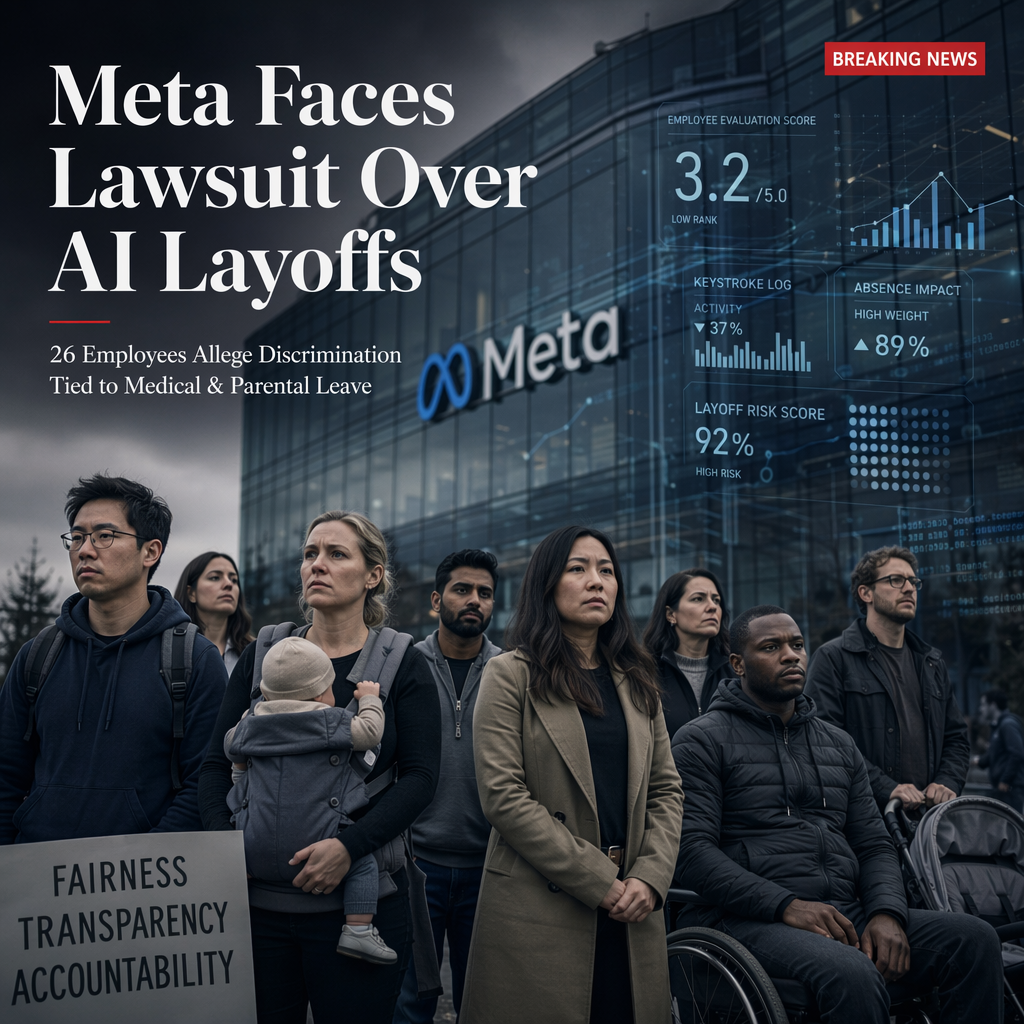
A group of 26 Meta employees has filed a lawsuit against the company, alleging that Meta used AI-powered software to select employees for mass layoffs, disproportionately targeting workers with disabilities or those who had taken medical, parental, or family leave [1]. The lawsuit, filed in federal court in Oakland, California, claims that Meta relied on internal AI systems, keystroke and activity-monitoring data, AI token-usage dashboards, and algorithmically assisted performance rankings to determine which employees would be laid off earlier this year [1]. According to the plaintiffs, these metrics inherently disadvantage employees on protected leave or with reduced output due to disabilities, as the system did not account for such circumstances and failed to pause for individualized, neutral review as required by law [1].
The 26 plaintiffs are among the approximately 8,000 employees, or about 10% of Meta's workforce, who were notified in May that their jobs would be eliminated, with terminations set to begin on July 22 [1]. The lawsuit alleges violations of several state and federal laws, including the Family and Medical Leave Act, the Americans with Disabilities Act, the Pregnancy Discrimination Act, and the Pregnant Workers Fairness Act, all of which prohibit discrimination or retaliation against employees who take medical leave, have disabilities, or are pregnant [1]. Additionally, the employees claim that Meta failed to test its AI systems for bias, allegedly breaching newly adopted laws in California and New York City [1].
The plaintiffs, who are from six states including California and New York as well as Washington, D.C., are seeking a preliminary court ruling to block Meta from completing the layoffs while their claims are pursued in private arbitration [1]. They argue that Meta's employment agreements require individual arbitration for workplace disputes but do not preclude requests for temporary relief to preserve the status quo and keep them employed during the arbitration process [1]. The lawsuit emphasizes that finalizing the terminations would cause irreparable harm that cannot be remedied by monetary damages alone, citing the loss of employer-subsidized health benefits [1].
No market reaction or analyst opinions are discussed in the article [1].
CONCLUSION
The lawsuit against Meta highlights significant employee concerns regarding the use of AI in workforce management and potential legal exposure related to discrimination laws. While the immediate market impact is not discussed, the case underscores growing scrutiny of AI-driven HR practices and could influence future regulatory and corporate policies.