
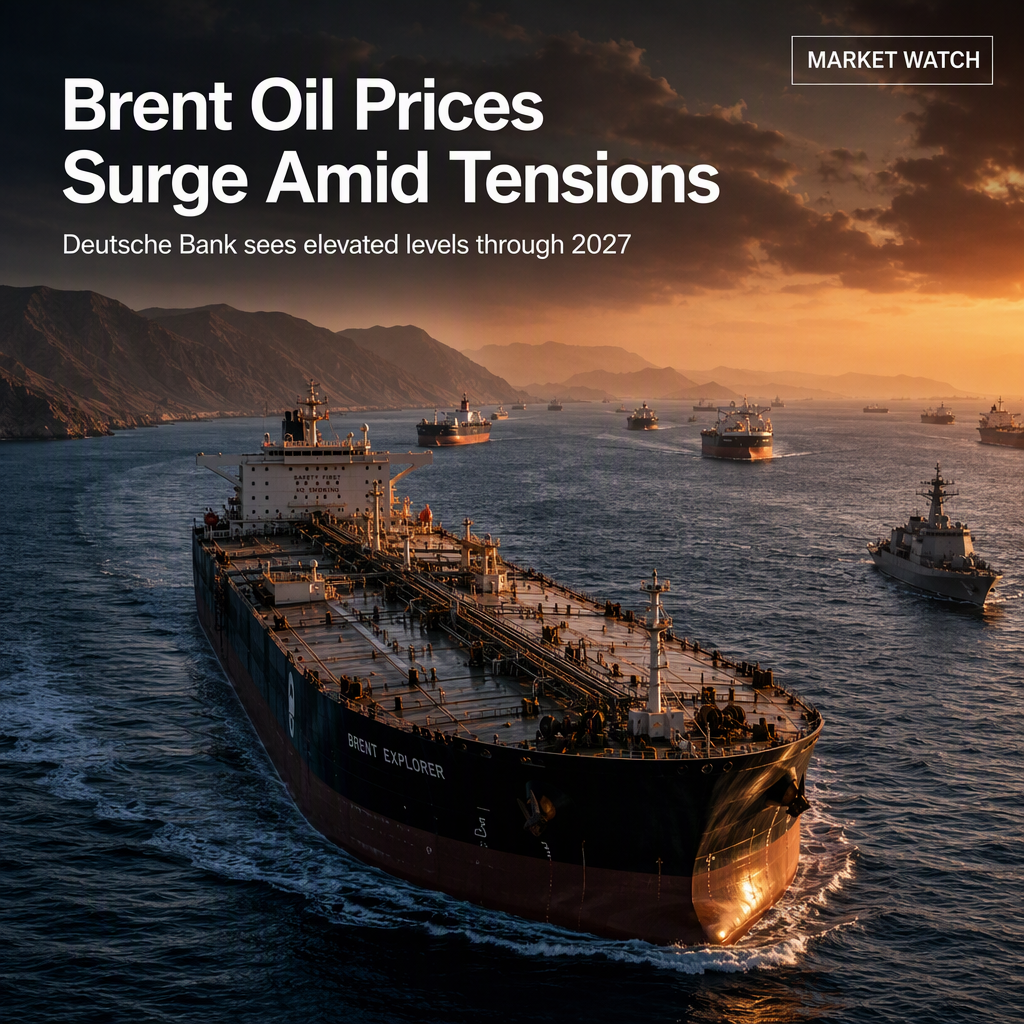
Brent Oil prices have experienced a significant surge, with spot prices climbing above $107 per barrel and December 2027 futures reaching new highs, according to Deutsche Bank analysts Henry Allen and Jim Reid [1]. The immediate catalyst for this upward movement was the weekend news that President Trump rejected Iran’s proposal, which contributed to Brent crude rising by +0.92% to $105.28 per barrel yesterday and advancing another +1.92% to $107.30 per barrel this morning [1].
The analysts attribute the sustained high prices to ongoing US–Iran tensions, particularly the lack of progress in diplomacy and skepticism regarding the reopening of the Strait of Hormuz [1]. This has led market participants to increasingly price in a prolonged period of elevated oil prices, not just in the short term but extending well into the future. Specifically, the December 2027 Brent future closed at a new high of $80.29 per barrel yesterday and rose further to $80.67 per barrel this morning, indicating that the market expects high oil prices to persist for several years [1].
The report also notes that the relentless bond selloff has shown no sign of easing, with a fresh rise in yields overnight as oil prices continue to move higher [1]. This dynamic underscores the broader market implications of sustained geopolitical tensions and their impact on both commodity and financial markets.
CONCLUSION
Brent Oil prices are being driven higher by persistent US–Iran tensions and skepticism over the reopening of the Strait of Hormuz, with Deutsche Bank analysts highlighting expectations for elevated prices through 2027. The market is responding by pricing in a prolonged period of high oil prices, reflecting ongoing geopolitical uncertainty.