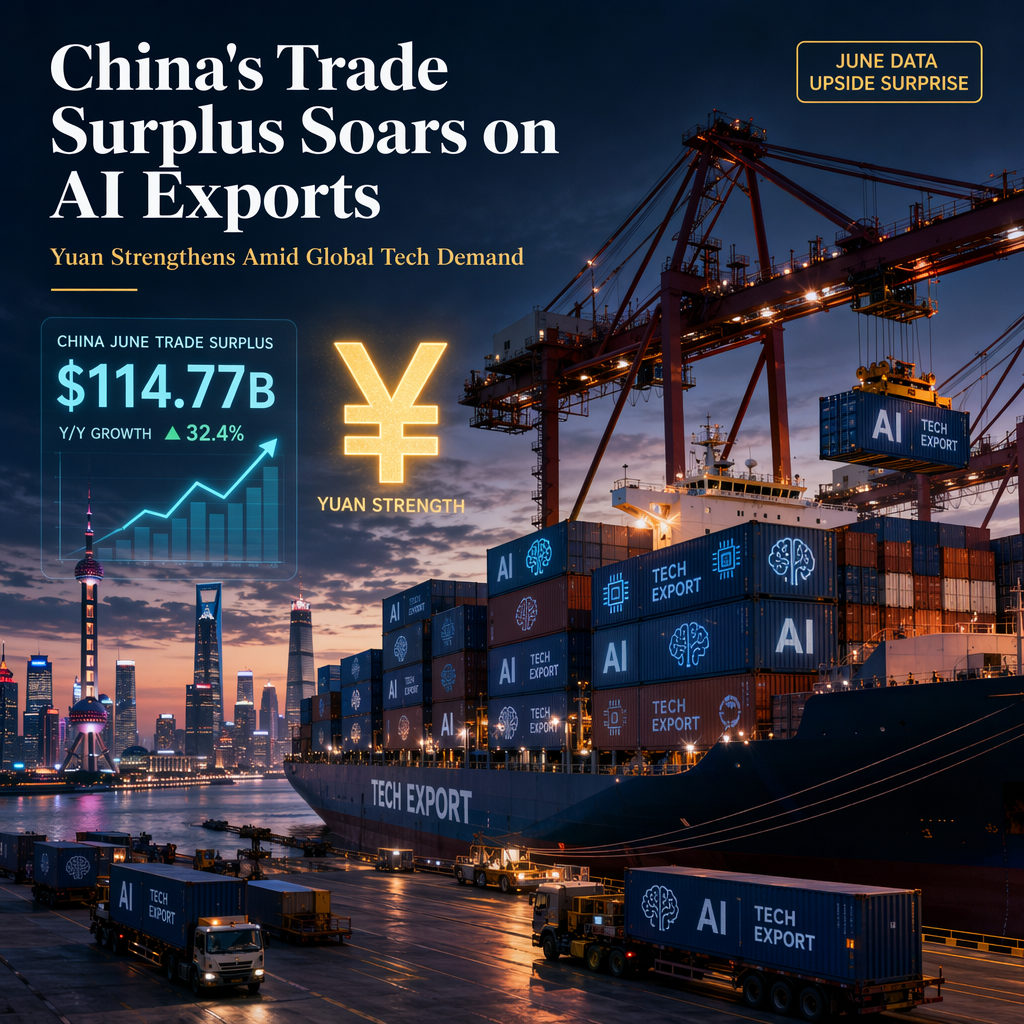
China's June trade data delivered a significant upside surprise, with exports rising 27.0% year-on-year, surpassing the Bloomberg consensus estimate of 19.0% and accelerating from a 19.4% gain in May. Imports also saw robust growth, increasing by 36% year-on-year. The surge in exports is attributed to strong global demand for AI infrastructure, which has become the primary driver of China's external accounts [1].
Despite the strength in the external sector, domestic consumption remains weak, highlighting a structural divergence in China's economy. The sustained trade surplus and a CFETS RMB index trading above 102 since late June—its highest level in four years—have underpinned the resilience of the Chinese yuan, even as the USD/CNY and USD/CNH rates edged higher by 50 pips to 6.78 and 30 pips to 6.79, respectively, reflecting modest US dollar strength ahead of the trade data release [1].
Looking ahead, market attention is shifting to the upcoming Q2 GDP release, with Bloomberg consensus forecasting 4.5% year-on-year growth, a slowdown from 5.0% in Q1. Premier Li Qiang has pledged to intensify countercyclical policy adjustments and unlock domestic demand potential, signaling policymakers' readiness to respond if growth data disappoints [1].
The ongoing divergence between a robust external sector and weak domestic consumption remains a central theme in China's economic outlook, reinforcing the importance of policy support to sustain overall growth momentum [1].
CONCLUSION
China's stronger-than-expected June trade data, driven by AI-related exports, has reinforced yuan resilience despite broader dollar strength. However, persistent weakness in domestic consumption and a potential GDP slowdown keep policymakers on alert for further stimulus. The market remains focused on upcoming economic data and policy responses.