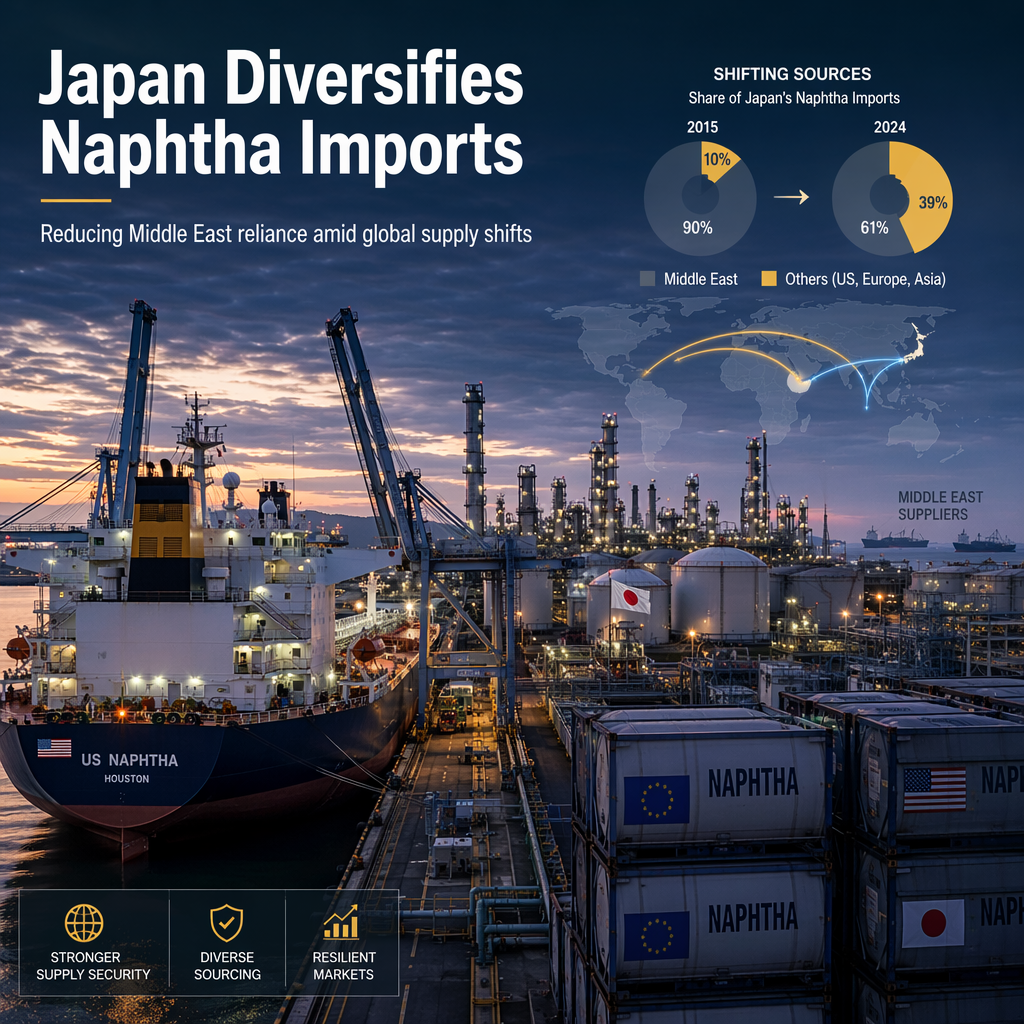
Japan has eased its year-on-year drop in naphtha imports for May, according to government trade data released on Friday, as the country increasingly sources the vital petrochemical feedstock from regions such as the United States and Europe, moving away from its traditional dependence on the Middle East [1]. This strategic shift in procurement is attributed to Japan's efforts to stabilize supply amid volatile conditions in the Middle East, which have been affected by geopolitical risks and fluctuating prices [1].
The latest analysis indicates that the less pronounced decrease in naphtha imports is a direct result of this diversification, which market participants view as a stabilizing factor for Japanese refiners and chemical producers [1]. Industry analysts note that naphtha prices remain sensitive to global supply dynamics, with technical analysis showing price support above $600 per ton and resistance at $670 per ton as supply sources shift [1].
A senior market analyst commented that Japan's broader procurement strategy enhances flexibility and resilience against market shocks, aligning with global trends to reconfigure supply chains and mitigate geopolitical risks [1]. Industry sources advise closely monitoring import volumes from non-Middle Eastern regions, as this ongoing trend is expected to influence market sentiment and pricing in the future [1].
Looking ahead, continued diversification of naphtha supply is anticipated to provide Japanese chemical companies with greater stability in production and cost management [1].
CONCLUSION
Japan's move to diversify its naphtha imports away from the Middle East is seen as a positive step toward supply stability and risk mitigation. Market analysts expect this trend to support Japanese chemical producers and influence naphtha pricing dynamics going forward.