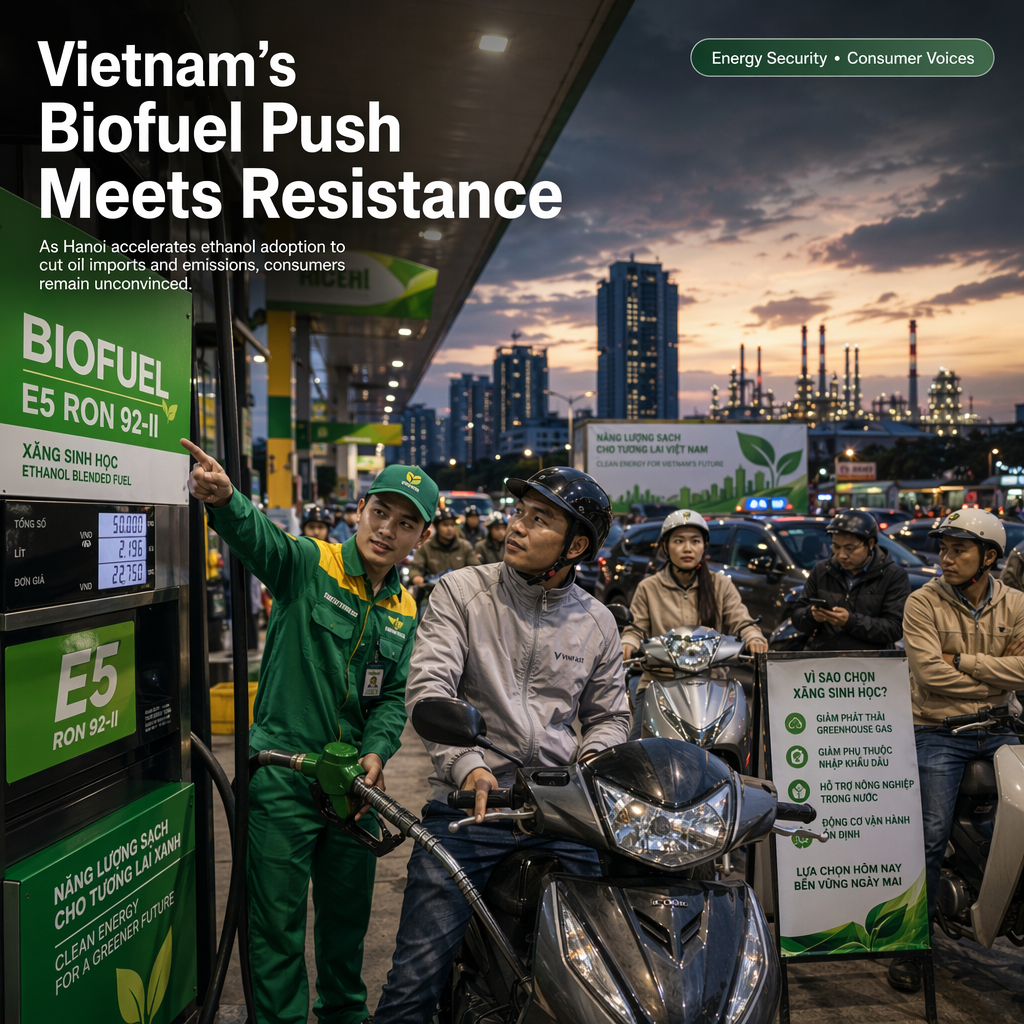
Vietnam is intensifying its efforts to promote the use of transport biofuels, particularly ethanol-blended gasoline, in response to heightened risks in global oil supply and increasing trade pressures from the United States [1]. The government has implemented measures to manage fuel demand and reduce reliance on imported oil, as recent volatility in oil prices and supply chain disruptions—especially those stemming from the Middle East crisis—have underscored the need for energy diversification [1].
Authorities are actively encouraging motorists to adopt biofuels, leading to visible increases in activity at petrol stations in cities such as Hanoi. However, the transition has been met with resistance from drivers, many of whom have expressed concerns about engine performance, fuel efficiency, and the overall cost-effectiveness of ethanol blends [1]. Questions also persist regarding the true environmental benefits of the shift, with some consumers and experts debating whether the advantages outweigh the drawbacks [1].
This policy move aligns with a broader regional trend, as other Asian countries also seek to bolster energy security and address price volatility in the wake of geopolitical tensions and shifting U.S. trade policies [1]. Market analysts have noted the increased urgency of Vietnam's biofuel push, but the article does not provide specific financial figures or market data to quantify the impact [1]. The effectiveness of biofuels in stabilizing markets and reducing emissions remains a contentious issue among stakeholders [1].
CONCLUSION
Vietnam's accelerated push for biofuels reflects growing concerns over oil supply risks and energy security. While the government is actively promoting ethanol-blended gasoline, consumer skepticism and unresolved questions about market and environmental impacts suggest that the transition faces significant hurdles. The long-term effectiveness of this strategy remains uncertain.