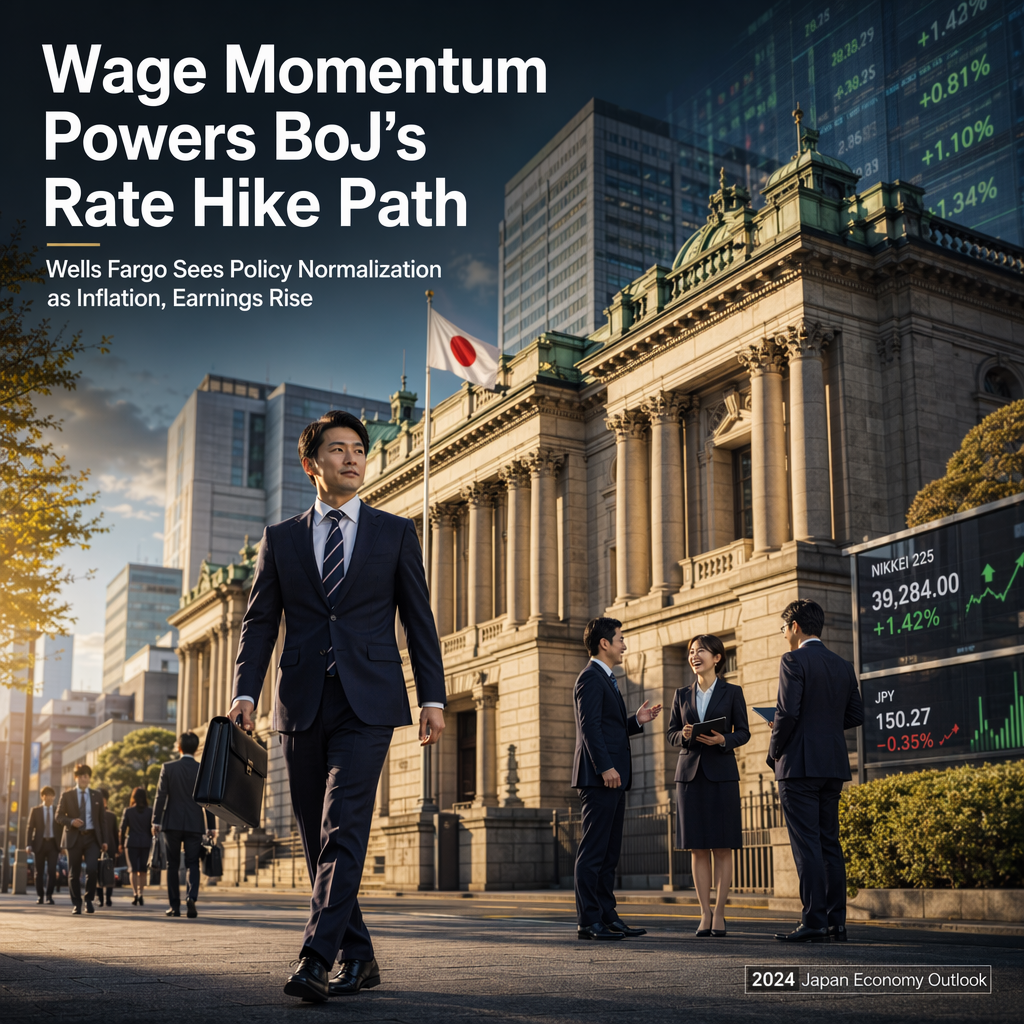
Wells Fargo Economics anticipates that Japan's May labor cash earnings data will confirm a sustained wage-price cycle, reinforcing the Bank of Japan's (BoJ) path toward policy normalization [1]. The report notes that April labor cash earnings and ordinary time earnings, which is the BoJ's preferred measure of underlying wage momentum, rose by 3.6% and 3.3% year over year, respectively [1]. This year's Shuntō wage negotiations resulted in labor unions securing average wage increases of more than 5% for the third consecutive year, effective from April, although the report highlights that the coverage of union workers is limited and there is a lag in the pass-through from negotiated settlements to realized earnings [1].
Wells Fargo points out that while inflation has been soft, the fading of government subsidies and the impact of a weaker yen on import prices are expected to contribute to a gradual pickup in inflation [1]. The combination of resilient GDP growth, a solid Q2 Tankan report, and strong wage data is seen as supporting the case for further monetary tightening by the BoJ [1].
Looking ahead, Wells Fargo projects that the BoJ will raise rates by 25 basis points in the third quarter, most likely in September, which would bring the policy rate to a terminal level of 1.25% by the end of the year [1].
CONCLUSION
Wells Fargo expects robust wage growth and improving inflation dynamics to support the Bank of Japan's policy normalization, with a 25 basis point rate hike likely in Q3 and a year-end policy rate of 1.25%. Market participants may interpret these developments as a sign of continued tightening by the BoJ.