
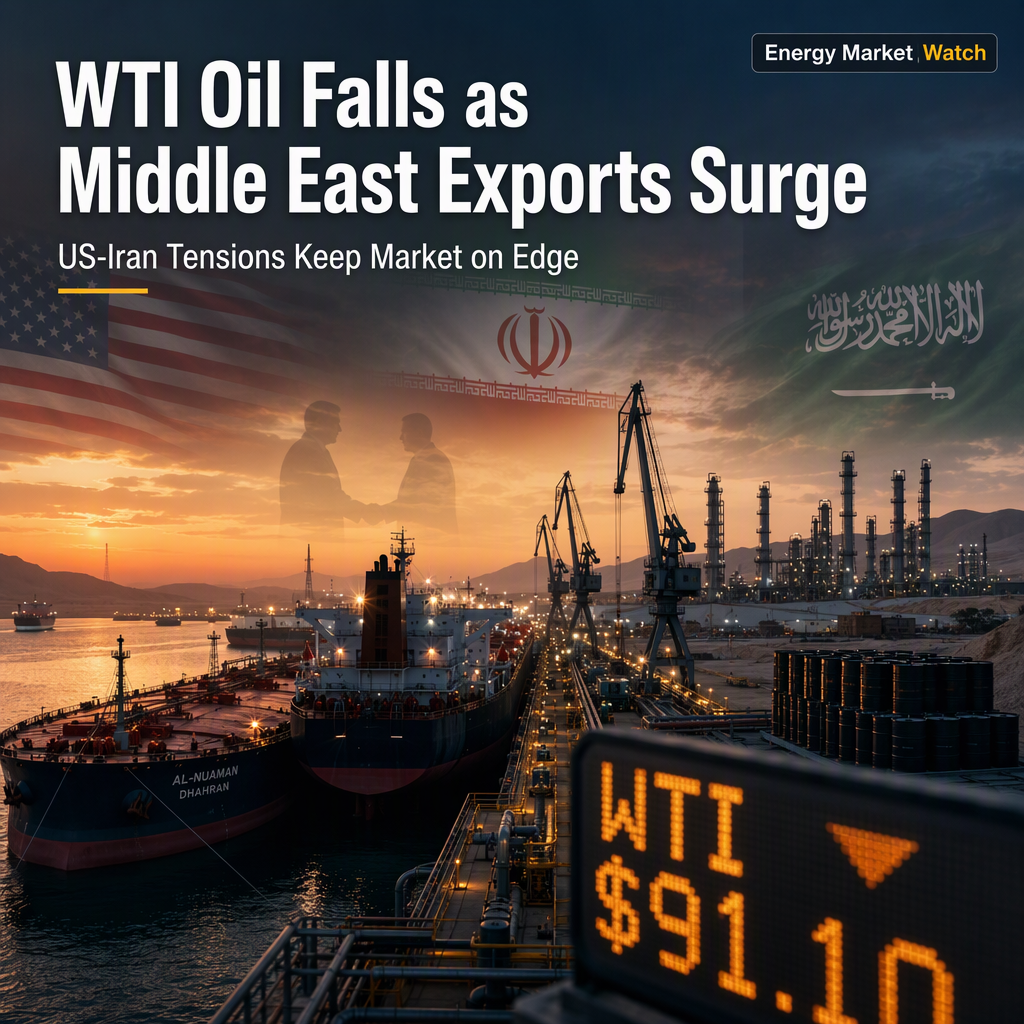
West Texas Intermediate (WTI) oil prices declined to approximately $91.10 per barrel during European trading hours on Tuesday, reversing some of the gains from the previous day. This price movement follows a notable rebound in crude exports from key Middle East producers in September. According to Kpler data reported by Reuters, shipments from the region surged to 16.328 million barrels per day (bpd), the highest level since the outbreak of conflict between Iran and the US-Israeli alliance in late February. The increase in supply was primarily attributed to higher production and exports from Saudi Arabia and the United Arab Emirates [1].
Despite the recent easing in prices, analysts caution that oil could quickly rebound due to ongoing uncertainty surrounding US-Iran negotiations. Iranian officials have expressed doubt about resolving hostilities or reopening the strategic Strait of Hormuz before the US midterm elections in November, maintaining elevated geopolitical risks in the region [1].
Diplomatic efforts are ongoing, with Iranian Foreign Minister Abbas Araqchi stating that Tehran expects a US response to its latest proposal regarding the Strait of Hormuz. US and Iranian representatives recently participated in separate mediator talks, and further discussions are planned to evaluate an amended version of Iran's original offer. While recent meetings in New York yielded limited progress—highlighted by President Donald Trump's rejection of Tehran's initial proposal—reports suggest the US administration may still consider sanctions relief and unfreezing Iranian assets if significant progress is made toward a nuclear agreement [1].
Strategists at Scotiabank emphasize that the market's primary focus remains on oil prices, with the latest advances driven by geopolitical developments. They note that the recent gains reflect the renewed deterioration in US-Iran negotiations and President Trump's rejection of Iran's proposal to reopen the Strait of Hormuz, keeping energy markets at the forefront of investor attention [1].
CONCLUSION
WTI oil prices have retreated on increased Middle East exports, but persistent US-Iran tensions and uncertainty over the Strait of Hormuz continue to drive market volatility. Analysts highlight that geopolitical risks remain elevated, ensuring oil stays central to investor focus in the near term.