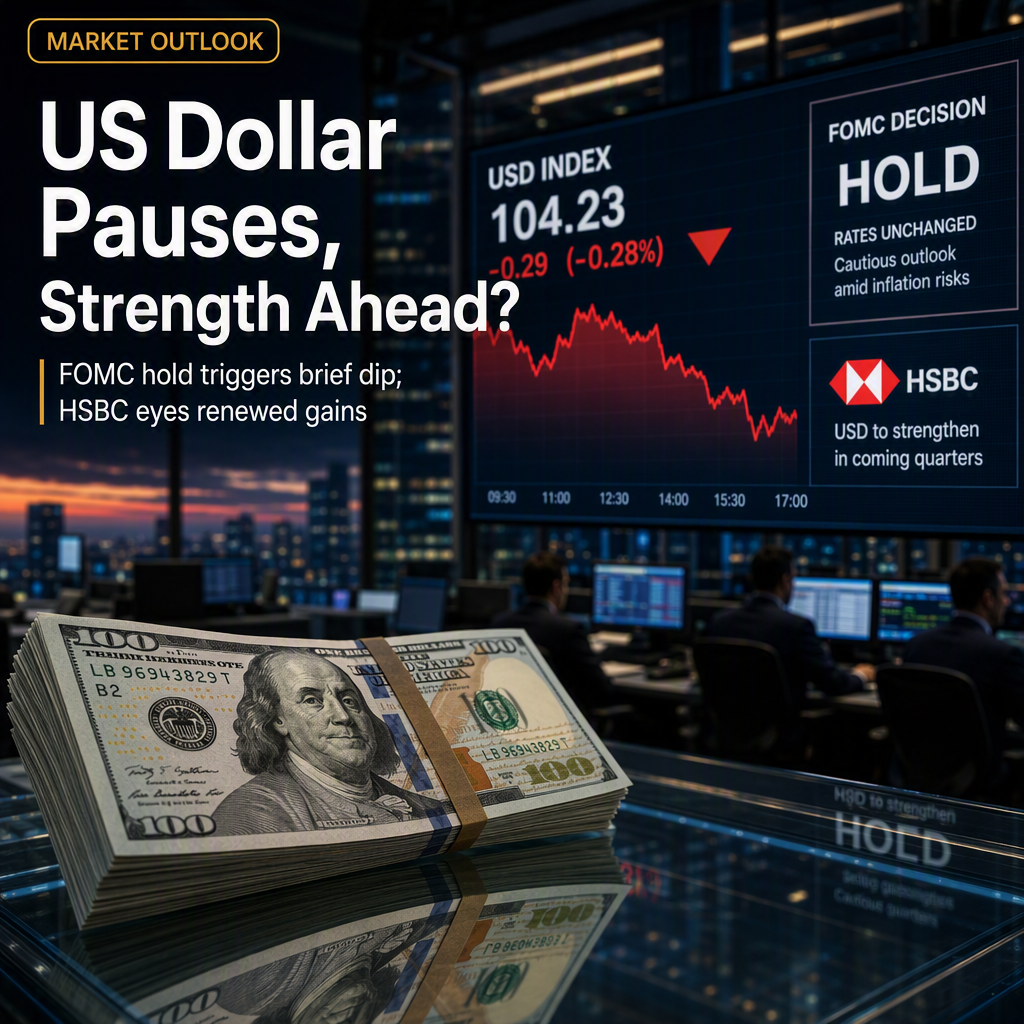
The US Dollar (USD) experienced a dip following the July Federal Open Market Committee (FOMC) meeting, where the Federal Reserve (Fed) decided to keep its policy rate unchanged at 3.50-3.75% on July 28-29. This decision was in line with the near-unanimous economist consensus, but markets had priced in a 35% chance of a 25 basis point hike, resulting in immediate USD weakness as rate expectations were modestly repriced lower [1].
Fed Chair Warsh's comments during the press conference were interpreted by markets as dovish and USD-negative, as he avoided giving explicit guidance on the likelihood of a near-term rate hike and provided limited insight into the committee’s internal debate. Instead, he reiterated the Fed's commitment to returning inflation to the 2% target and referenced ongoing discussions about recent economic shocks and supply-chain strains, without disclosing specific conclusions [1].
The internal debate within the Fed was characterized by hawkish members advocating for higher rates due to persistently above-target inflation, a resilient US labor market, and easy financial conditions, while the dovish contingent preferred patience to assess conditions further. Although the press conference did not deliver a 'hawkish hold' tone, the emphasis on achieving 2% inflation suggests that further tightening remains possible if necessary [1].
HSBC strategists maintain a constructive outlook for the USD, expecting it to grind higher in the coming period. Their view is supported by resilient US economic activity, upside inflation risks, and widening interest rate differentials. They also note that while geopolitical risks, such as the US-Iran conflict, may provide sporadic USD support, the FX market's sensitivity to these events is waning. Overall, HSBC expects modest USD strength ahead despite the immediate post-FOMC setback [1].
CONCLUSION
The FOMC's decision to hold rates led to a short-term dip in the US Dollar, but HSBC expects the currency to strengthen going forward, supported by robust economic fundamentals and widening interest rate differentials. The Fed's ongoing commitment to its 2% inflation target keeps the possibility of future tightening open, underpinning a generally positive outlook for the USD.