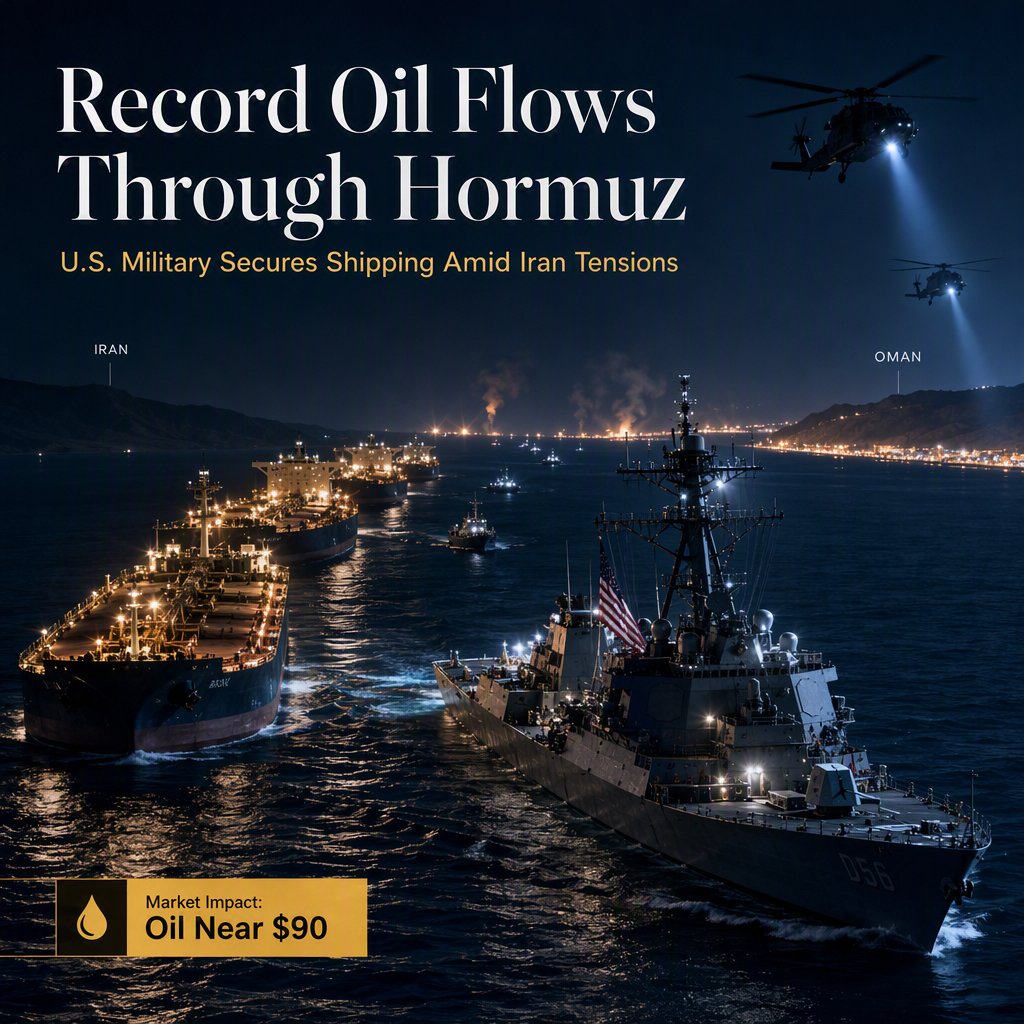
U.S. Energy Secretary Chris Wright told CNBC that more than 17 million barrels of oil transited the Strait of Hormuz by ship on Monday, marking a record since the Iran war began in late February [1]. Wright noted that oil exports from the region on Monday were higher than prewar levels when including Saudi Arabia's and the United Arab Emirates' pipelines that bypass Hormuz [1]. Before the war started on February 28, around 20 million barrels per day of crude and products passed through the strait [1].
Wright emphasized that Iran is losing its ability to 'hold the world economic hostage' as the U.S. military provides protection for oil tankers sailing through Hormuz [1]. He stated, 'Tehran is causing some disruption but they are losing that card' [1]. The U.S. government has reported oil export data through Hormuz that are higher than those reported by independent ship-tracking firms, with Wright attributing this to the superior data collection capabilities of the U.S. military and Department of Energy compared to private companies, which often miss covert transits [1].
The U.S. military has established a shipping corridor along Oman's coast that tankers from Gulf allies use to transit Hormuz, often at night with their transponders turned off to reduce the risk of attack [1]. Despite these measures, Iran has repeatedly attacked tankers using the U.S.-protected route and has demanded that commercial ships take a northern corridor through its waters. At least two tankers have come under attack in the strait this week, according to incident reports from the United Kingdom Maritime Trade Operations Centre [1].
Market reaction was notable, with U.S. crude oil down about 1% on Wednesday, though the futures contract hovered around $90 per barrel earlier in the session as Washington and Tehran traded military strikes, breaking a period of relative calm [1]. The interview with Wright took place in Venezuela, five days after President Donald Trump announced a massive oil deal with the interim government in Caracas [1].
CONCLUSION
Oil flows through the Strait of Hormuz have reached post-war highs despite ongoing security threats and attacks, as U.S. military protection ensures continued exports. Market volatility persists, but the U.S. government asserts that Iran's leverage over global oil supply is diminishing.