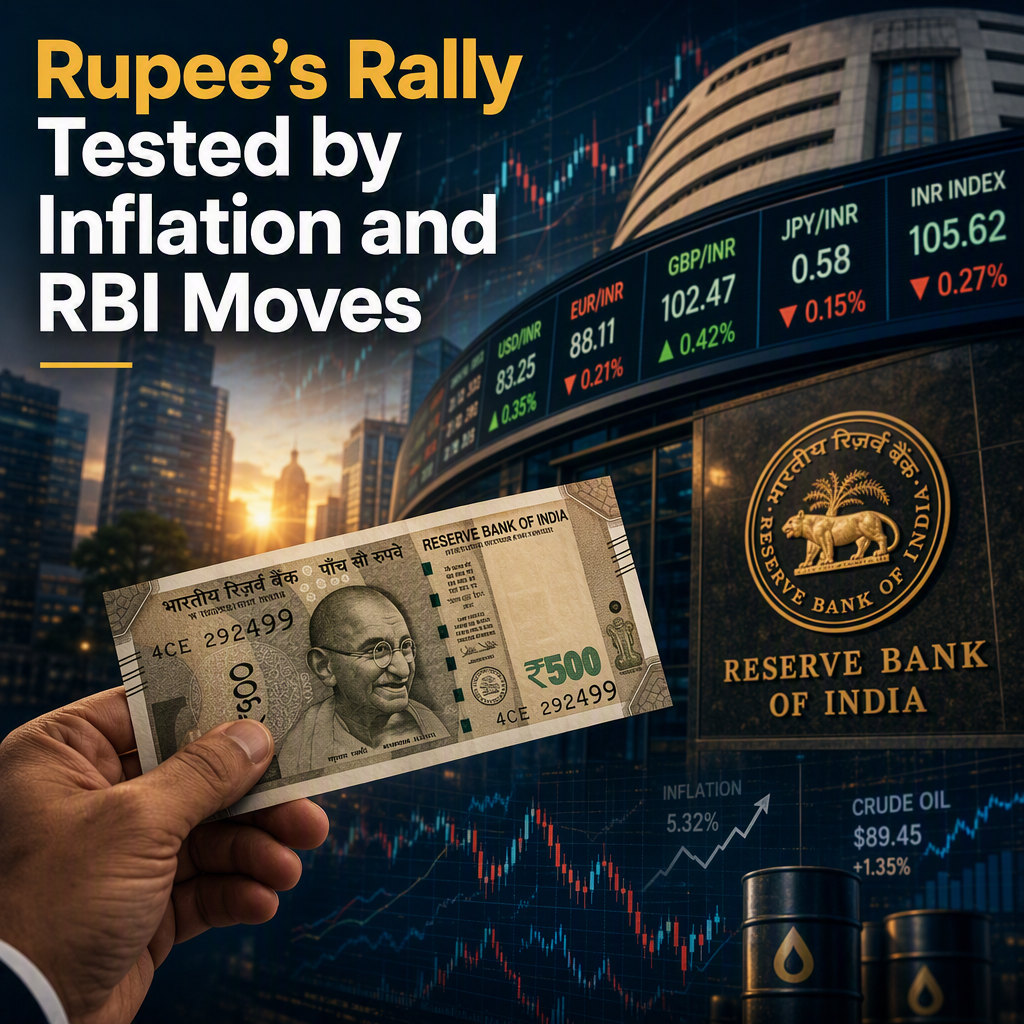
Societe Generale strategists report that the Indian Rupee (INR) began September with notable strength, as evidenced by the currency moving back below its 100-day moving average (100dma) at 95.15 for the first time since July 2025 [1]. This development has prompted questions regarding the role of Reserve Bank of India (RBI) intervention in supporting the currency, especially in the context of a hawkish U.S. Federal Reserve and elevated oil prices [1].
The bank highlights that India's second quarter Gross Domestic Product (GDP) growth was a stronger-than-expected 7.8% year-on-year, indicating that the economy has thus far managed to withstand external shocks [1]. However, Societe Generale's economist Kunal Kundu cautions that a weak GDP deflator, combined with sharply higher Consumer Price Index (CPI), food prices, and Wholesale Price Index (WPI) inflation, may be overstating the true pace of real economic activity [1].
Additionally, the RBI's net short dollar position reached a record $136.8 billion at the end of July, up from $103.3 billion in June, reflecting significant intervention in the currency markets [1]. Despite these efforts and the recent rupee gains, Societe Generale warns that the broader backdrop for the INR remains structurally challenging due to persistent inflation dynamics and the scale of RBI's intervention [1].
CONCLUSION
While the Indian Rupee has shown resilience in early September, supported by RBI intervention and robust GDP growth, underlying inflationary pressures and structural challenges persist. Societe Generale suggests that the sustainability of the rupee's gains remains uncertain amid these headwinds.