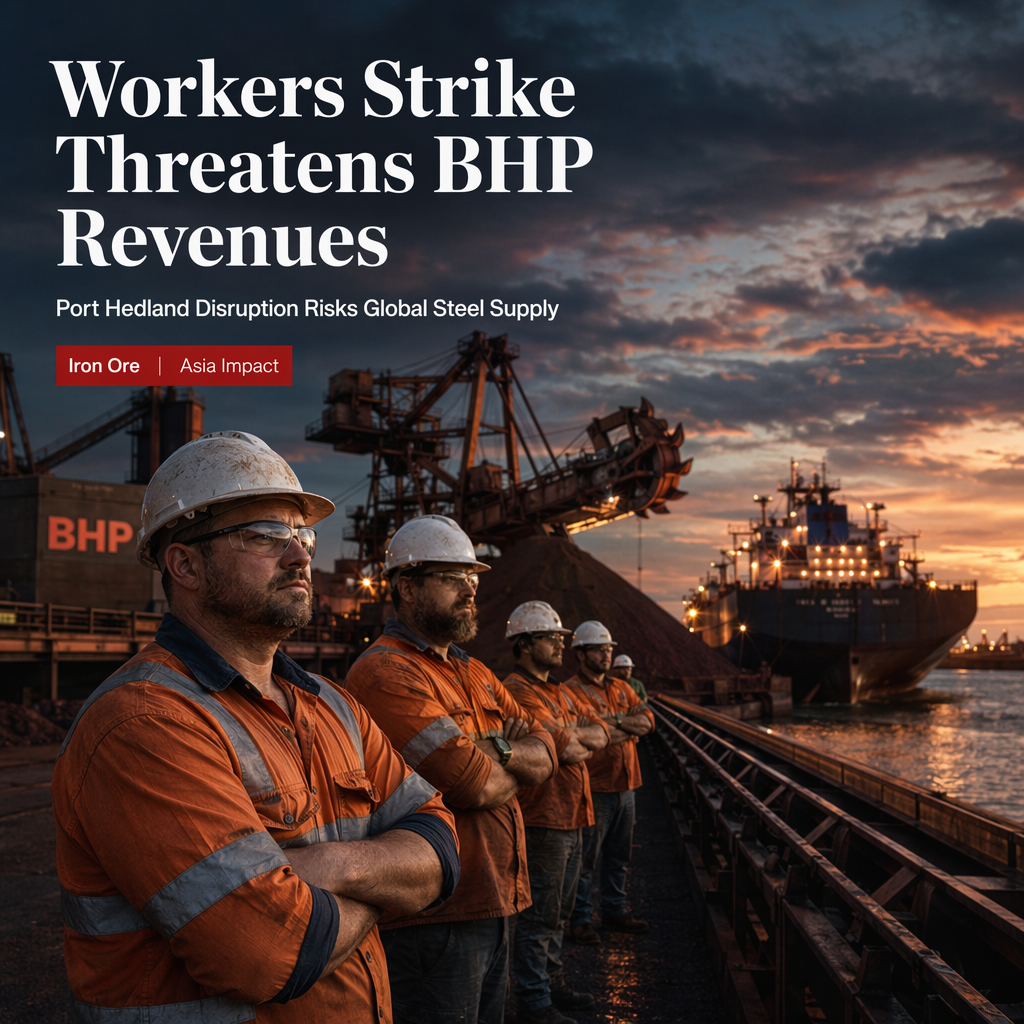
Unions representing workers at Port Hedland, the world's largest iron ore bulk export port in Australia, have announced plans for an 8-hour strike. This action targets BHP, a major resource company, and is expected to potentially cost the company tens of millions of dollars in lost revenue and possible penalties from delayed contracts, according to union estimates [1]. The strike threatens to delay iron ore exports destined for steel mills in China, Japan, and South Korea, all of which are heavily reliant on Australian iron ore for their steel production [1].
The timing of the strike is particularly significant as demand for iron ore remains strong in Asia. Market analysts are closely monitoring the situation for any impact on iron ore prices and potential supply chain disruptions. They warn that a prolonged strike could lead to price volatility and have ripple effects throughout the steel manufacturing sector, especially in Asia [1].
BHP has not issued specific trading advice but is actively engaging with unions in an effort to prevent escalation. Market sentiment is described as cautious, with traders watching for signs of potential supply constraints. Immediate resistance levels for iron ore prices may be tested if port operations are disrupted, and technical indicators suggest that volatility could increase in the near term [1].
An industry analyst noted, 'Any delay at Port Hedland would be felt across global steel supply chains,' emphasizing that the risks to BHP extend beyond lost sales to include reputational and contractual impacts with their largest customers [1].
CONCLUSION
The planned 8-hour strike at Port Hedland poses a significant risk to BHP's revenues and could disrupt global steel supply chains, particularly in Asia. Market participants are adopting a cautious stance, anticipating potential price volatility and supply constraints if the dispute is not resolved swiftly.