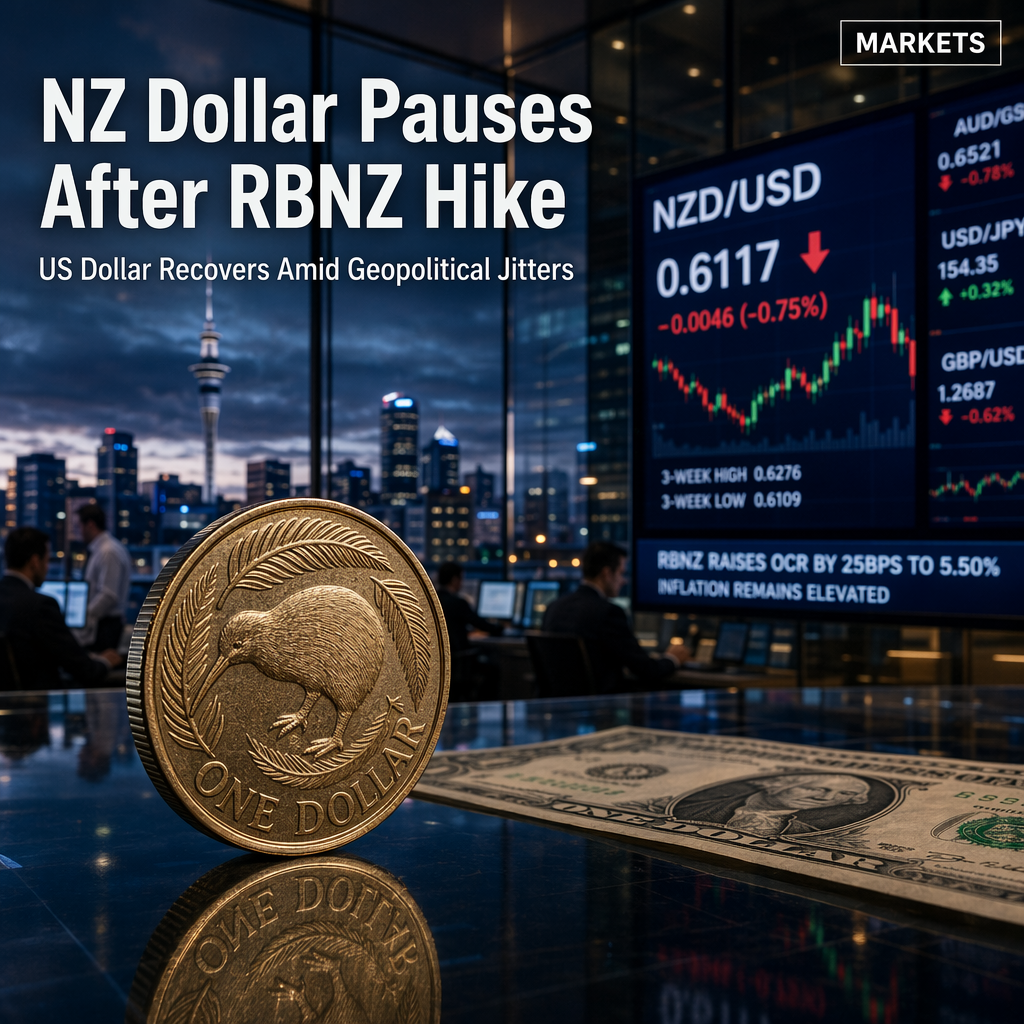
The New Zealand Dollar (NZD) eased from its three-week highs near 0.5800 against the US Dollar (USD) on Friday, trading around the 0.5775 level after reaching 0.5794 earlier in the day [1]. Despite this pullback, the NZD is on track for a 1% weekly appreciation, largely driven by a hawkish 25 basis point hike by the Reserve Bank of New Zealand (RBNZ) earlier in the week [1]. The RBNZ also hinted at further monetary tightening in the coming months to bring inflation to its 2% target, with investors now pricing in two additional rate hikes this year, which has provided broad support for the NZD [1].
Meanwhile, the US Dollar trimmed its losses during a calm European trading session on Friday, as investors considered rumors of diplomatic efforts to bring the US and Iran back to negotiations. Hostilities between the two countries had paused after a series of tit-for-tat attacks earlier in the week, but the continued closure of the key Strait of Hormuz kept risk appetite subdued among investors [1].
In the United States, the minutes from the Federal Reserve’s latest monetary policy meeting did not provide support for the US Dollar. While the Fed reiterated its commitment to bringing inflation to target, the rate projections revealed a split committee, leaving investors uncertain about the timing of the next interest rate hike [1].
Overall, the NZD’s recent strength is attributed to the RBNZ’s hawkish stance and expectations for further rate increases, while the USD’s recovery on Friday was influenced by geopolitical developments and mixed signals from the Fed [1].
CONCLUSION
The New Zealand Dollar’s gains this week were underpinned by the RBNZ’s rate hike and hawkish outlook, though it retreated from recent highs as the US Dollar rebounded. Market sentiment remains cautious amid ongoing geopolitical tensions and uncertainty over future Fed policy moves.