
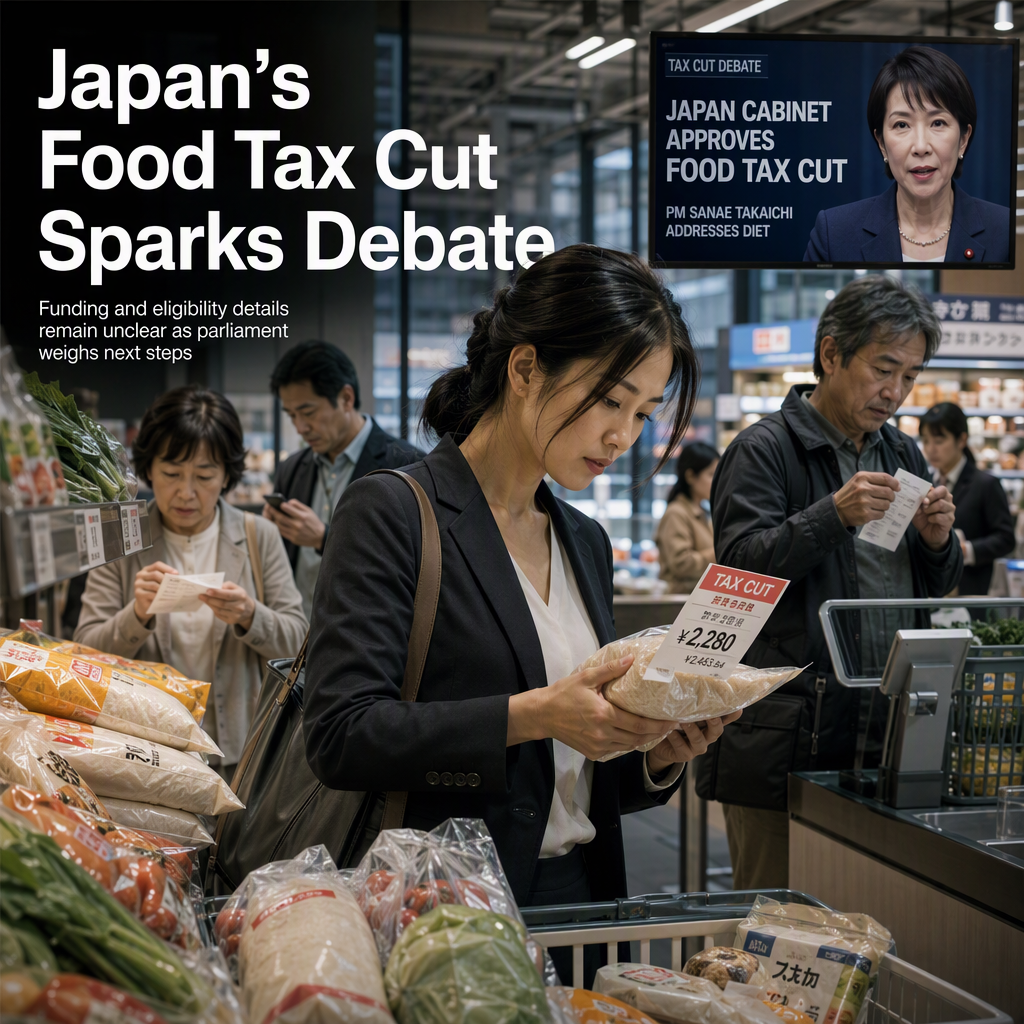
Japan's cabinet has approved a temporary consumption tax cut on food, but many critical details remain unresolved, including the funding source and eligibility criteria, which are expected to be debated in parliament [1]. The decision, announced on Friday, has generated cautious optimism among some market participants, but also skepticism from financial analysts due to the lack of clarity on how the tax cut will be financed and who will benefit [1].
Key figures such as Prime Minister Sanae Takaichi have been involved in the discussions, but the government has not yet provided specifics regarding the duration of the tax cut, the projected drop in tax revenue, or its anticipated impact on consumer prices for food and drink items [1]. Economists have warned that without a clear funding mechanism, the tax cut could exacerbate Japan's fiscal pressures, especially as the country faces inflation that has raised prices on 3,000 food and drink items [1].
The government's initiative aims to support households and stimulate consumption, but it is set against a backdrop of fiscal constraints and scrutiny over whether new deficit bonds will be issued to finance the relief [1]. Market sentiment remains cautious, with mixed reactions observed in early trading as investors await further details on the scope and implementation timeline of the tax cut [1].
Forward-looking statements from analysts suggest that the outcome of parliamentary discussions will be crucial in determining the market's response, as the specifics of the tax cut's funding and eligibility are still to be finalized [1].
CONCLUSION
Japan's cabinet approval of a food tax cut has introduced both optimism and uncertainty into the market, with key details such as funding and eligibility yet to be determined. Market participants are expected to remain cautious until parliament provides more clarity on the measure's scope and fiscal impact.