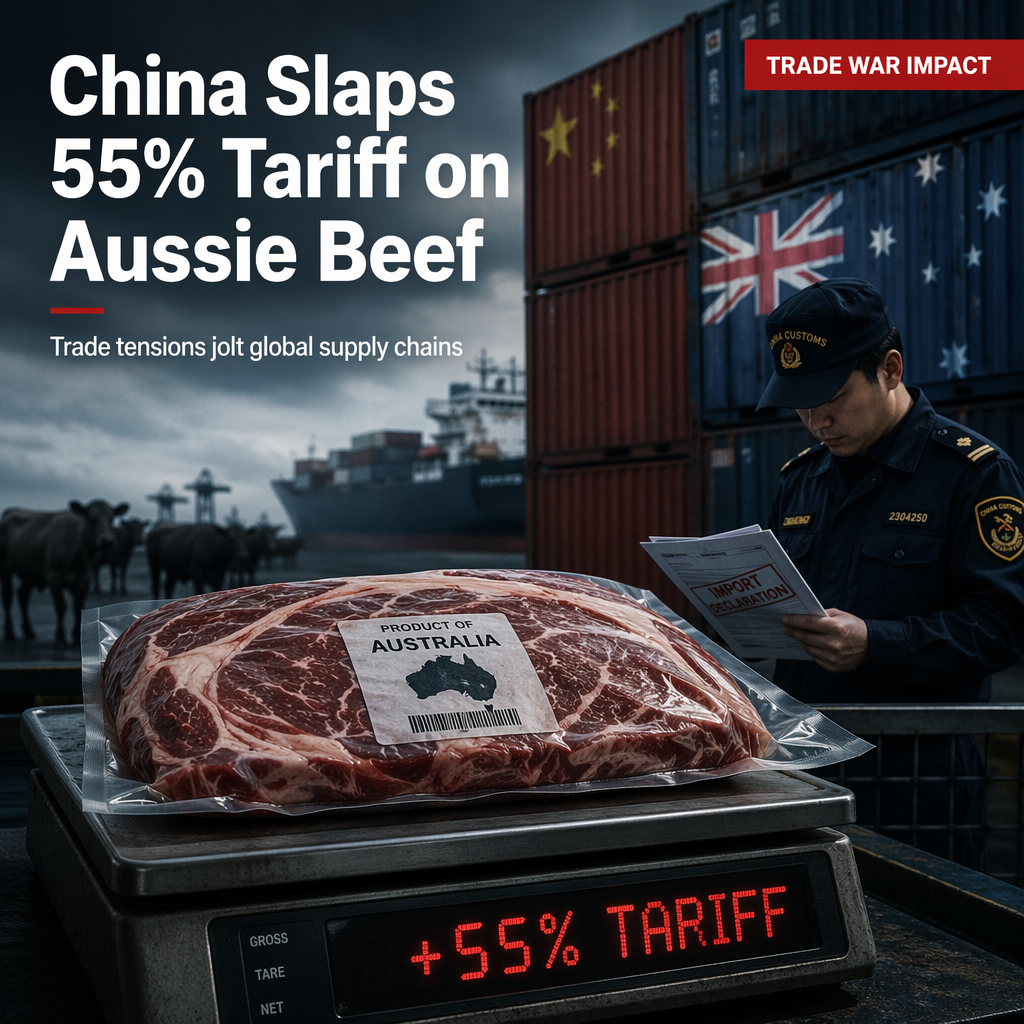
China announced on Friday that its import quota for Australian beef has been reached, triggering the imposition of a 55% tariff on Australian beef imports starting Saturday [1]. This sudden tariff hike is expected to significantly impact Australian beef producers, who now face the challenge of finding alternative markets or renegotiating with Chinese importers to maintain their market share under the new trade conditions [1]. China is the world's largest importer of beef, and Australian beef is highly regarded in the Chinese market, making the tariff a major concern for the Australian meat industry [1].
While the article on Australian beef focuses on the direct impact of the new tariff, a separate report highlights ongoing trade tensions between China and the United States, which have also affected other sectors such as tobacco [2]. The Hong Kong-listed arm of China's state-owned tobacco monopoly warned of a sharp decline in earnings for the first half of the year, attributing this to a significant reduction in leaf imports from the U.S. [2]. The company expects a double-digit fall in both its top and bottom lines, though no specific figures were provided [2]. The reduction in U.S. leaf imports has forced the company to adjust its sourcing strategy, likely increasing costs and affecting profit margins [2].
Both articles underscore the vulnerability of key Chinese industries to shifts in global supply chains and trade policy changes. In the case of beef, Australian exporters are likely to lose competitiveness in the Chinese market due to the high tariff, while in tobacco, Chinese companies are facing profit pressures due to reduced access to U.S. raw materials [1][2]. No forward-looking statements or analyst opinions were provided in either article.
CONCLUSION
China's imposition of a 55% tariff on Australian beef and the reduction in U.S. tobacco leaf imports both highlight the significant impact of trade policy changes on global supply chains and corporate earnings. These developments are likely to create substantial challenges for exporters and importers in affected sectors, with immediate negative implications for market participants.