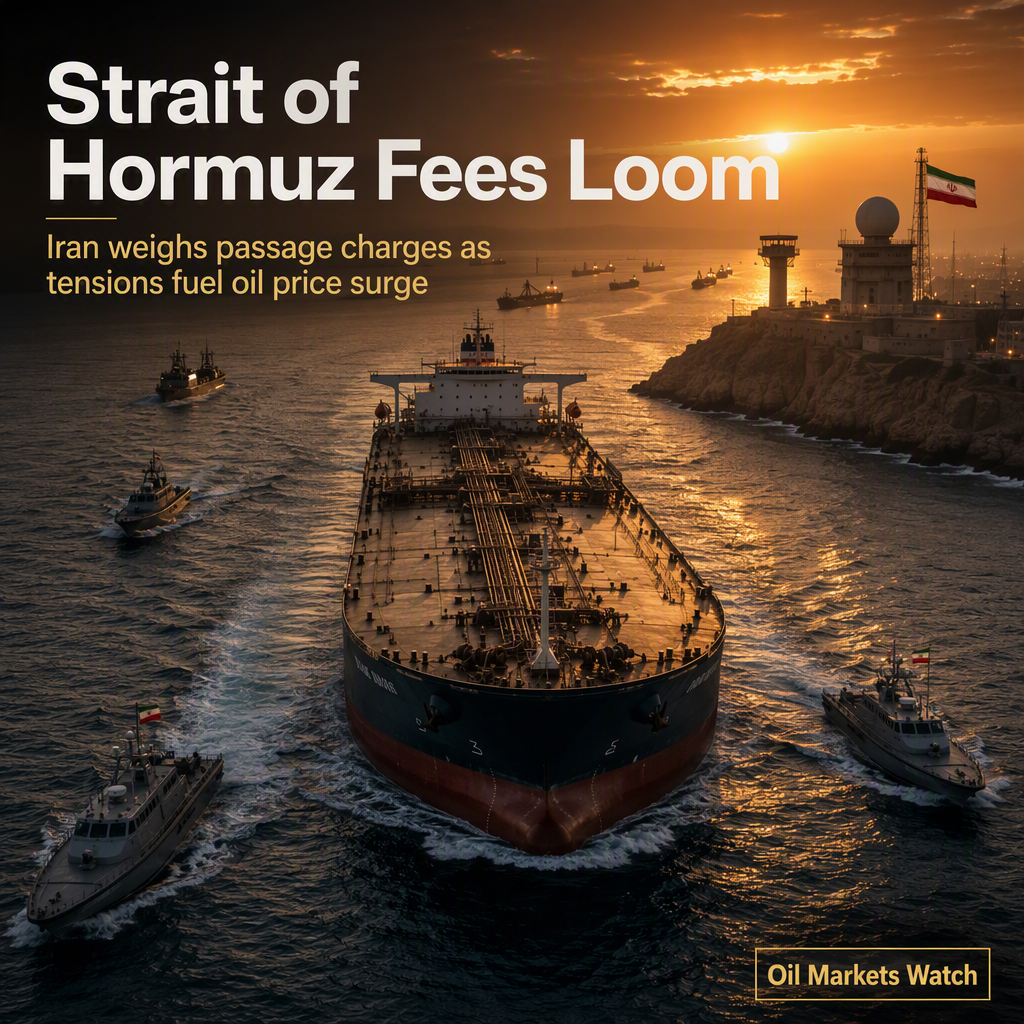
Iran is moving toward establishing a framework to charge fees for vessels passing through the Strait of Hormuz, drawing inspiration from Turkey's model, which has seen an eightfold increase in strait passage fees over four years and generated $259 million in revenue in the past year [1]. This development comes as global oil inventories are declining and amid the threat of new U.S. economic sanctions against Iran [1]. Market participants are closely monitoring the situation, as the introduction of passage fees could increase operational costs for shipping companies, potentially leading to higher freight rates and global crude prices [1].
Iranian officials are reportedly studying the legal and procedural aspects of implementing a fee structure similar to Turkey's, but no formal announcement has been made regarding the timing or specific details of the fees [1]. The move is seen as an attempt by Iran to compensate for lost export revenue due to sanctions and to assert its strategic control over the critical waterway, which is a vital chokepoint for global energy supplies [1].
Separately, Iran’s Security Chief Mohsen Rezaei stated that Tehran is preparing a list of conditions to open the Strait of Hormuz, including the requirement to end the war in the region, as reported by Reuters and Iranian state media [2]. Rezaei emphasized that the U.S. must take practical steps to fulfill Iran’s conditions before the strait is opened [2]. An Iranian official also warned that Iran would target U.S. economic interests if the maritime blockade continues [2]. During a ceasefire, Rezaei claimed that Iran had 'broken the maritime blockade' and exported between 70 million and 80 million barrels of oil, with oil sales returning to pre-sanctions levels [2].
The market has reacted to these developments, with West Texas Intermediate (WTI) crude oil prices rising 1.77% to $82.90 at the time of reporting [2]. Analysts suggest that any disruption or increased costs associated with the Strait of Hormuz could have immediate impacts on international energy markets and price stability [1].
CONCLUSION
Iran's consideration of passage fees for the Strait of Hormuz and its conditional stance on reopening the waterway have heightened concerns over global energy supply and contributed to a rise in oil prices. Market participants remain cautious as the situation develops, with the potential for further volatility in energy markets if Iran proceeds with its plans or if regional tensions escalate.