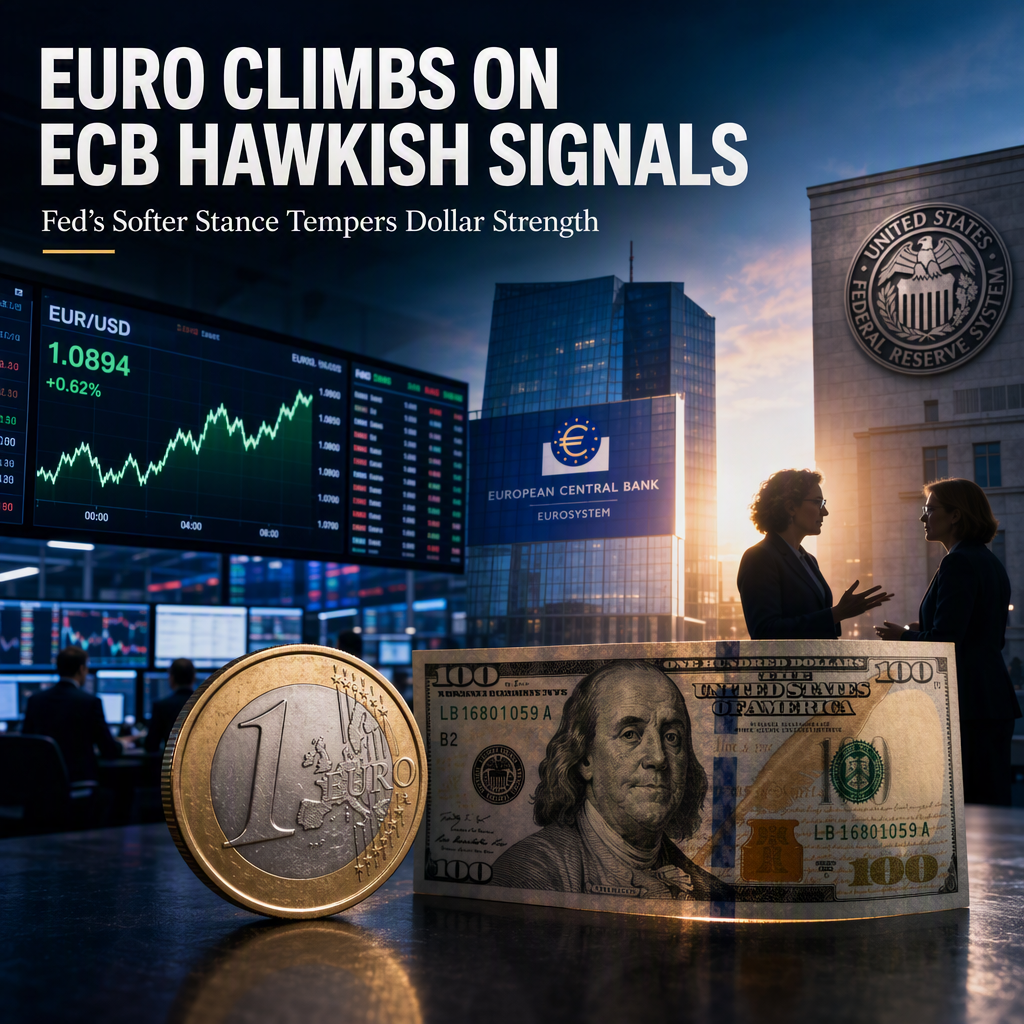
The Euro strengthened against the US Dollar, with EUR/USD trading around 1.1650 during Asian hours on Friday, following minor gains the previous day. This upward movement was driven by the European Central Bank’s (ECB) hawkish monetary policy outlook. ECB Executive Board member Isabel Schnabel emphasized the need for continued increases in borrowing costs, citing persistent inflation risks stemming from the ongoing Middle East conflict and a resilient Eurozone economy. As a result, market expectations have shifted, with the ECB Watch tool now indicating nearly a 96% probability of a deposit rate hike to 2.50% at the upcoming September policy meeting [1].
Despite the Euro’s gains, further appreciation of the EUR/USD pair has been limited by the persistent strength of the US Dollar. This is attributed to stronger-than-expected US inflation data released earlier in the week, which reinforced expectations that the Federal Reserve (Fed) will raise interest rates before the end of the year. Market pricing reflects a probability above 70% for a December Fed rate hike, while the likelihood of a rate change at the September meeting stands at approximately 65% for rates remaining unchanged [1].
Market participants are also focusing on the annual economic symposium in Jackson Hole, Wyoming, particularly an upcoming speech by Federal Reserve Chairman Kevin Warsh, which could provide further signals on US monetary policy direction [1].
Additionally, Fed’s Collins delivered a less hawkish tone than usual, with the FXS Speechtracker score at 4.8/10 compared to a baseline of 5.7/10. Collins emphasized that current restrictive policy should lead to gradual disinflation and downplayed the recent inflation surprise as a temporary bump rather than a shift in trend. The FXS Fed Sentiment Index fell by 2.44 points to 129.11, indicating a modest reduction in perceived hawkishness, though the index remains above the neutral mark of 100. This suggests that while Fed communication is still hawkish overall, Collins’ softer stance has tempered immediate upside for the Dollar and broader risk sentiment [1].
CONCLUSION
The Euro’s gains are supported by the ECB’s hawkish outlook and expectations of a September rate hike, while the US Dollar’s strength is tempered by a less aggressive tone from Fed officials. Market attention now turns to upcoming central bank communications, particularly at Jackson Hole, for further policy direction. Overall, sentiment remains cautiously optimistic for the Euro, with medium market impact expected.