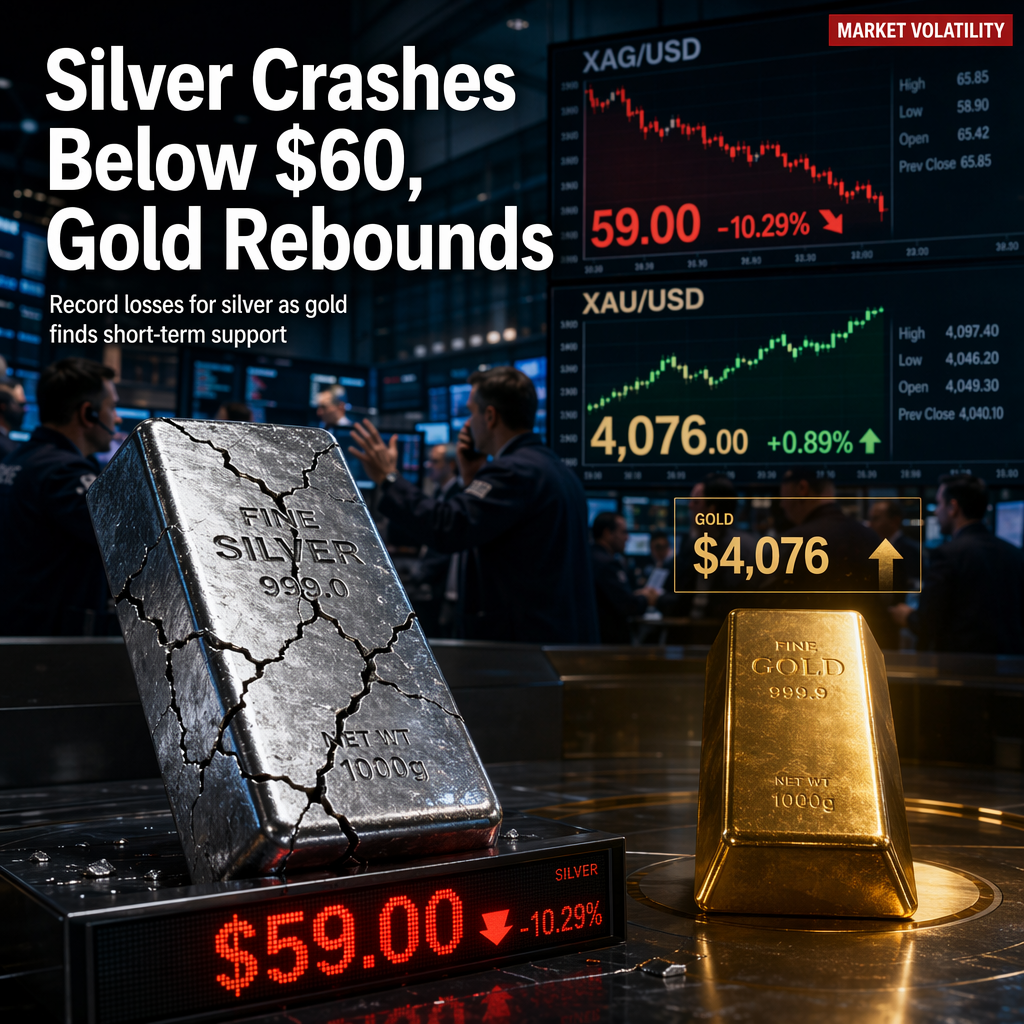
Silver prices (XAG/USD) experienced a sharp decline, breaking below the $60 mark for the first time since December 2025, and registering a weekly loss of 10.29% despite a nearly 2% gain on Friday. The metal traded at $59.00 after hitting a low of $55.70, with a total drop of nearly 22% in June from a record high of $121.66 per troy ounce. Technical indicators, such as the Relative Strength Index (RSI), suggest that sellers remain in control, and the path of least resistance is downward. Key support levels include the June 24 swing low of $55.63, the November 13, 2025 cycle high-turned-support at $54.39, and the $50.00 mark. For a bullish reversal, buyers would need to clear $60.00 and the 200-day Simple Moving Average at $69.56. The decline is attributed to expectations of higher-for-longer interest rates from major central banks, exerting downward pressure on silver prices [1].
In contrast, gold (XAU/USD) rebounded, hitting a two-day high of $4,096 and trading at $4,076, up 1.24%. The recovery was driven by falling US Treasury yields, which dropped nearly 14 basis points since Wednesday to 4.374%, and a weaker US Dollar Index (DXY), down 0.10% at 101.33. The latest US inflation report showed the Core Personal Consumption Expenditures (PCE) Price Index rising by 3.4% year-over-year in May, up from April's 3.3%, and remaining well above the Federal Reserve's 2% target. Fed officials, including Minneapolis Fed President Neel Kashkari and Chicago Fed President Austan Goolsbee, signaled that further tightening may be necessary, with Kashkari penciling in one rate hike for 2026. Market data indicates a 73% probability of a rate hike at the September Fed meeting, with futures implying 18.46 basis points of tightening. Upcoming US economic events include Fed Chair Kevin Warsh's appearance before Congress, June Nonfarm Payrolls, and the ISM Manufacturing PMI release [2].
Gold's technical outlook remains downward-biased unless buyers can clear resistance at $4,098 and $4,100. The RSI is moving toward neutral but remains bearish, though a positive divergence suggests upward momentum. Silver, meanwhile, faces strong selling pressure, with technical and macroeconomic factors pointing to further downside unless key resistance levels are reclaimed [1][2].
CONCLUSION
Silver's steep decline below $60 and record weekly losses highlight bearish sentiment driven by expectations of prolonged high interest rates, while gold's rebound reflects short-term support from falling yields and a weaker dollar. Both metals face significant technical resistance, and market participants are closely watching upcoming US economic data and Fed policy signals for further direction. The overall market impact is high, with continued volatility expected in precious metals.