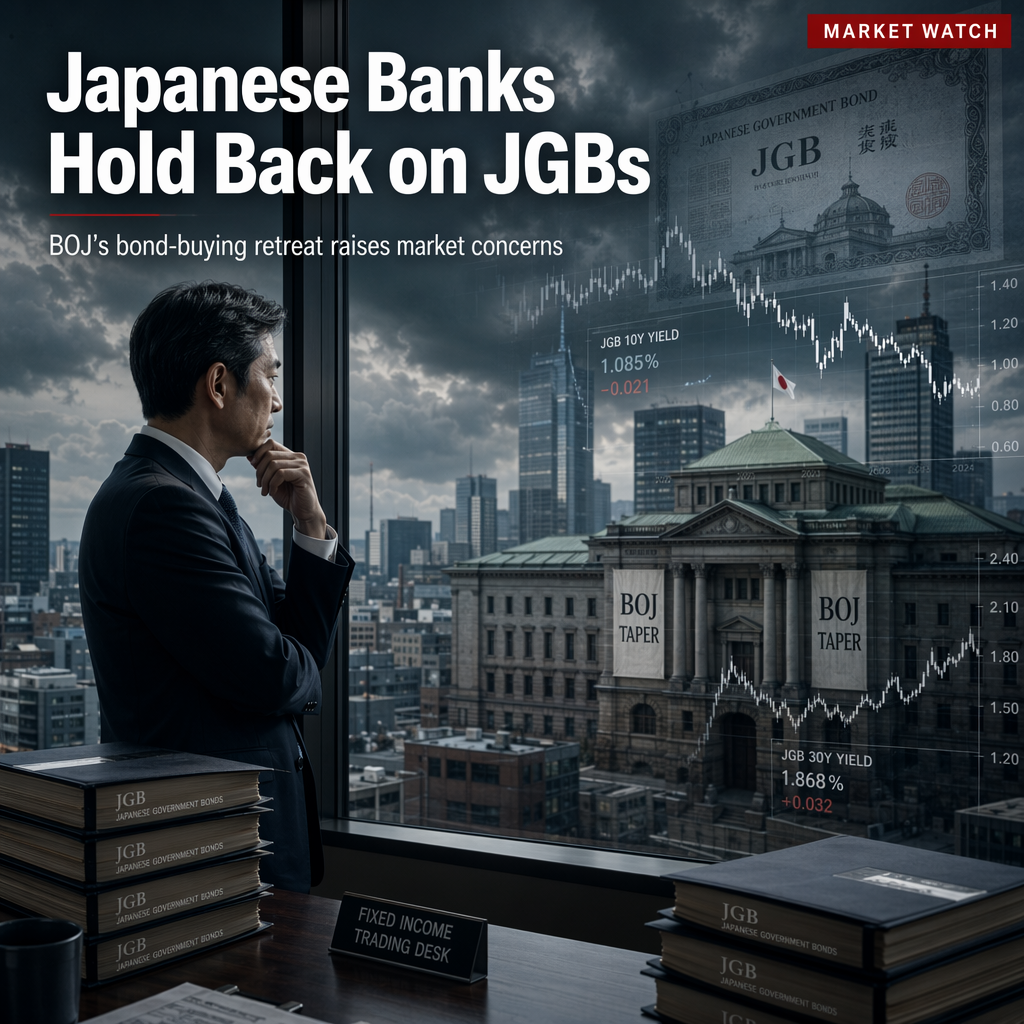
Japanese banks have shown hesitation in increasing their purchases of Japanese government bonds (JGBs) as the Bank of Japan (BOJ) continues to taper its bond-buying program, a move scheduled to last through April 2027 [1]. Currently, Japanese banks' holdings of JGBs stand at only 40% of their previous peak, a decline attributed to rising interest rates that have made JGBs less attractive and depressed new purchases [1].
This reluctance by banks to step in as major buyers comes at a time when the BOJ is reducing its involvement in the JGB market, raising concerns among market participants about potential supply-demand imbalances [1]. The increase in long-term yields has further discouraged banks from buying JGBs, as they face the risk of valuation losses on their existing bond portfolios if rates continue to rise [1].
The article underscores the uncertainty surrounding who will absorb the increased supply of JGBs as the central bank steps back, highlighting the challenging environment for a smooth transition away from the BOJ's large-scale bond purchases [1]. No specific analyst opinions or forward-looking statements are provided beyond the general market concerns about the future role of banks as buyers [1].
CONCLUSION
The BOJ's ongoing tapering of JGB purchases has not yet prompted Japanese banks to increase their bond holdings, raising concerns about supply-demand imbalances in the market. Rising yields and the risk of valuation losses are key factors behind banks' reluctance. The situation presents uncertainty for the JGB market as the central bank reduces its support.