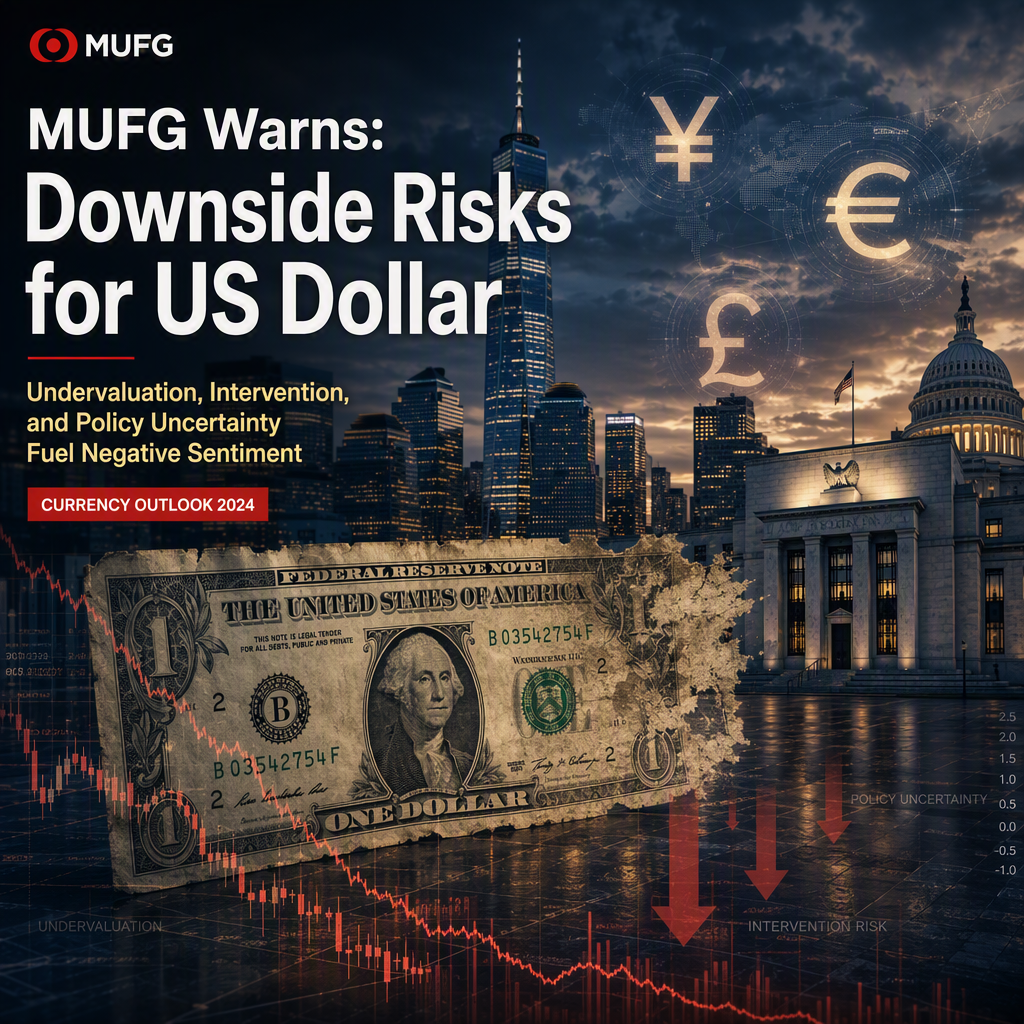
MUFG's G10 regression models indicate that the US Dollar is currently undervalued against eight of the nine other G10 currencies, suggesting that additional risk premia are being priced into foreign exchange markets due to factors such as Middle East conflict, inflation concerns, and perceived political interference at the Federal Reserve [1]. The analysis points to the possibility that the US Dollar has already priced in a potential ceasefire deal in the Middle East more rapidly than other markets, which is reflected in its undervaluation according to MUFG's models [1].
Recent intervention in the currency markets, particularly US-backed efforts to strengthen the Japanese yen, is also cited as a factor weighing on the Dollar's performance. Although the US Treasury did not directly sell US Dollars, its strong support for Japan's actions is seen as a signal that could encourage broader Dollar devaluation, especially against Asian currencies [1]. Scott Bessent notes that the undervalued yen may be dragging down valuations for Asian FX more generally, with the renminbi also potentially undervalued. The US Treasury appears to be subtly endorsing a weaker Dollar versus Asia [1].
Political developments are adding to the uncertainty. Reports of frequent communications between President Trump and Fed Chair Warsh are reinforcing concerns about increased political influence over the Federal Reserve, which could undermine its independence. This uncertainty is likely contributing to higher yields without providing the Dollar with its usual support, and may prompt global investors to hedge their US Dollar exposure, as seen in January of this year [1].
Overall, the combination of geopolitical risks, policy interventions, and political uncertainty is creating downside risks for the US Dollar, with MUFG warning that these factors could lead to further Dollar weakness if investor sentiment deteriorates [1].
CONCLUSION
MUFG's analysis highlights that the US Dollar faces downside risks due to undervaluation, geopolitical tensions, and concerns over Federal Reserve independence. Market interventions and political uncertainty are contributing to a cautious outlook, with potential for increased Dollar hedging by global investors. The overall market sentiment toward the Dollar remains negative under current conditions.