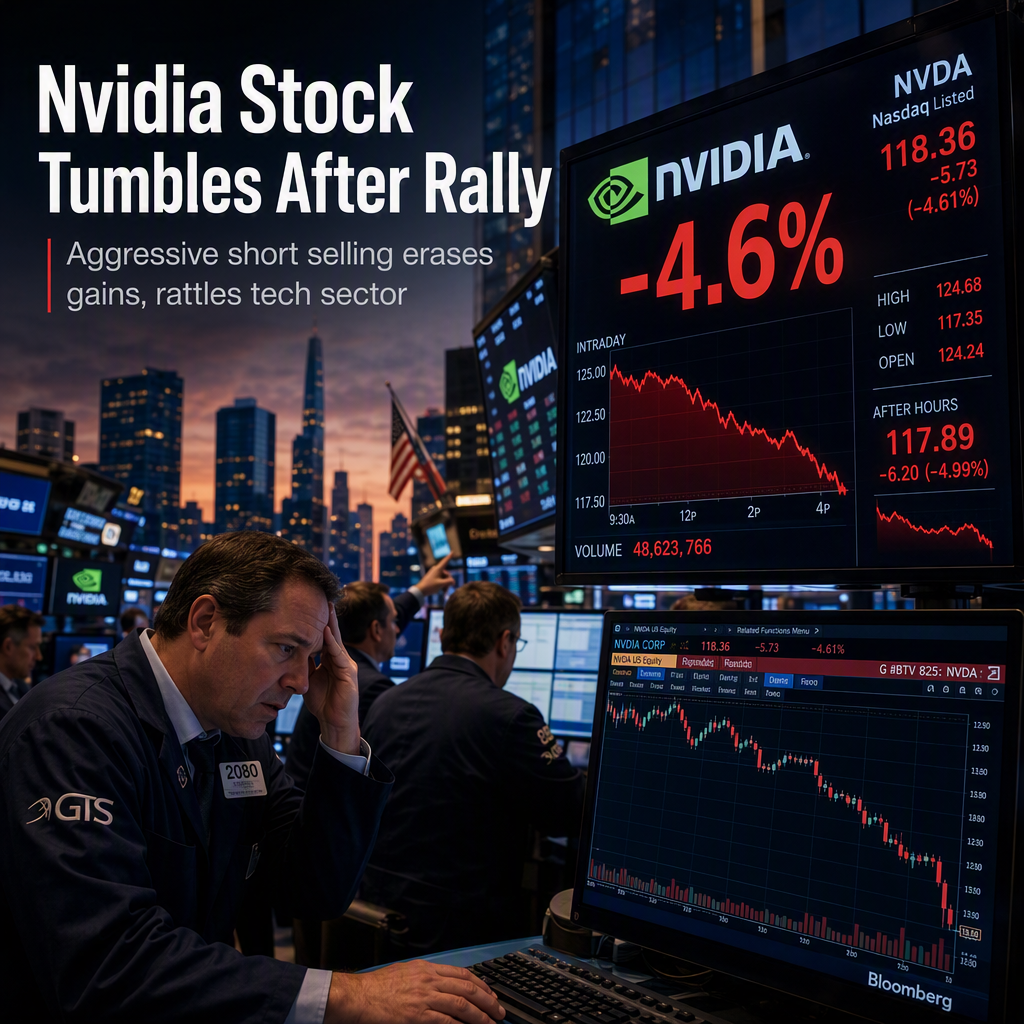
On Friday, Nvidia experienced a sharp reversal in its stock price, dropping from an intraday high of $229.26 to close at $217.55, marking a 4.6% decline for the day [1]. This sell-off followed a nearly 9% surge on Thursday after Nvidia reported its quarterly earnings Wednesday night, with Friday's session erasing more than half of Thursday's gains [1]. The trading volume was significant, with twenty-four billion shares exchanged over five hours [1].
The pattern of Nvidia's reversal was compared to Intel's post-earnings performance in July, where Intel's stock jumped in extended trading after a strong quarter but sank during the following regular session [1]. The Nvidia sell-off, however, occurred a day after its earnings-driven rally, highlighting a similar but slightly delayed reaction [1].
The article attributes the aggressive selling to the trading strategies of Situational Awareness, an AI-focused hedge fund led by Leopold Aschenbrenner, which had previously targeted companies like Microsoft, Workday, and others in the iShares Expanded Tech-Software Sector ETF (IGV) [1]. The fund's short positions were described as forceful and influential, reminiscent of the market dynamics seen after the SEC scrapped the uptick rule in 2007, which previously limited the impact of short selling [1].
Despite theories about the decline of software-as-a-service companies, firms such as Workday, ServiceNow, and Salesforce continued to report decent quarters, challenging the so-called "SaaSpocalypse" narrative [1]. The article suggests that the trading style of Situational Awareness contributed to the swift and loud downward moves in targeted stocks, with Nvidia being the latest example [1].
CONCLUSION
Nvidia's stock reversal on Friday was driven by aggressive short selling following a strong earnings report, echoing patterns seen in other tech stocks like Intel. The event underscores the influence of hedge fund trading strategies and highlights ongoing volatility in the tech sector. Market participants should remain cautious as similar dynamics may continue to impact high-profile technology stocks.