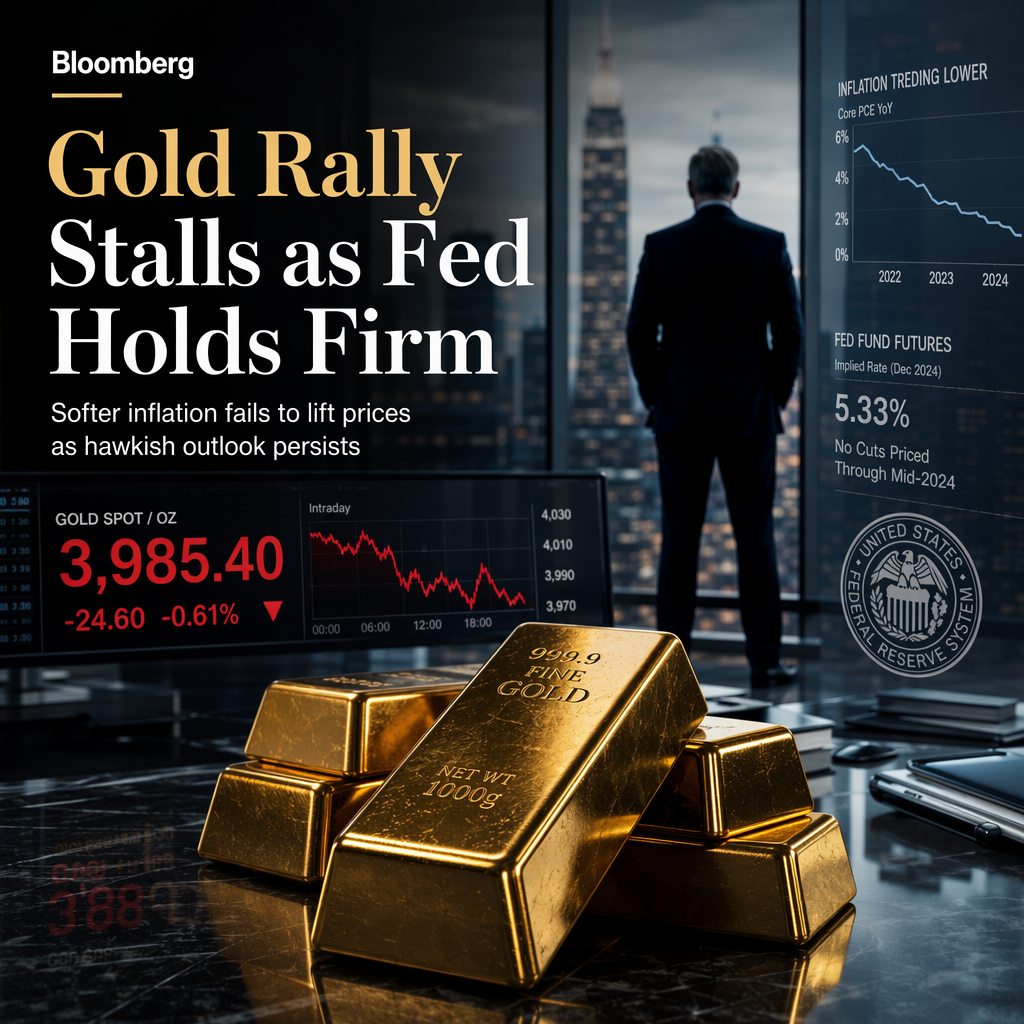
Gold's recent rally has stalled, with prices slipping back below USD 4,000 per troy ounce, according to Thu Lan Nguyen at Commerzbank. This pause comes despite weaker US inflation data, as both consumer and producer prices in June showed slower growth than expected, which initially dampened expectations for further US interest rate hikes. Previously, markets had priced in nearly two rate hikes by year-end, but now only a single 25-basis-point hike is fully anticipated. However, this shift in expectations provided only a brief boost to gold prices, which have since retreated below the USD 4,000 mark where they are currently trading [1].
Nguyen notes that the upside potential for gold remains limited in the near term due to the Federal Reserve's continued hawkish outlook and ongoing risks of energy price spikes stemming from the Middle East conflict. These factors are likely to keep expectations of further rate hikes alive for some time. A significant correction in gold prices is expected only if the market's assessment of the Federal Reserve's stance changes fundamentally [1].
There are, however, emerging views within the Federal Open Market Committee (FOMC) that could alter the outlook. For instance, Warsh has suggested that advances in artificial intelligence could boost productivity and have an inflation-dampening effect, a sentiment echoed by New York Fed President John Williams, who referenced a long-term downward trend in inflation. Should these perspectives gain traction, the necessity for additional rate hikes may be reconsidered, potentially benefiting gold prices both in the short and long term as the market prices out further hikes and perceives increased inflation risks from a more dovish Fed [1].
CONCLUSION
Gold's rally has lost momentum as the Federal Reserve maintains a hawkish stance despite softer US inflation data. Near-term upside appears limited unless the Fed signals a shift towards a more dovish policy, which could reignite gold's upward trajectory.