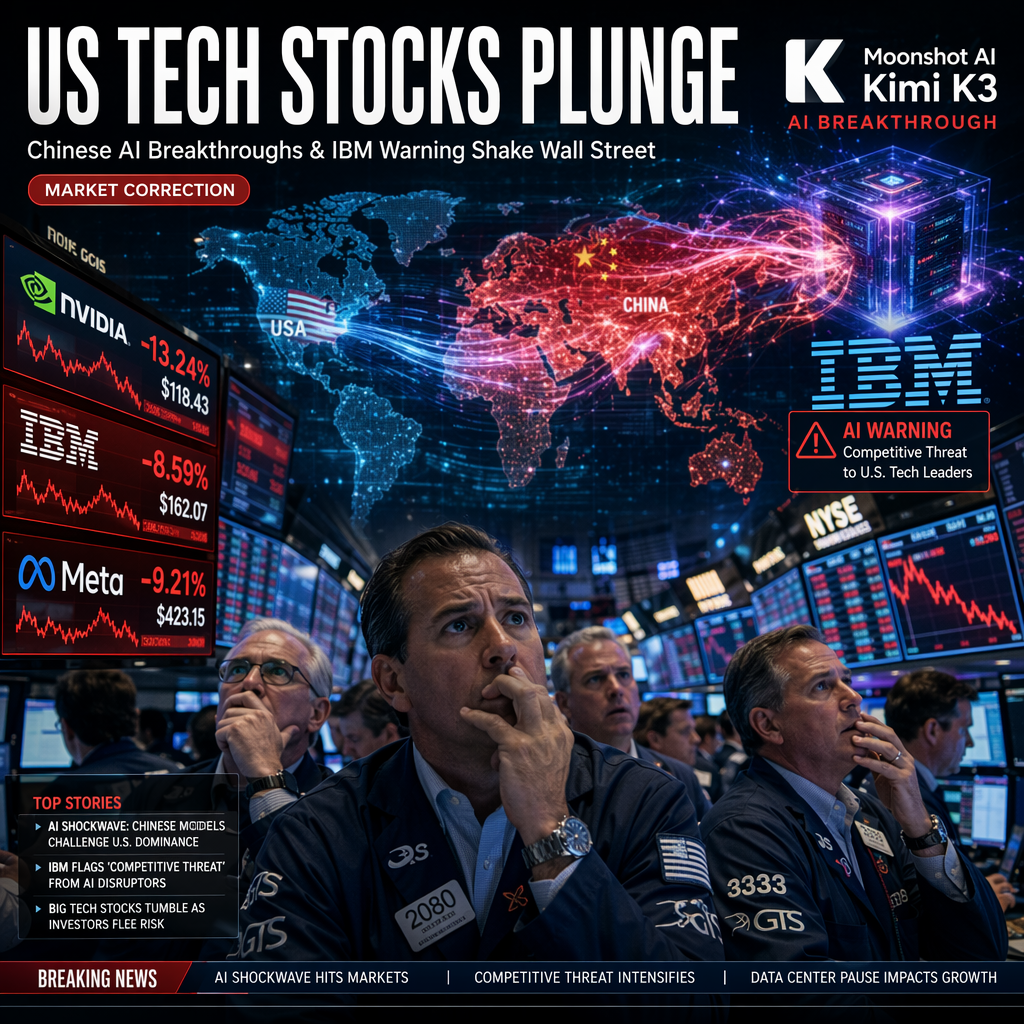
US technology stocks experienced a sharp decline following two major developments in the artificial intelligence sector. On Friday, a Chinese startup, Moonshot AI, unveiled its Kimi K3 model, a low-cost artificial intelligence system that investors fear could rival leading US AI platforms. This development heightened concerns about the narrowing technology gap between Chinese and US firms, particularly as Chinese companies offer AI services at substantially lower prices. The announcement triggered a significant correction in high-profile technology shares, including Nvidia and other major AI players, as investors worried about the potential erosion of pricing power and market share for established US firms. Analysts noted that the market was already sensitive to competitive threats, and the latest news from China intensified profit-taking in Big Tech stocks. Market participants described the move as a significant correction, with traders closely monitoring downside support levels for Nvidia and other technology giants. The competitive threat from China is expected to remain a key theme for investors evaluating US AI companies in the coming quarters [1].
Separately, IBM's shares fell by more than 23% at the market open on Tuesday after the company issued an AI-related warning, raising questions about whether companies are seeing sufficient near-term returns from their AI investments. This sharp drop sent a 'shockwave' through the tech industry, reflecting heightened investor uncertainty regarding the pace and profitability of AI spending. JPMorgan Chase CEO Jamie Dimon commented on the situation, stating that there is still considerable uncertainty over how AI will impact the workforce and cautioned against overreacting to fears about job losses, noting that new technologies have historically created new employment opportunities [2].
Additional developments included New York's decision to pause the construction of large AI data centers, which drew criticism from lawmakers and industry leaders who argued that the move could weaken the United States' competitive position in the global AI race. Meanwhile, Meta announced the expansion of its data center project in Richland Parish, Louisiana, to 5 gigawatts of compute capacity, making it one of the largest data centers in history [2].
The combination of competitive pressure from Chinese AI advancements and disappointing signals from IBM contributed to a broad sell-off in US technology stocks, with market participants expressing concern about both near-term profitability and long-term strategic positioning in the global AI landscape [1][2].
CONCLUSION
US technology stocks faced significant pressure due to competitive advances from Chinese AI firms and a sharp decline in IBM shares following an AI-related warning. Investor sentiment has turned cautious, with concerns about both immediate returns on AI investments and the long-term ability of US firms to maintain their market leadership. The market is expected to closely monitor further developments in global AI competition and corporate AI strategies.