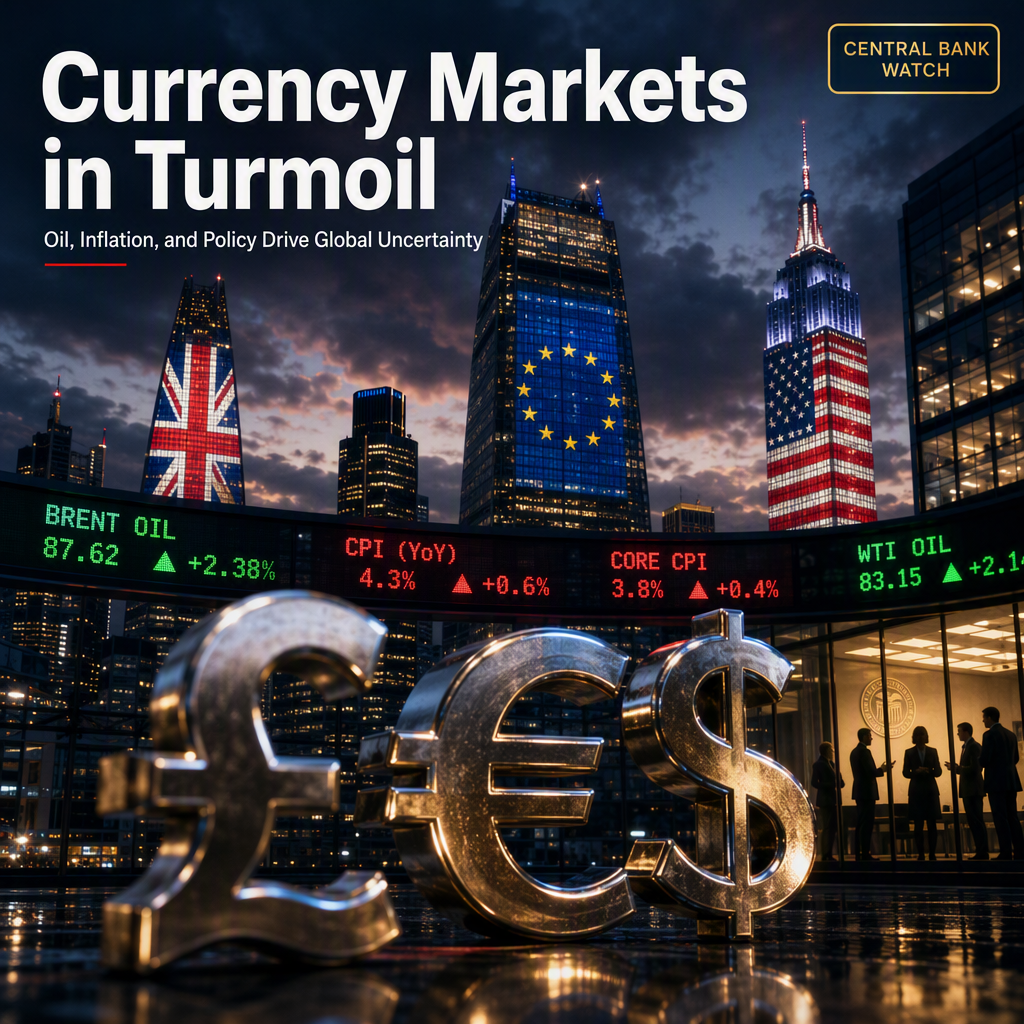
Recent developments in global currency markets have highlighted significant risks and uncertainties, particularly for the British Pound, Euro, and US Dollar. Rabobank's Senior FX Strategist Jane Foley points out that the British Pound remains vulnerable due to high foreign ownership of UK gilts and sensitivity to fiscal policy news. Chancellor Healey’s pro-growth rhetoric and commitment to fiscal rules have left questions over funding, with EUR/GBP staying range-bound but expected to drift higher towards 0.87 over the next three months. Foley notes that a hawkish Bank of England (BoE) meeting is already priced in, so any dovish signals could lead to a decline in the Pound [1].
For the Euro, ING’s Francesco Pesole observes that stronger second-quarter Eurozone growth, revised up from 0.4% to 0.6% quarter-on-quarter due to robust Irish performance, has kept the Euro relatively expensive. However, he maintains a short-term downside bias in EUR/USD, driven by expectations of a September Federal Reserve hike and worsening Eurozone commodity terms of trade. Pesole sees a move towards 1.150 in EUR/USD as realistic ahead of a potentially dovish European Central Bank (ECB) meeting, noting that aggressive tightening expectations may not be met [2].
The US Dollar has received a modest lift from Brent crude oil's surge toward $100 a barrel, which is pressuring stocks and bonds. Brown Brothers Harriman’s Elias Haddad emphasizes that the upcoming US August Consumer Price Index (CPI) report will be decisive for the Federal Reserve’s September 16 meeting. A strong CPI print would favor a rate hike and support the Dollar, while a softer reading could trigger a dovish repricing and Dollar weakness. Haddad also notes that even if a September Fed hike occurs, further USD strength may be limited due to tightening by other major central banks, with the ECB expected to deliver a 25bps hike on Thursday. The August New York Fed consumer expectations survey is also highlighted as important for monitoring long-term inflation expectations [3].
According to [1], the Pound is particularly sensitive to fiscal news due to high foreign ownership of gilts, while [2] reports that Eurozone resilience has kept the Euro expensive but downside risks remain. [3] stresses that oil prices and CPI data are shaping the Dollar's path, with central bank decisions expected to play a critical role in upcoming market moves.
CONCLUSION
Currency markets are facing heightened volatility as fiscal risks, central bank decisions, and commodity price surges converge. The Pound is seen as vulnerable to policy shifts, the Euro faces downside risks ahead of the ECB meeting, and the Dollar's trajectory hinges on upcoming CPI data and Fed action. Investors should remain alert to these key events, as they are likely to drive significant market movements in the near term.