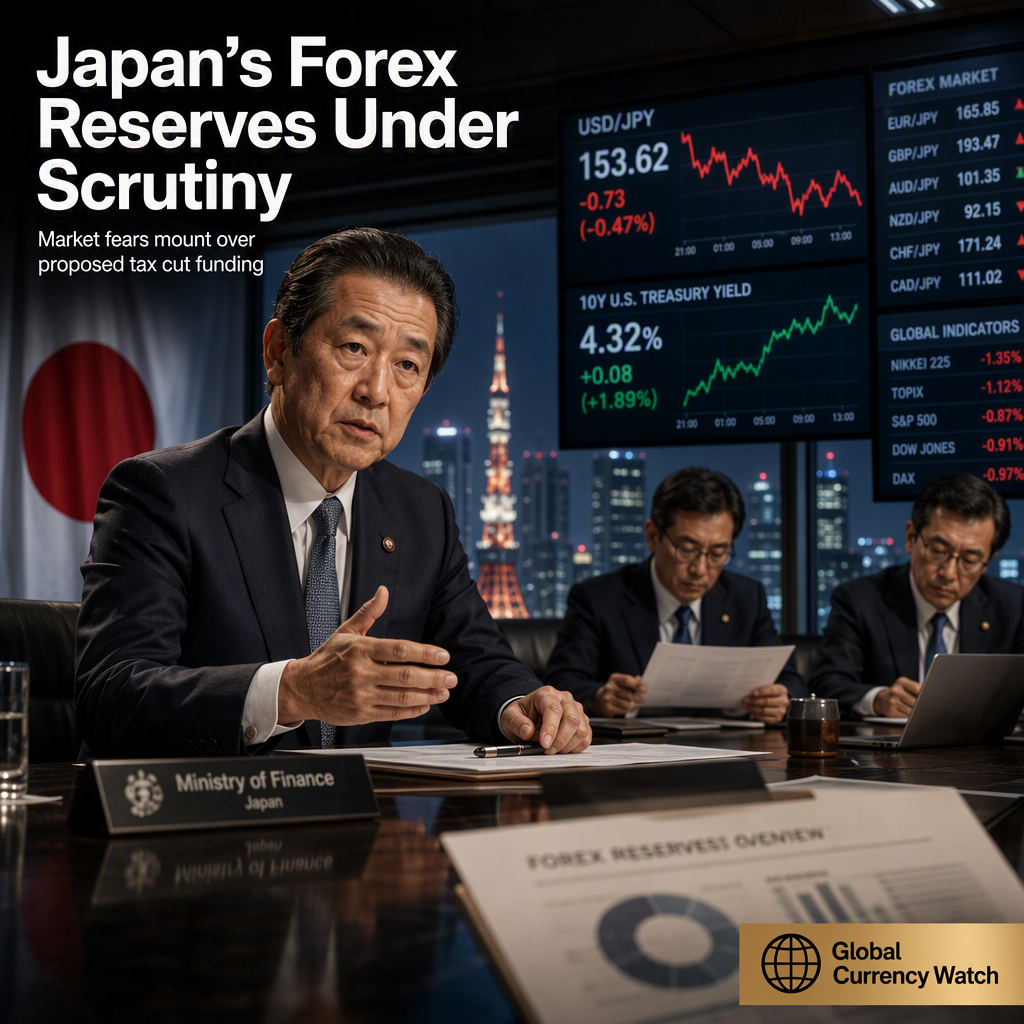
The ongoing debate in Japanese politics centers on how to fund a planned consumption tax cut, with particular focus on whether Japan should utilize its substantial foreign exchange reserves for this purpose [1]. Finance Minister Satsuki Katayama and U.S. Treasury Secretary Scott Bessent recently coordinated on a yen-buying intervention earlier in the summer, underscoring the sensitivity of foreign exchange markets to Japan's policy decisions [1]. The article argues that raiding Japan's foreign reserves to pay for the tax cut would likely push up U.S. Treasury yields and weaken the yen, potentially undermining confidence in Japan's fiscal discipline and sending jitters throughout both Japanese and global markets [1].
Japan's foreign reserves, among the world's largest, are traditionally used as a buffer to stabilize the yen during periods of volatility, not as a funding source for domestic fiscal measures [1]. Deploying these reserves for non-market purposes could prompt investors to reassess the risk profile of Japanese assets, possibly leading to capital outflows or increased hedging costs against yen depreciation [1]. The recent coordinated intervention with the U.S. demonstrated Japan's understanding of the delicate balance in currency markets, and any move to use reserves for domestic spending could erode this credibility, making future interventions less effective and potentially inviting speculative attacks on the yen [1].
The article concludes that while Japan's foreign reserves are substantial, using them to finance a consumption tax cut is not a prudent option. The potential ripple effects on U.S. Treasury yields, the yen's value, and broader market sentiment warrant caution, and policymakers are urged to seek alternative funding sources that do not compromise Japan's financial stability or the integrity of its currency management [1].
CONCLUSION
Japan's consideration of using its foreign exchange reserves to fund a consumption tax cut has raised significant concerns about market stability and fiscal discipline. The article warns that such a move could weaken the yen, push up U.S. Treasury yields, and undermine investor confidence. Policymakers are advised to pursue alternative funding methods to avoid negative market repercussions.