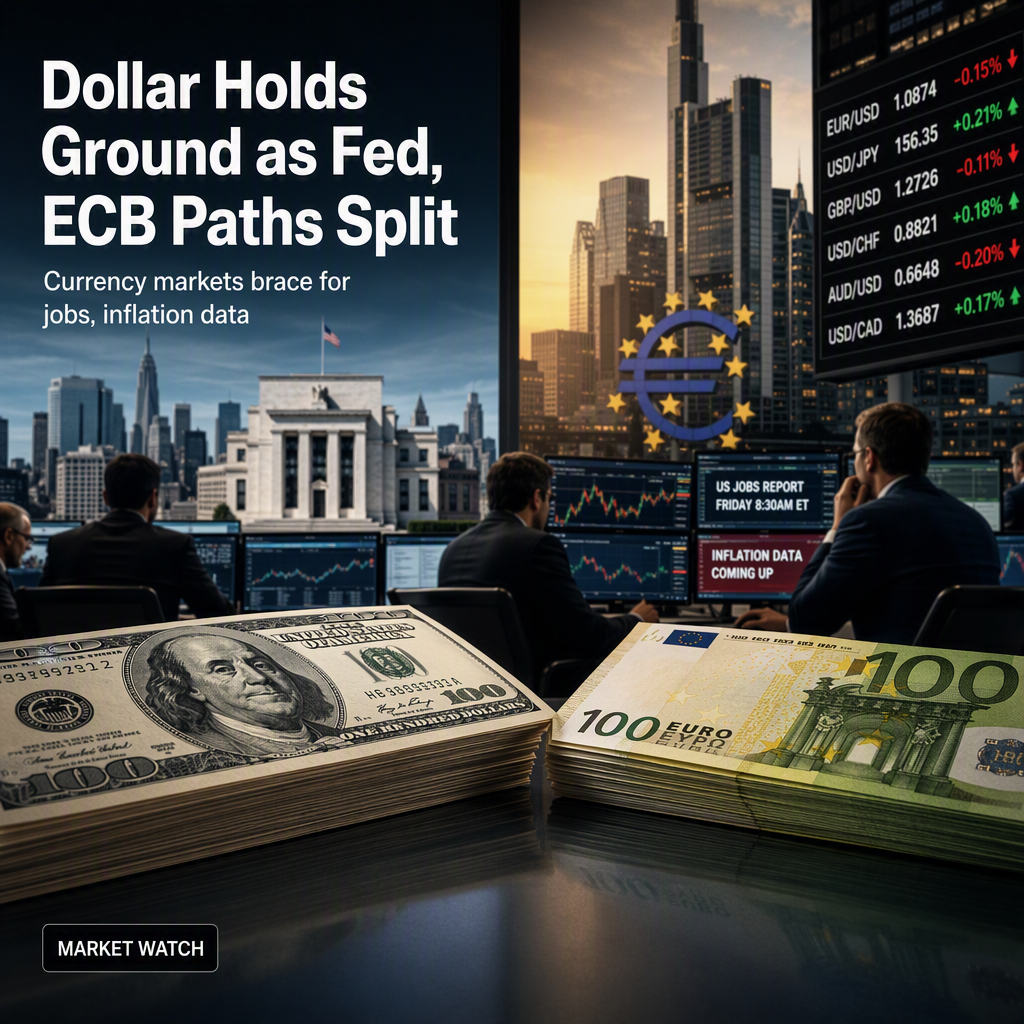
The US Dollar (USD) has shown signs of stabilization following a period of volatility in August, with the US Dollar Index (DXY) finding a floor as hedging pressure from a dovish July FOMC interpretation fades and the Federal Reserve (Fed) signals a continued hawkish stance on interest rates [2][5]. The Greenback has stabilized against major currencies such as the Euro (EUR), Mexican Peso (MXN), and Canadian Dollar (CAD), though it remains softer against the Japanese Yen (JPY) and Swiss Franc (CHF) [1][2][5].
Recent US economic data has contributed to market uncertainty. The ADP August private payrolls report showed the US economy added only +38k private sector jobs (consensus: +47k), down from +46k in July and marking the lowest reading since January [1][5]. Market experts note that this soft labor data has set a challenging stage for the upcoming Nonfarm Payrolls (NFP) report, though the correlation between ADP and NFP is weak [1][5]. The ISM services index, a key indicator of US economic activity, is expected to remain expansionary at 54.1, supporting the case for resilient demand and sticky inflation pressures [2][5].
Fed policy expectations are in flux. According to ING, Kevin Warsh’s hawkish speech at Jackson Hole has shifted the Fed’s reaction function toward a September rate hike, with ING now seeing a 25bp increase as more likely than a hold, unless upcoming data is exceptionally weak [3]. ING analysts argue that front-end rates and elevated energy prices continue to favor the USD, and the bar for the Fed to avoid a September hike is now higher [2][3]. However, Brown Brothers Harriman (BBH) expects the Fed to hold rates steady at the September FOMC, which could lead to a dovish repricing against the USD, especially if the August CPI print on September 11 confirms cooling inflation [5]. BBH also notes that wage growth is consistent with the Fed’s 2% inflation target and that policy is already restrictive [5].
Meanwhile, the Euro has gained 0.2% to near 1.1610 against the USD, supported by expectations of a European Central Bank (ECB) rate hike [1][4]. According to a Reuters poll, 65 economists overwhelmingly expect the ECB to raise its deposit rate by 25 basis points to 2.50% on September 10, with 90% predicting the rate will remain at that level through year-end [4]. The ECB’s focus on price stability and the prospect of higher rates have contributed to the Euro’s strength [4].
Market implications are significant, with the USD expected to remain range-bound or stabilize in the near term, except against the JPY, where softness persists [2][5]. The upcoming US jobs report and CPI data are seen as decisive for the Fed’s next move, and any surprises could trigger sharp repricing in currency markets [1][3][5].
CONCLUSION
The US Dollar is stabilizing as markets weigh mixed US labor data, resilient services activity, and diverging Fed rate hike expectations. The Euro is strengthening on the back of anticipated ECB tightening. The next moves in both currencies hinge on upcoming US jobs and inflation data, with the potential for significant market repricing depending on the outcomes.