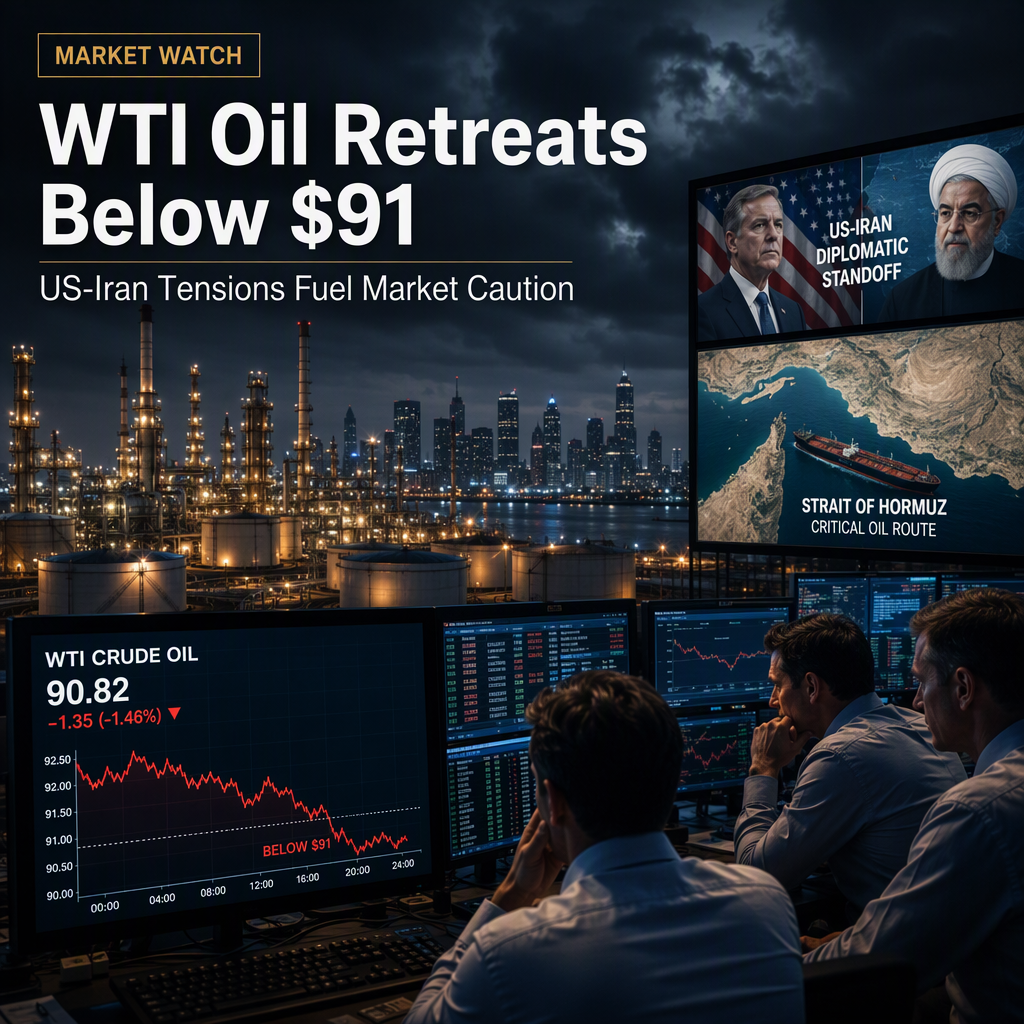
West Texas Intermediate (WTI) crude oil prices slipped below $91.00 per barrel, trading around $90.80 during Asian hours on Thursday, following modest gains the previous day [1]. This decline comes despite escalating friction between the United States and Iran, with uncertainty persisting over the progress of diplomatic talks between the two nations [1]. At the United Nations General Assembly, Iranian President Masoud Pezeshkian stated that Tehran would not yield to threats and reaffirmed Iran's right to pursue nuclear technology for economic development. He also warned that Iran would restrict freedom of navigation through the Strait of Hormuz as long as US sanctions and blockades remain in place [1].
In the United States, Energy Secretary Chris Wright announced that the Trump administration is working with domestic refiners to voluntarily reduce US diesel exports, positioning this as an alternative to a formal overseas shipment ban [1]. Meanwhile, Saudi Arabia is resuming oil exports via its East-West pipeline, and Ukrainian President Volodymyr Zelenskyy disclosed recent discussions with President Donald Trump about a potential energy ceasefire [1].
Market sentiment remains cautious, with TD Securities highlighting that traders are wary of reacting to headline news about potential deals until concrete developments emerge. The bank's strategists noted that as speculative positioning in crude oil becomes more elevated, the market is increasingly vulnerable to daily headline-driven sentiment shifts rather than changes in underlying fundamentals [1].
CONCLUSION
WTI oil prices have retreated below $91 per barrel amid heightened US-Iran tensions and shifting geopolitical dynamics. Market participants remain cautious, with analysts warning that crude prices are increasingly sensitive to headline risks rather than fundamental changes.