
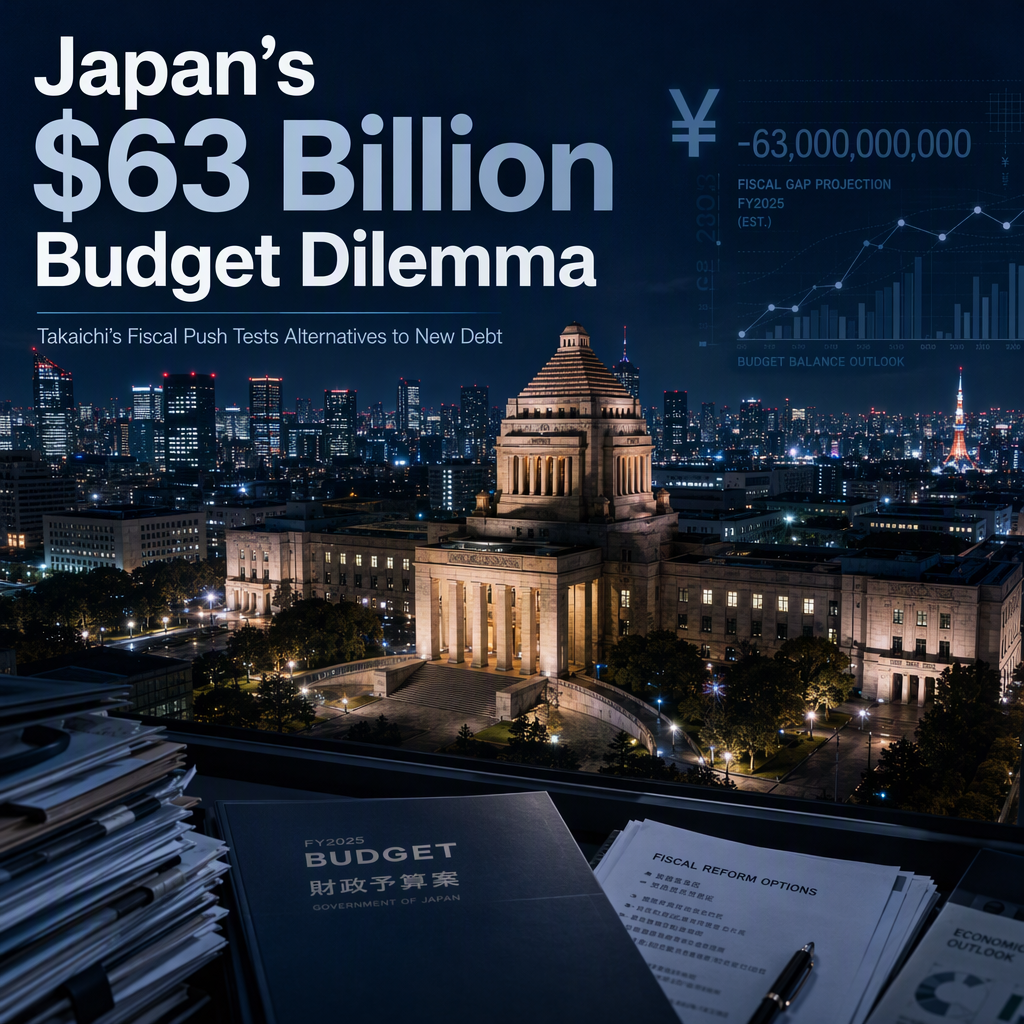
Japan's government is grappling with the challenge of funding an aggressive fiscal policy under Prime Minister Sanae Takaichi without resorting to new deficit-financing bonds, amid already high levels of public debt [1]. The latest budget requests from various ministries have increased significantly, reflecting policy shifts that prioritize growth investments and defense spending [1]. Specifically, Japan faces a $63 billion fiscal shortfall for measures such as food tax cuts and defense buildup, while also considering $78 billion in uncapped growth investment as part of its budget strategy [1].
To address the funding gap, the government is considering the use of so-called bridge bonds, which could help facilitate the funding process but require dedicated revenue streams to avoid adding to the deficit [1]. The Ministry of Finance and other agencies are actively debating alternative funding sources, including expanded tax breaks and subsidies, as well as tax breaks linked to bond purchases and wage hikes to attract investment and boost revenues [1].
Market analysts and industry observers caution that aggressive fiscal policy without proper funding mechanisms could negatively impact Japan's debt market and investor confidence [1]. The ongoing debate highlights the government's struggle to balance increased spending with fiscal responsibility, as it seeks to avoid further exacerbating the nation's public debt burden [1].
No trading advice or technical indicator analysis is provided in the article. The focus remains on fiscal policy, government funding mechanisms, and the potential market impact of Japan's evolving budget strategies [1].
CONCLUSION
Japan's efforts to fund expanded fiscal measures without new deficit bonds underscore the government's commitment to fiscal discipline amid rising budget demands. The outcome of these funding debates will be closely watched by market participants, given the potential implications for Japan's debt market and investor sentiment.