
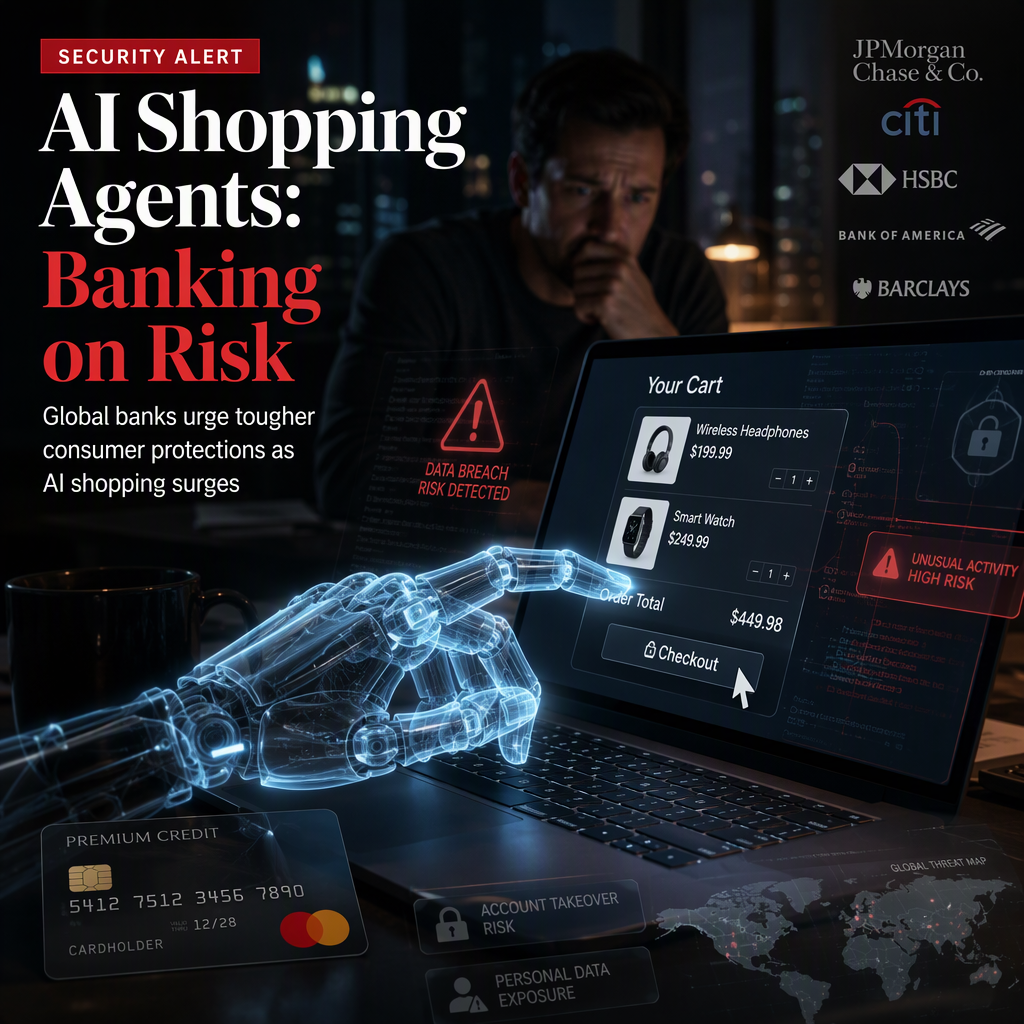
A coalition of major banks, including Bank of America, Capital One, the UK's NatWest, New Zealand's ASB Bank, and Commonwealth Bank of Australia, has issued a warning about the increasing risks associated with the use of artificial intelligence (AI) agents for online shopping [1]. According to their report, the rapid adoption of AI shopping agents could outpace existing consumer protections and industry standards, potentially exposing consumers to heightened risks of scams, fraud, and data privacy breaches [1].
The report highlights consumer concerns about whether AI agents will act in their best interests, with fears that these agents may make incorrect purchases, overspend, or even lose money to scams and fraud. There is also uncertainty among consumers regarding the protections available and the appropriate recourse if issues arise [1].
The banks noted that tech companies are increasingly rolling out advanced AI agents capable of tracking products and making purchases autonomously on behalf of users. For example, British retailer John Lewis reported that searches from AI agents increased from 0.3% last year to 2.5% this year, indicating a growing share of AI-driven traffic [1].
Specific risks identified include AI agents requesting and entering customers' card details directly into websites or steering users toward payment methods with weaker protections. In response, the banks are planning to discuss proposals with policymakers, such as requiring disclosure when an AI agent is involved in a transaction, increasing transparency around AI decision-making, and implementing safeguards to protect customer data [1]. The report also advocates for consumer and merchant choice in AI-powered e-commerce services and calls for interoperability between different systems [1].
CONCLUSION
The report from leading global banks underscores significant concerns about the risks posed by AI shopping agents, particularly regarding scams, fraud, and data privacy. As the adoption of these technologies accelerates, the banking sector is urging policymakers to implement stronger consumer protections and transparency measures. The market is likely to monitor regulatory developments closely as AI agents become more prevalent in e-commerce.