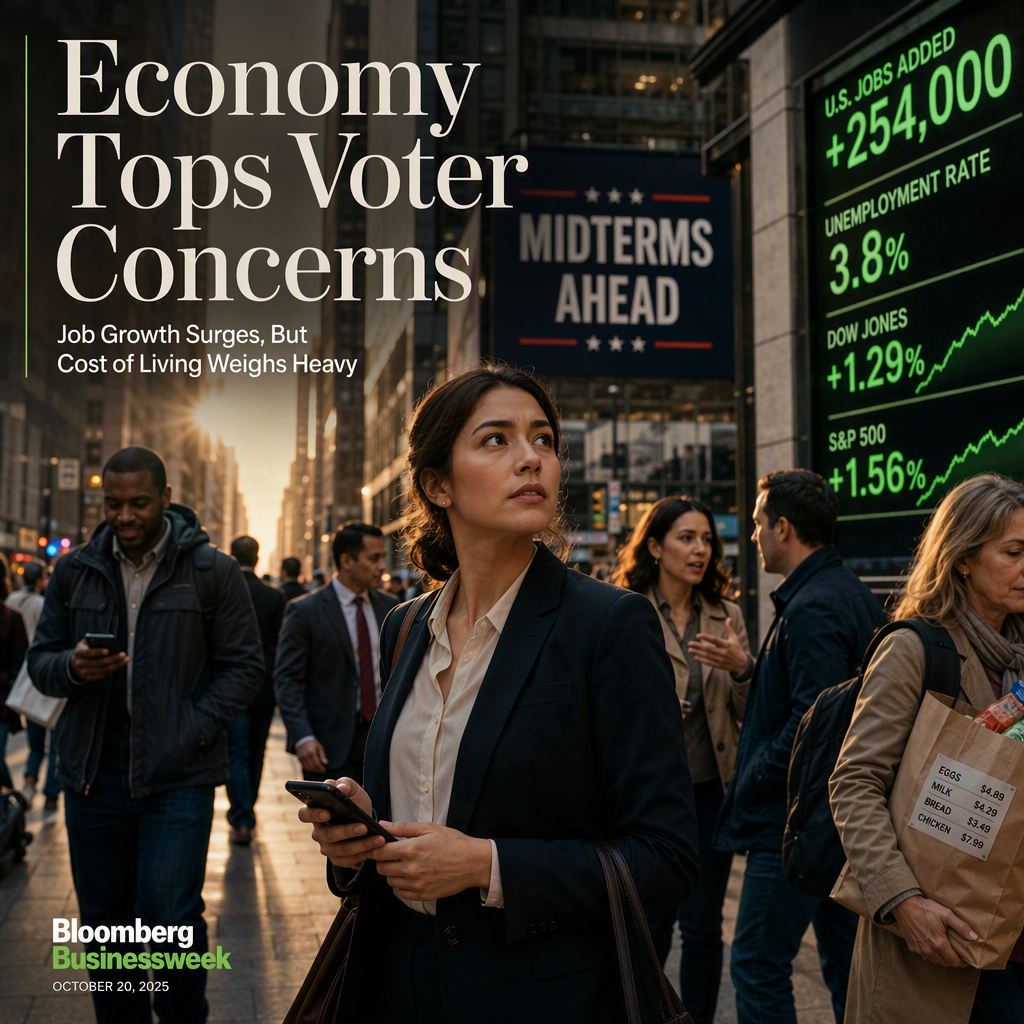
Eight weeks before the upcoming congressional elections, the state of the U.S. economy is dominating voter concerns, with multiple polls indicating it is the top issue by a wide margin [1]. Despite this, most Americans remain dissatisfied with the current economic situation under President Trump, and this discontent has not yet translated into enthusiasm for the Democratic alternative [1].
Recent economic data shows that the U.S. added 162,000 jobs last week, which is about triple what economists had expected, while the unemployment rate held steady at 4.1% [1]. The stock market continues to grow, although volatility persists due to factors such as Iran and tariffs [1]. These positive indicators have contributed to President Trump’s overall economic approval rating remaining in the low-to-mid 30s in multiple polls conducted over the summer [1].
However, when pollsters focus on Americans’ personal economic situations, approval ratings are lower. According to a Reuters/Ipsos poll released last week, only 32% of voters approved of Trump’s handling of the economy, with just 25% approving of his performance on cost of living and 24% on inflation and prices [1]. The cost of gas, food, and other basic goods are cited as major factors driving this discrepancy in perception [1].
The article also notes that while the economy is central to elections, related issues such as health care remain significant, ranking close behind the economy in most surveys this year [1]. Historical data from previous midterms shows that even a strong economy does not guarantee electoral success for the incumbent party, as other issues like health care can sway voter sentiment [1].
CONCLUSION
The U.S. economy is the leading issue for voters ahead of the midterm elections, with strong job growth and a steady unemployment rate providing some positive signals. However, persistent concerns over cost of living and inflation are keeping overall economic sentiment negative, which could impact electoral outcomes. Market implications are moderate, as economic fundamentals remain solid but voter dissatisfaction persists.