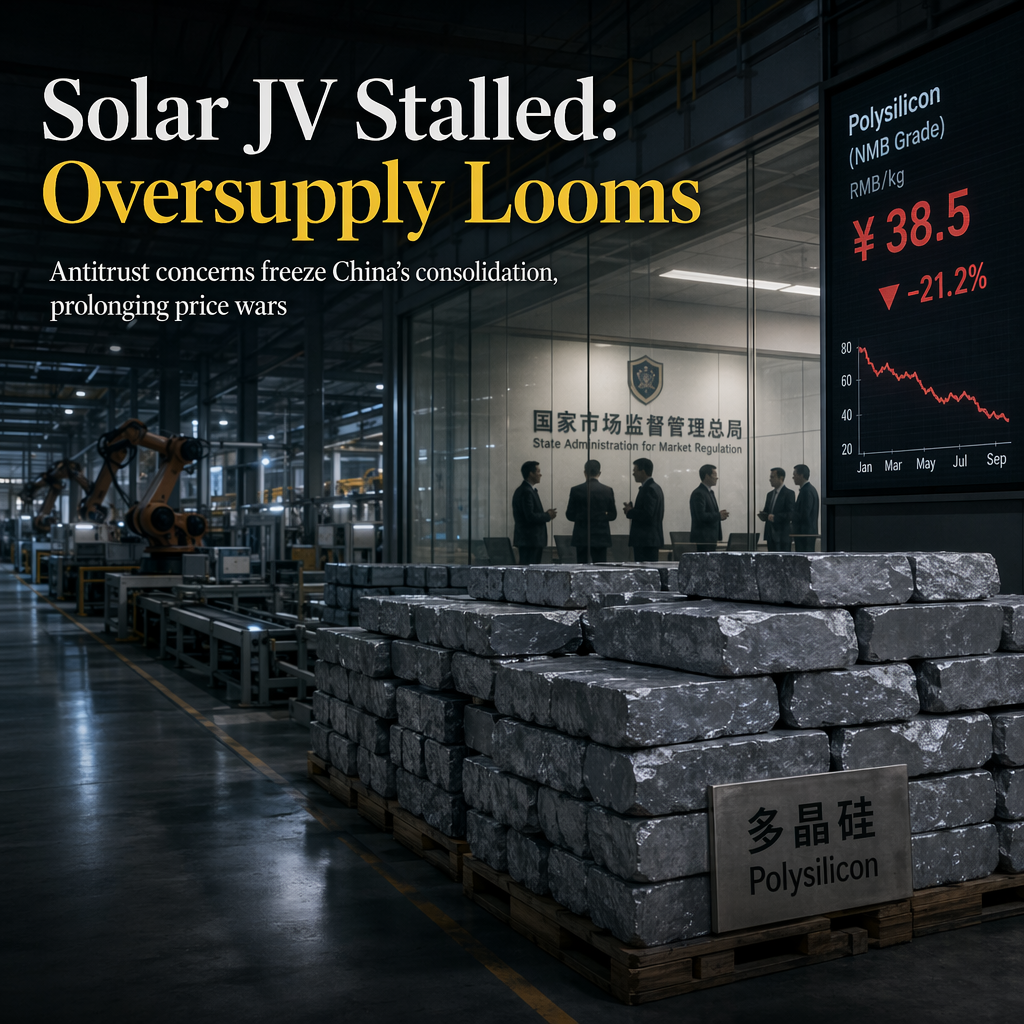
A joint venture in China aimed at consolidating production capacity for polysilicon, a critical material in solar panels, has remained inactive for several months following its launch due to warnings from antitrust authorities [1]. Chinese suppliers currently control 95% of global polysilicon production capacity, and the joint venture was intended to streamline the market and address persistent oversupply and price volatility [1]. However, regulatory concerns about potential anticompetitive practices have stalled progress, casting uncertainty over the future of market consolidation and coordinated action among major suppliers [1].
Industry analysts have highlighted that the inability to consolidate production is likely to prolong the existing supply glut, which has already resulted in significant losses for leading Chinese solar panel manufacturers, many of whom have reported negative financial results in recent quarters [1]. The ongoing oversupply and aggressive price competition are expected to keep prices depressed and margins under pressure, with analysts warning of continued price wars and weak technical support levels as supply continues to outpace demand [1].
Market sentiment remains cautious, as the stalled joint venture underscores the challenges facing China's solar sector in balancing market power with regulatory constraints [1]. The risk of further antitrust intervention is seen as a key factor that could shape the industry's trajectory in the coming months, with resistance levels likely to be tested if prices continue to fall [1].
CONCLUSION
The dormancy of the Chinese polysilicon joint venture, driven by antitrust concerns, is expected to prolong oversupply and keep industry margins under pressure. Market sentiment remains cautious, with analysts anticipating continued price competition and weak pricing until regulatory uncertainties are resolved.