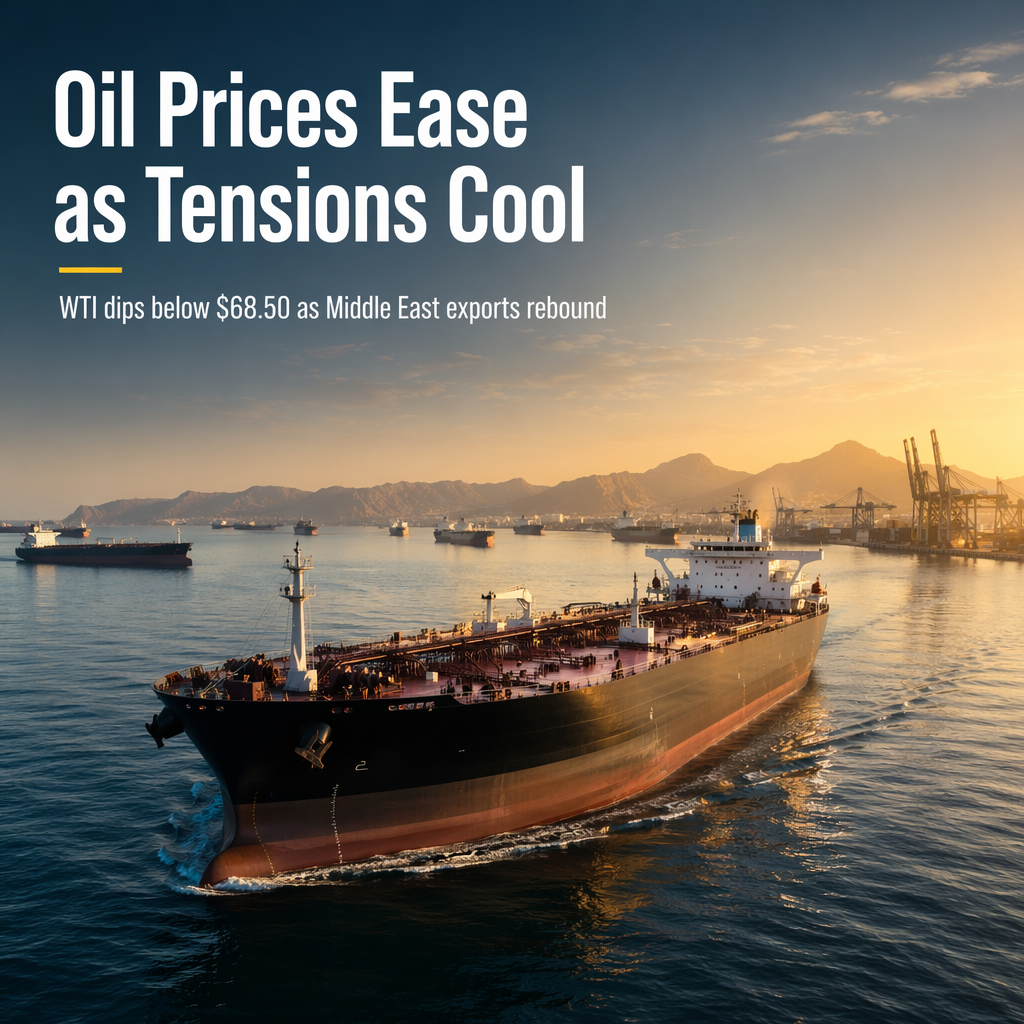
West Texas Intermediate (WTI) crude oil prices edged lower, trading around $68.40 during Asian hours on Friday, after modest gains in the previous session [1]. This decline comes as geopolitical tensions in the Middle East have eased, following a series of diplomatic breakthroughs between the United States and Iran, with negotiations in Doha mediated by Qatar and Pakistan [1]. These developments have significantly reduced the geopolitical risk premium that had previously kept energy prices elevated [1].
The stabilization of the region has led to a steady recovery in commercial shipping through the Strait of Hormuz, a critical maritime chokepoint for global oil distribution [1]. The resumption of confident tanker transit signals to global markets that regional oil supplies are normalizing after a period of uncertainty [1]. Major oil producers in the region are rapidly restoring export capacities: Saudi Arabia's crude exports have rebounded to approximately 90% of pre-war levels, while the United Arab Emirates has fully restored its exports to pre-war volumes by discreetly routing tankers through the Strait and utilizing a strategic pipeline that bypasses the chokepoint [1].
These factors have contributed to the easing of oil prices, reflecting improved supply stability and reduced market anxiety over potential disruptions [1]. No specific analyst opinions or forward-looking statements are provided in the source article [1].
CONCLUSION
WTI oil prices have declined below $68.50 as easing Middle East tensions and restored export flows from major producers signal a normalization of global supply. The market response reflects reduced geopolitical risk and improved confidence in the stability of energy shipments through the region.