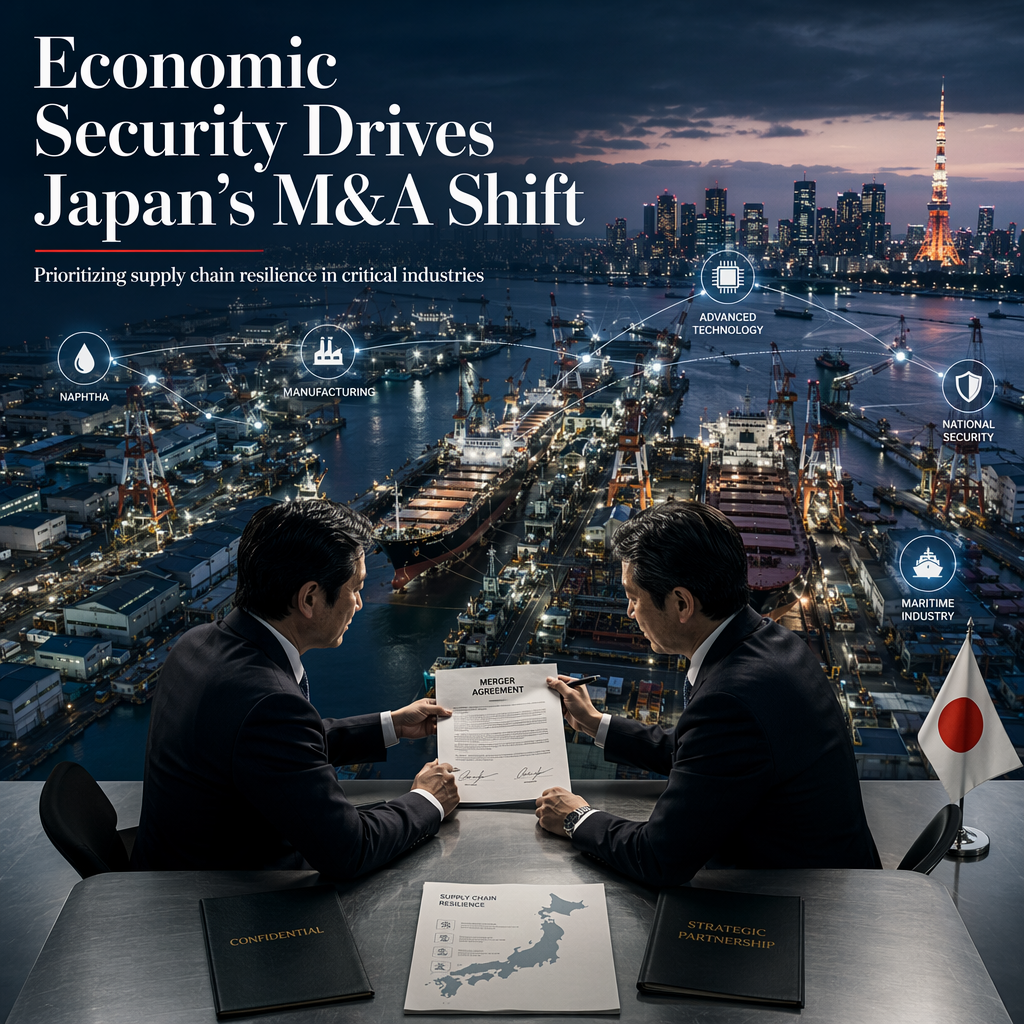
Japanese authorities are set to officially incorporate economic security considerations, such as supply stability, into their evaluation of mergers and acquisitions by large corporations [1]. This policy shift is designed to enhance Japan's competitiveness in critical sectors, including naphtha and shipbuilding, by ensuring that M&A activity supports the stability of domestic supply chains [1].
A notable example cited is Imabari Shipbuilding's acquisition of Japan Marine United in the previous year, which was approved despite resulting in a market share exceeding 50% for the combined entity [1]. This approval underscores a changing regulatory approach, where deals that might otherwise raise antitrust concerns could be sanctioned if they are deemed to bolster domestic supply stability [1].
The new direction emerges amid heightened concerns about securing stable supplies of essential goods and preserving Japan's industrial base, particularly in the context of intensifying global competition from countries like China [1]. Authorities plan to assess the economic security benefits of proposed mergers, with a focus on enhancing supply chain resilience and protecting industries considered vital to national interests [1].
This policy is anticipated to influence future M&A activity, especially in sectors where Japan aims to maintain or strengthen its global position and where domestic production and supply capabilities are perceived to be at risk [1].
CONCLUSION
Japan's move to integrate economic security into M&A screenings signals a strategic shift in regulatory priorities, emphasizing supply chain resilience and industrial competitiveness. This approach may lead to greater flexibility in approving deals that support national interests, potentially reshaping the landscape for future mergers in key sectors.