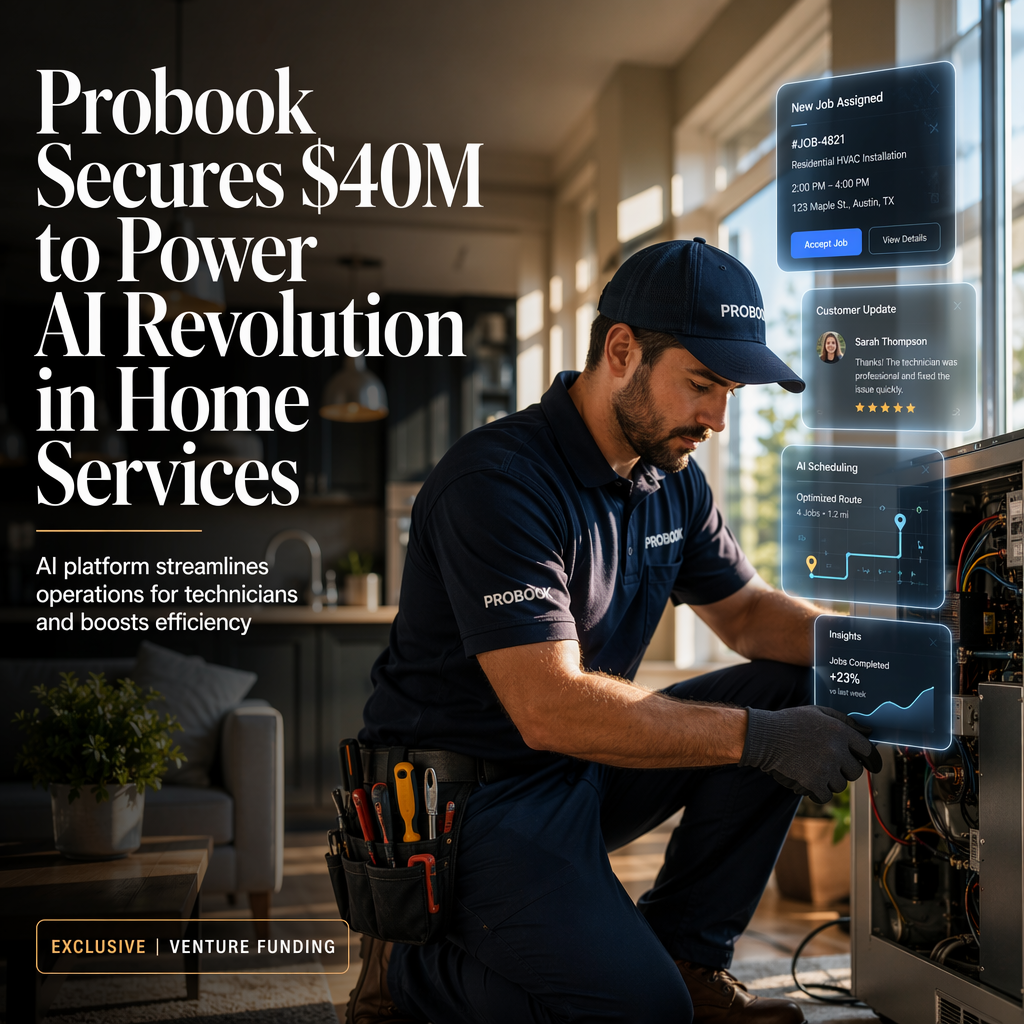
Probook, an AI operating system designed to streamline operations for electricians, plumbers, and HVAC technicians, has raised $40 million in venture capital funding. The company was founded by George Eliadis, a Wharton graduate who previously worked pressure-washing homes with his father in upstate New York. The funding round includes a $34 million Series A led by Andreessen Horowitz and a $6 million seed round led by Sequoia Capital, as first reported by Fortune [1].
Eliadis developed Probook to address inefficiencies he experienced firsthand, such as missed calls and time lost between jobs. The platform aims to consolidate fragmented AI tools into a single system that manages everything from answering calls and cleaning up job data to sending customer updates. Eliadis emphasized that the next decade in home services will be dominated by platforms that provide end-to-end customer experiences, with AI handling most tasks and teams managing exceptions [1].
Probook's impact is demonstrated by an Indiana-based repair service with 14 locations and 260 technicians, which booked 2,873 jobs in their first month using Probook with zero human intervention. Additionally, a similar business in Kansas reported a 10% increase in revenue per job and a 40% reduction in team size after eight months on the platform. Probook is also targeting private equity firms that are consolidating home service businesses and seeking to maximize margins through automation [1].
From the customer perspective, Sequoia Capital described Probook as an easier and faster way to book home repairs. The platform's AI can immediately assign the most suitable technician based on experience, availability, and proximity, while keeping customers informed throughout the process [1].
CONCLUSION
Probook's $40 million funding round highlights strong investor confidence in AI-driven solutions for the home services sector. The platform's demonstrated ability to boost efficiency and revenue for service businesses, along with its appeal to private equity, suggests significant market potential. Continued adoption could reshape how home service companies operate and interact with customers.