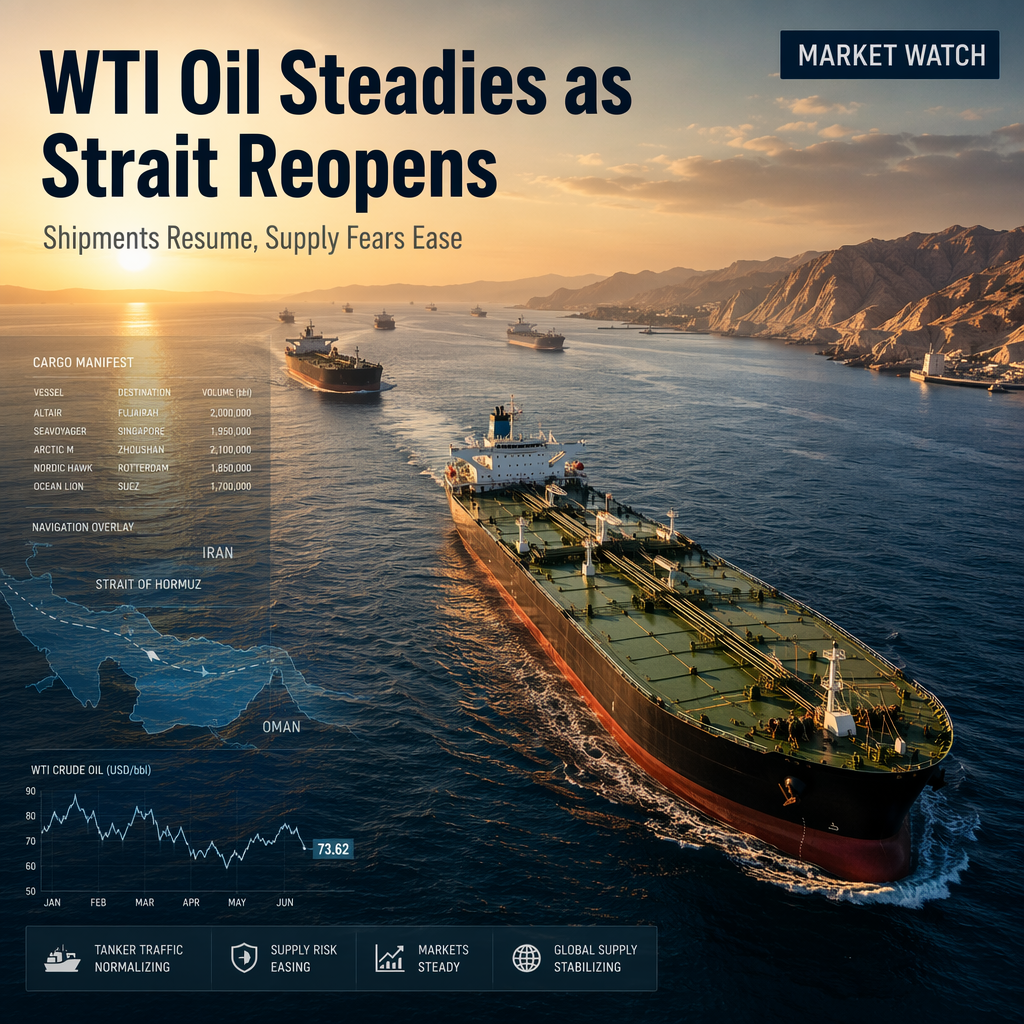
West Texas Intermediate (WTI) crude oil prices paused their recent decline, trading around $75.60 per barrel on Friday, up 0.21% for the day, though still on track for a weekly loss of approximately 10% following a sharp sell-off earlier in the week [1]. The market's sentiment improved significantly after the implementation of a 60-day memorandum of understanding between Washington and Tehran, which has reduced the geopolitical risk premium in energy prices as concerns over prolonged disruptions to oil exports from the Middle East have eased [1].
Shipping traffic is gradually resuming through the Strait of Hormuz, a critical chokepoint for global oil trade. The US Central Command (CENTCOM) announced the lifting of all maritime restrictions on traffic to and from Iranian ports and coastal waters, and several previously stranded crude cargoes have begun leaving the region, improving global supply prospects [1]. US Vice President JD Vance confirmed that 12.5 million barrels of oil passed through the Strait overnight without interference from Iran, further supporting the view that shipping conditions are normalizing [1]. Additionally, Kuwait has announced plans to gradually increase oil production, reinforcing expectations of improved supply availability [1].
Despite these positive developments, some caution remains. Rabobank noted that while the agreement reduces immediate risks for the global economy, questions persist regarding the future administration of the Strait of Hormuz. Iran is reportedly considering the introduction of maritime fees after the 60-day period, a move opposed by US President Donald Trump [1]. Deutsche Bank observed that the initial resumption of oil flows pressured crude prices lower, but the market later stabilized as exports through the Strait resumed, easing concerns about global supply disruptions. However, uncertainty about longer-term negotiations continues to linger [1].
CONCLUSION
The resumption of crude shipments through the Strait of Hormuz and improved diplomatic relations have eased immediate supply concerns, stabilizing WTI oil prices after a sharp decline. While market sentiment has improved and supply prospects look better, unresolved issues regarding future maritime administration and potential fees keep some uncertainty in the outlook.