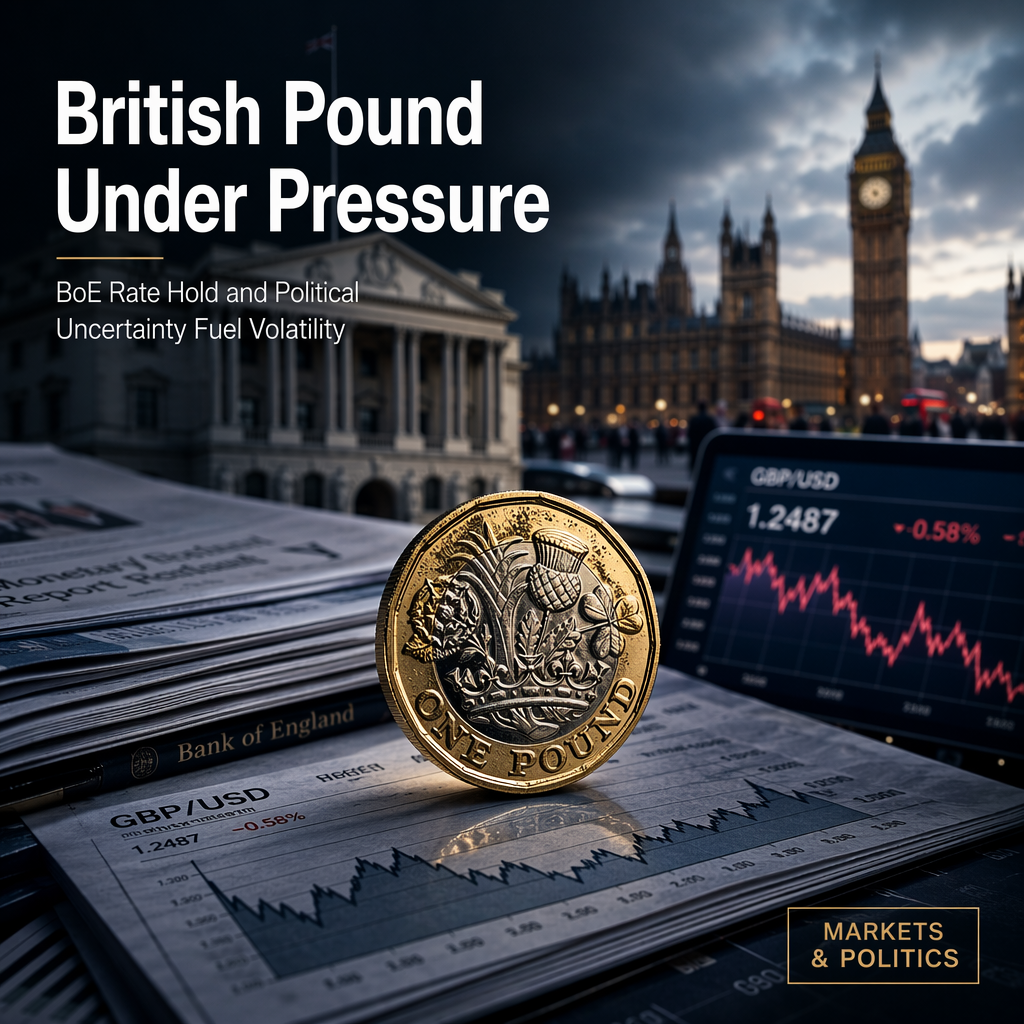
The British Pound (GBP) experienced significant volatility following the Bank of England's (BoE) decision to keep its policy rate unchanged at 3.75%, with a 7–2 vote split among Monetary Policy Committee members. Two members, including chief economist Huw Pill and external member Megan Greene, voted for a 25 basis point hike to 4.00% [1]. In the immediate aftermath, GBP/USD fell sharply by 0.69% to 1.3205 before recovering slightly to trade near 1.3236 [1]. The BoE's cautious stance reflects ongoing concerns about above-target inflation and subdued economic growth [1].
UK labour market data showed a slight improvement, with the unemployment rate edging down to 4.9% in the three months to April from 5.0% in March. Wage growth remained robust, with regular pay rising 3.4% year-on-year and total pay closer to 4.4% year-on-year, both exceeding expectations and complicating the BoE's policy outlook [1].
In addition to monetary policy factors, political developments are contributing to GBP volatility. According to DBS Group Research, uncertainty surrounding the Makerfield by-election, where Labour's Burnham is leading, is weighing on the Pound [2]. Burnham, described as one of Labour's most popular figures, is expected to challenge Prime Minister Starmer for party leadership upon entering parliament [2]. His left-leaning policy stance and potential challenges to fiscal rules, especially in defense and taxation, are raising concerns about fiscal uncertainty, which could negatively impact both Gilts and the Pound [2].
DBS notes that Burnham is seeking advice from prominent economists such as Andy Haldane and Jim O’Neill to enhance policy credibility, but the political outlook remains clouded by leadership risks and fiscal questions [2].
CONCLUSION
The British Pound is under pressure from both the Bank of England's cautious monetary policy and rising political uncertainty linked to the Makerfield by-election. Market participants are closely watching for further volatility in GBP/USD and potential impacts on UK Gilts as fiscal and leadership risks persist.