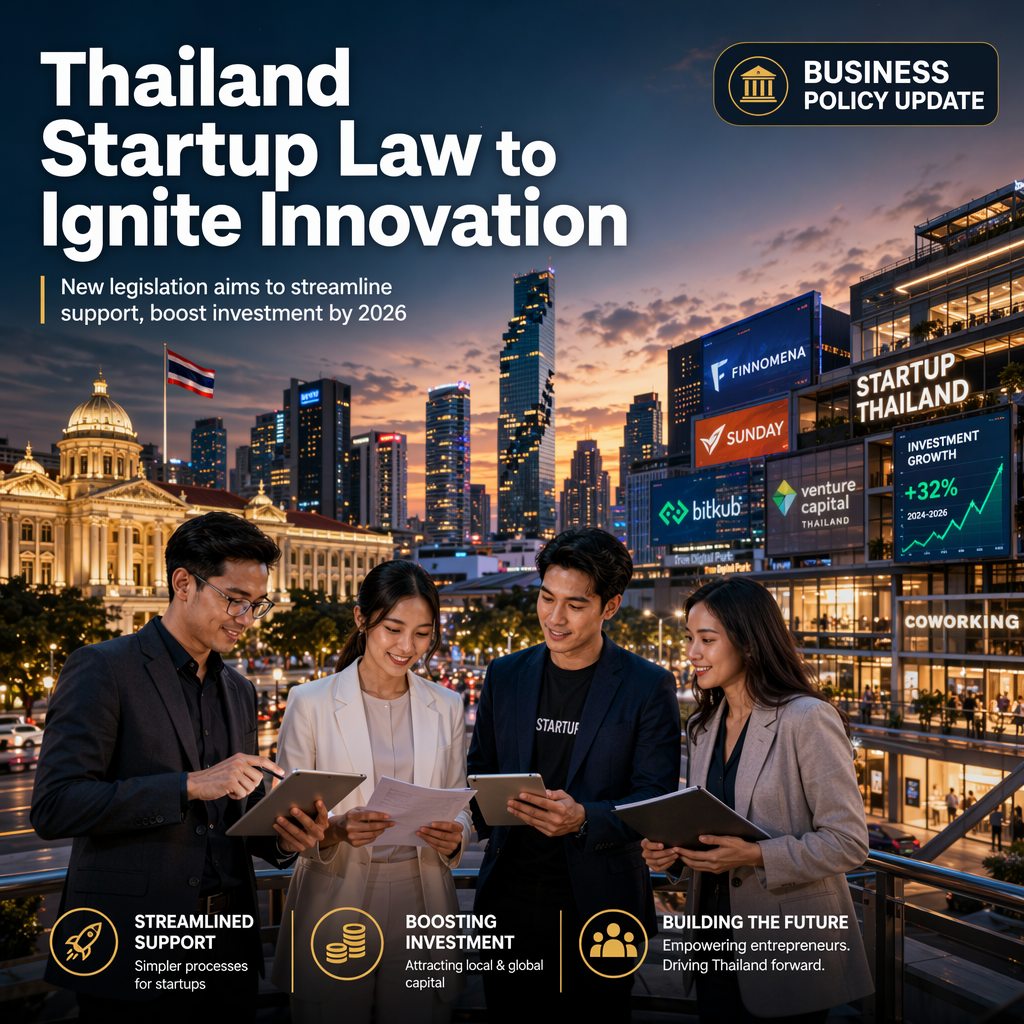
Thailand is poised to implement a new law aimed at empowering startups by the end of 2026, according to Krithpaka Boonfueng, executive director of the National Innovation Agency, who announced the regulation at a business conference in Bangkok on June 26 [1]. The law is designed to simplify government support programs and incentives for startups, making it easier for entrepreneurs to access resources and funding [1]. Key provisions include faster registration and approval processes, simplified tax incentive structures, and increased transparency in government funding allocations [1].
Boonfueng emphasized that the regulation will allow startups to focus on growth and innovation rather than paperwork, stating, "We want startups to be able to focus on growth and innovation, not paperwork. This new law will make government support more accessible and predictable" [1]. The Thai startup sector has been expanding, but entrepreneurs have faced challenges navigating complex government programs. The National Innovation Agency expects the law to attract more investment into the ecosystem and foster greater innovation [1].
Financial analysts in Bangkok believe that the regulatory clarity and streamlined incentives provided by the new law could boost the number of startup registrations and venture capital activity in Thailand by the end of 2026 [1]. They also suggest that easier access to government support may help startups scale more efficiently, potentially leading to increased valuations and market competitiveness [1].
CONCLUSION
Thailand's upcoming startup law is expected to streamline government support and incentives, making it easier for startups to access resources and funding. Analysts anticipate that these changes will attract more investment and enhance the competitiveness of the Thai startup ecosystem. The law is projected to have a positive impact on startup growth and innovation by the end of 2026.