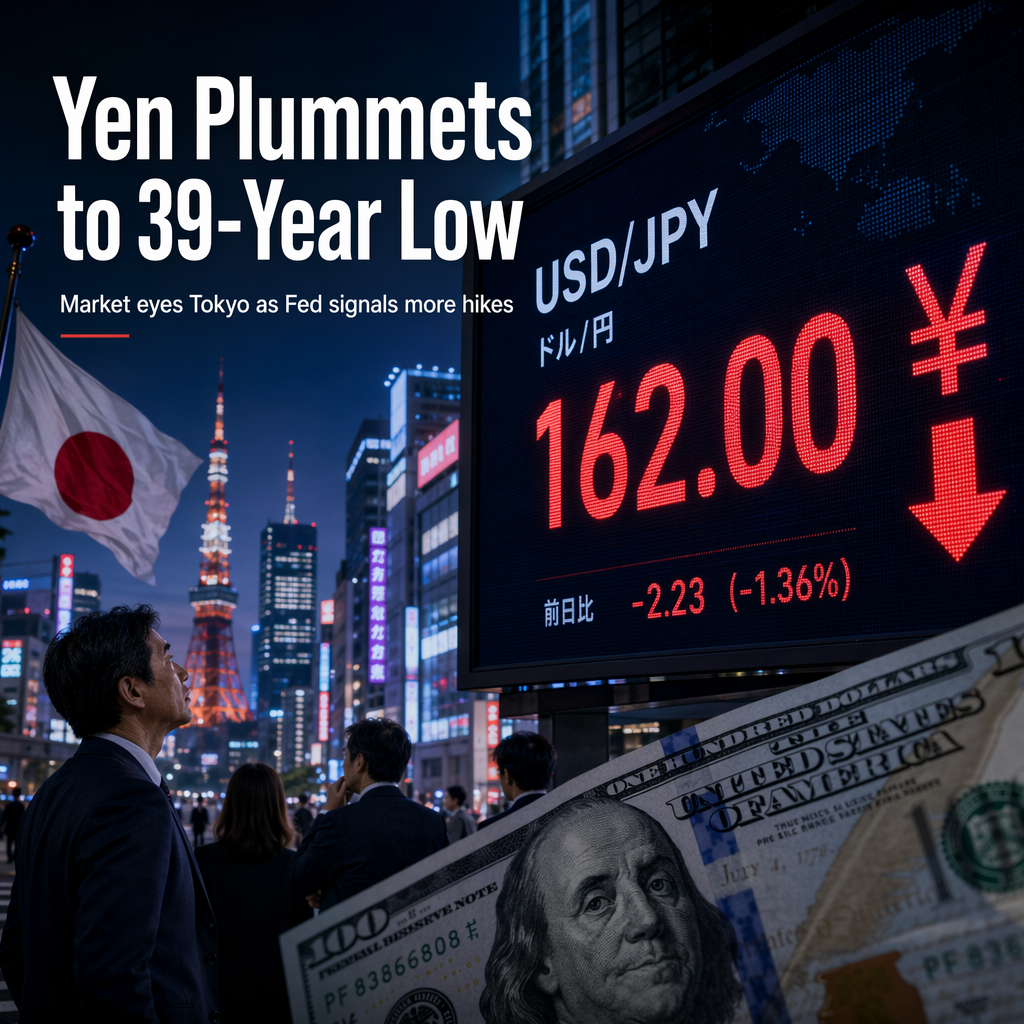
The Japanese yen fell to its lowest level in 39 years against the U.S. dollar on Monday, reaching 162 yen per dollar, a threshold not seen in nearly four decades [1]. This decline was driven by a rally in the dollar, as market participants increasingly priced in further monetary tightening by the U.S. Federal Reserve [1]. The widening yield differential between U.S. and Japanese government bonds has made the dollar more attractive to investors, exerting additional downward pressure on the yen [1].
The yen's weakness has heightened expectations that Japanese authorities may intervene in the currency markets, as significant moves in the exchange rate can impact the Japanese economy through higher import costs and increased inflationary pressures [1]. Traders and investors are closely monitoring for any official response from Tokyo, as well as key technical levels, with 162 per dollar identified as a critical support point [1]. A sustained break above this level could lead to further depreciation of the yen, according to technical analysts [1].
Market sentiment remains cautious, with investors wary of potential sudden moves by Japanese policymakers that could trigger volatility in currency markets [1]. The prevailing trend is currently shaped by the outlook for U.S. interest rates, and the yen's future trajectory will likely depend on both Federal Reserve policy decisions and any intervention by Japanese authorities [1].
CONCLUSION
The yen's slide to a 39-year low against the dollar has raised the possibility of intervention by Japanese authorities, as the currency's weakness poses risks to the domestic economy. Market participants are focused on U.S. monetary policy and potential actions from Tokyo, with volatility expected if official measures are taken.