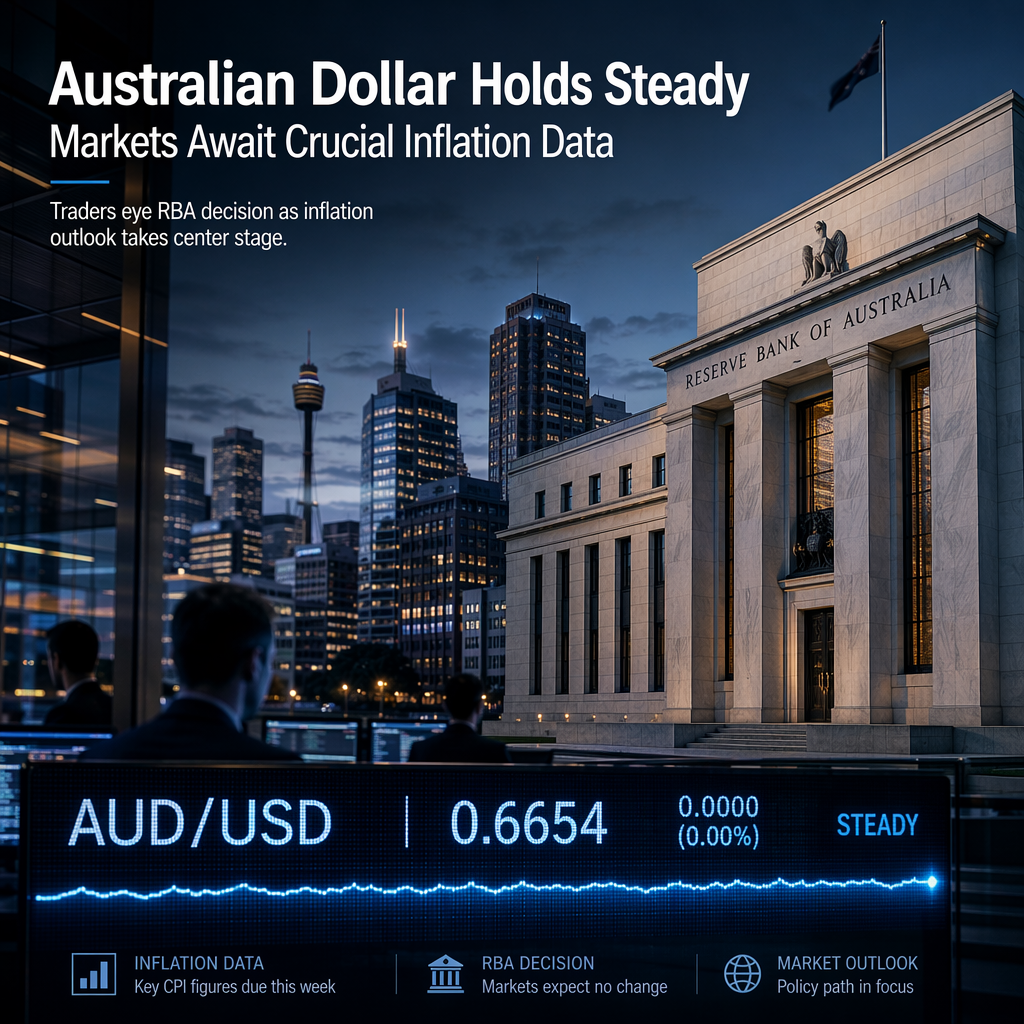
The Australian Dollar (AUD) has been trading largely sideways in recent weeks, with market participants adopting a wait-and-see approach ahead of the Reserve Bank of Australia's (RBA) next meeting scheduled for August 11 [1]. According to Volkmar Baur at Commerzbank, the market is seeking clarity on two fronts: developments in the Middle East and the release of upcoming Australian labor and inflation data [1].
Recent sentiment indicators released show some improvement, but they remain at low levels in absolute terms [1]. Leading indicators for inflation rates suggest a significant easing of price pressures, which supports the expectation that the RBA will keep its benchmark interest rate unchanged at the upcoming meeting [1]. Notably, the subcategory tracking expected retail price trends has turned negative for the first time since 2020, and capacity utilization data also points toward inflation returning to the 2% range [1].
Despite these signals, market caution persists due to ongoing uncertainty regarding potential escalation in the Middle East and the pending release of important domestic economic data [1]. Commerzbank's analysis concludes that, based on current secondary data, it appears likely the RBA will maintain its current policy stance in August [1].
CONCLUSION
The Australian Dollar remains in a holding pattern as markets await key inflation and labor data ahead of the August 11 RBA meeting. Current indicators suggest easing inflation and support expectations for unchanged interest rates, but geopolitical and domestic uncertainties are keeping market sentiment cautious.