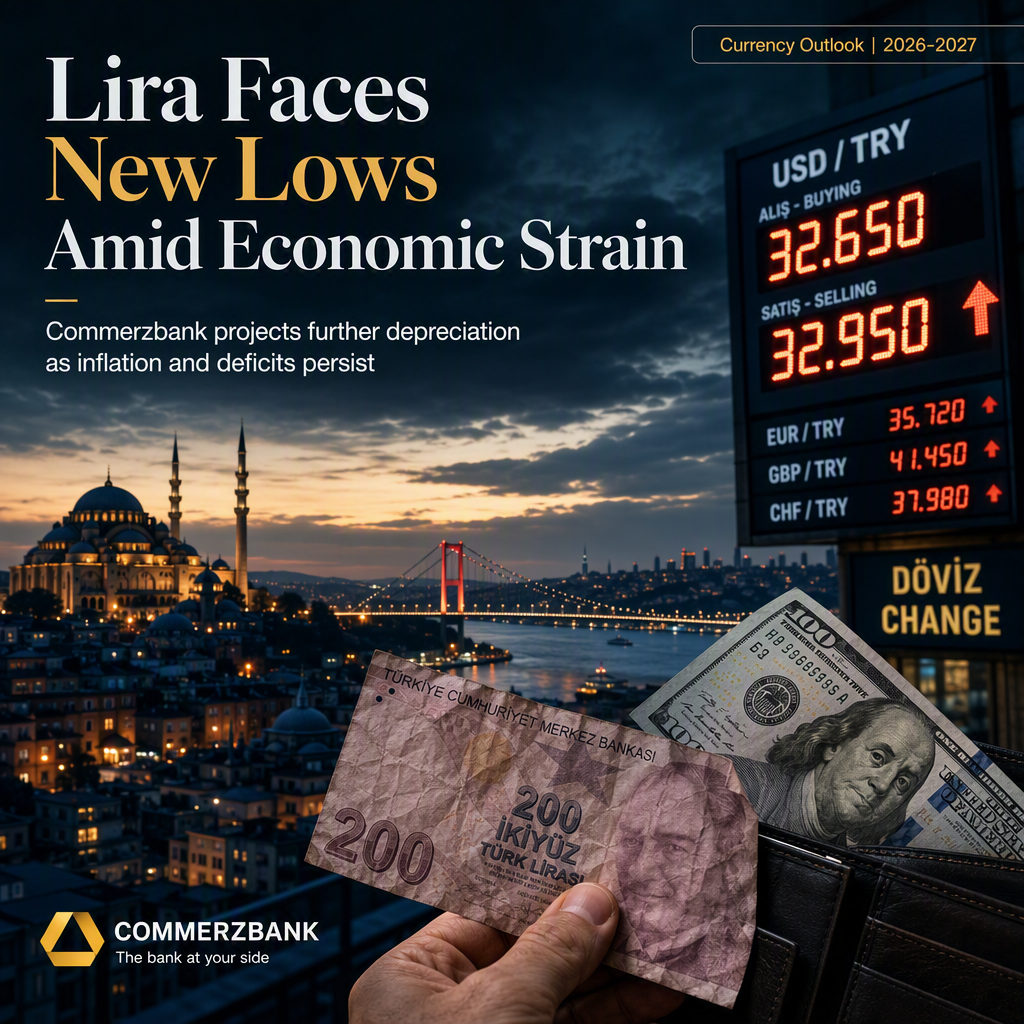
Commerzbank FX analyst Tatha Ghose projects continued depreciation of the Turkish Lira against the US Dollar, citing persistent inflation pressures and a renewed deterioration in Turkey's current account as primary drivers of the currency's weakness [1]. The bank forecasts the USD/TRY exchange rate to rise from 48.00 in September 2026 to 57.00 by December 2027, indicating expectations of ongoing lira depreciation despite the central bank's tight monetary policy and significant foreign exchange intervention [1].
Ghose notes that Turkey's reliance on energy imports and its strong trade and financial ties to the Middle East exacerbate existing balance of payments vulnerabilities [1]. The central bank's policy rate remains at 37.0%, but since the Iran shock, the Central Bank of Turkey (CBT) has kept the weekly repo window largely closed, pushing funding towards the 40.0% overnight lending facility [1]. CBT Governor Fatih Karahan has hinted at the possibility of restarting one-week repo funding, which would effectively lower the funding cost and act as a rate cut in practice [1].
Inflation remains a significant concern, with the latest seasonally-adjusted month-on-month CPI increase described as 'not encouraging at all' [1]. While officials maintain an optimistic inflation target of 24% for end-2026, the actual year-end forecast was revised up to 28% in the Q3 Inflation Report, and the 2027 forecast remains at 15% [1]. Ghose points out a pattern of setting ambitious targets that are later revised as outcomes become less achievable [1].
The lira's managed decline has required heavy intervention from the central bank, but the cost of this defense is becoming unsustainable [1]. Most of the international reserve gains highlighted by policymakers earlier in the year were attributed to rising gold prices, not increases in FX reserves, which remain modest when excluding swaps [1]. The current account, after improving in 2024-25, has begun to widen again, with the trade deficit increasing by 14% year-on-year in July due to faster import growth compared to exports, and the deficit running at 6% of GDP in recent months [1].
CONCLUSION
Commerzbank anticipates further depreciation of the Turkish Lira due to unresolved inflation and a worsening current account deficit, despite ongoing central bank interventions and high policy rates. The bank's forecasts and recent economic data suggest continued pressure on the lira, with significant market implications for Turkey's currency and broader financial stability.