
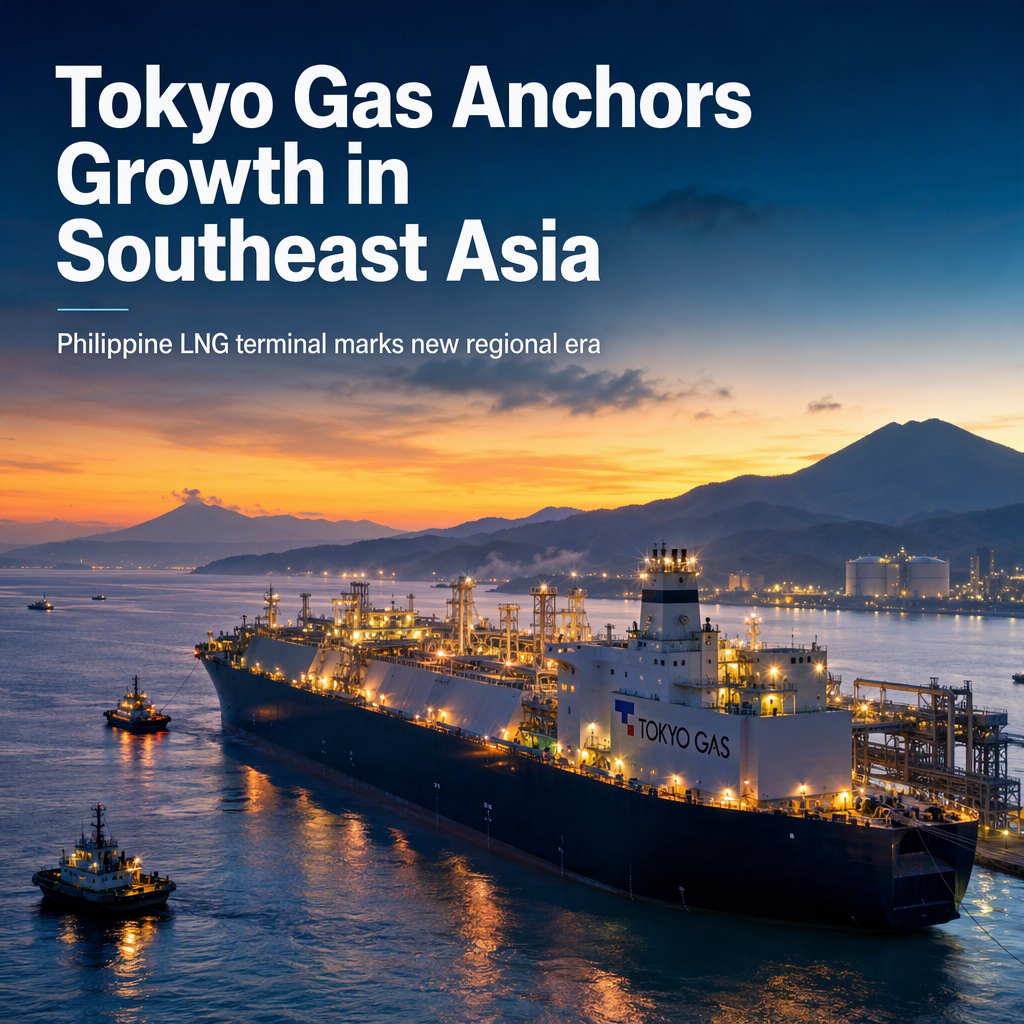
Tokyo Gas has announced its participation in the operation of a floating storage and regasification unit (FSRU) in Batangas Bay, Philippines, marking a significant step in its international expansion strategy [1]. The company aims to leverage this project as a foundation for further growth in Southeast Asia, specifically targeting markets such as Malaysia, Vietnam, and Indonesia, where domestic gas production is declining and the need for LNG import infrastructure is increasing [1].
The move comes as Southeast Asian countries experience rising demand for liquefied natural gas (LNG) due to efforts to diversify energy supplies and address shortages caused by dwindling output from existing gas fields [1]. Floating LNG terminals like the Batangas Bay FSRU are gaining traction in the region because they require less time and investment to deploy compared to traditional onshore facilities, offering a flexible solution to meet immediate energy needs [1].
Tokyo Gas's shift toward international projects reflects broader changes in the global LNG market, with evolving supply and demand dynamics. The company is seeking new opportunities outside Japan, where domestic gas demand has plateaued due to demographic changes and the ongoing energy transition [1]. By utilizing its expertise in LNG handling and import infrastructure, Tokyo Gas aims to establish a strong presence in emerging Southeast Asian markets and position itself for continued regional growth [1].
CONCLUSION
Tokyo Gas's involvement in the Batangas Bay FSRU signals a strategic pivot toward Southeast Asia, driven by growing regional LNG demand and declining domestic gas production. The company's expansion is expected to enhance its international profile and capitalize on new market opportunities as energy needs evolve in the region.